Best Camera for Makeup Artists 2026: 7 Picks for True Skin Tones & Tutorials
As an Amazon Associate we earn from qualifying purchases. Some links in this guide are affiliate links, see our affiliate disclosure for details.
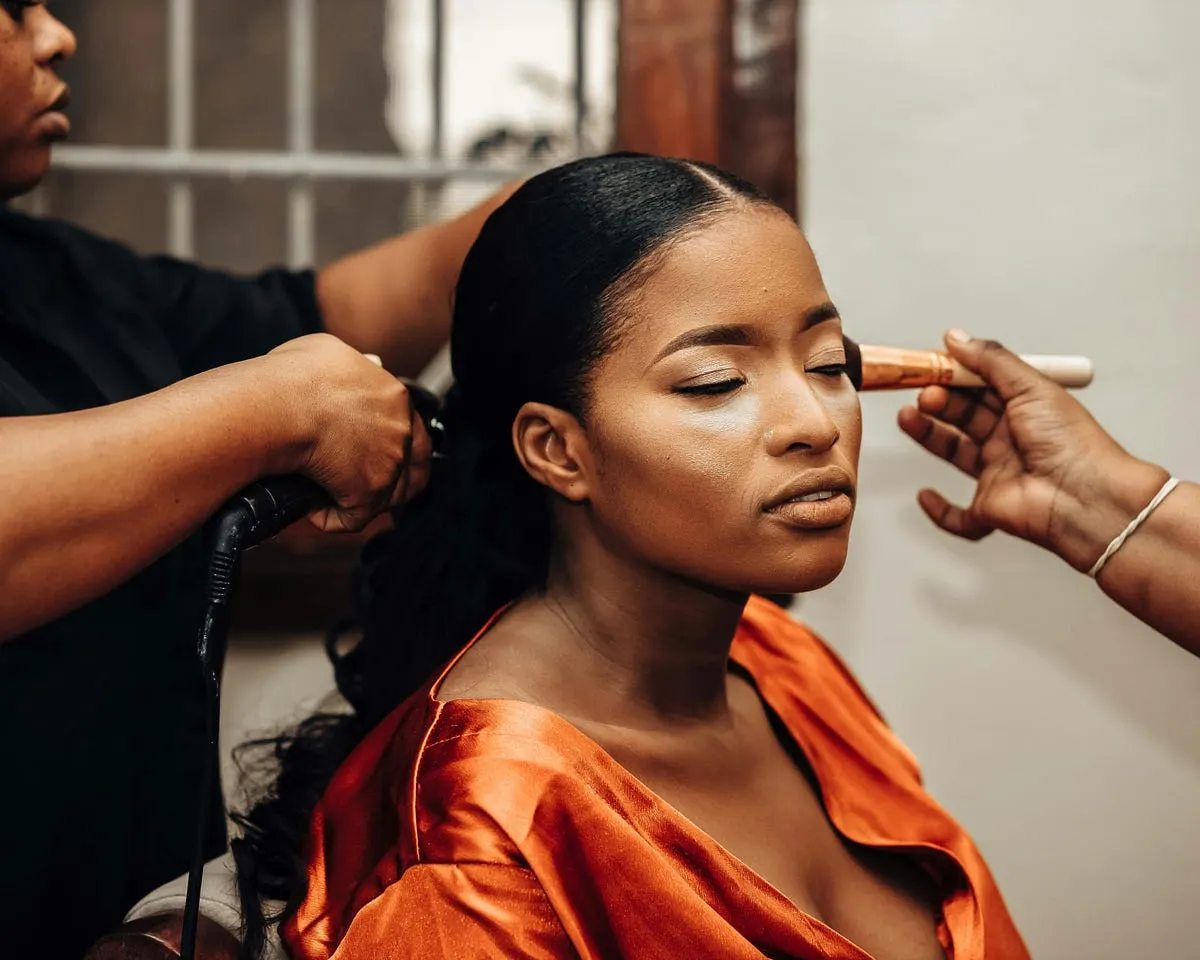
Photo by Bright Eliya on Unsplash
Makeup artistry is judged on subtleties that smartphone computational sharpening often ruins: seamless foundation transitions, accurate warm/cool undertones, micro-shimmer on eyelids, and natural facial proportions. When a phone camera shoots a client from two feet away with a 24mm wide-angle lens, it enlarges the nose by up to 25% and flattens cheek contours—while aggressive phone HDR shifts warm golden undertones toward orange or grey.
This guide compares seven dedicated cameras for makeup artists (MUAs), beauty content creators, and bridal stylists, along with the exact focal lengths (50mm to 85mm equivalent) and CRI 96+ lighting setups needed for true-to-life portfolio photos and 4K tutorials.
Quick Verdict: Top 7 Cameras for Makeup Artists
| Camera | Sensor & Lens Mount | Why It Excels for Makeup Work |
|---|---|---|
| Sony Alpha a6400 | 24.2 MP APS-C (Sony E-mount) | Real-time Eye-AF locks onto lashes and irises instantly; pairs with affordable Sigma f/1.4 primes |
| Canon G7 X Mark III | 20.1 MP 1-inch (Fixed 24–100mm f/1.8–2.8) | Pocketable all-in-one with flattering Canon skin science and a built-in 100mm portrait zoom |
| Canon EOS 90D | 32.5 MP APS-C DSLR (Canon EF/EF-S) | High-resolution 32.5 MP files let you crop tightly into eye and lip macro details |
| Fujifilm X-T30 | 26.1 MP APS-C (Fujifilm X-mount) | Renowned ASTIA/Soft film simulations produce smooth, natural skin gradation straight out of camera |
| Sony ZV-1 | 20.1 MP 1-inch (Fixed 24–70mm f/1.8–2.8) | Product Showcase mode switches focus from your face to an eyeshadow palette in half a second |
| Fujifilm X-S20 | 26.1 MP APS-C with 7-stop IBIS | 6.2K/4K 10-bit 4:2:2 internal video gives maximum color-grading accuracy for studio tutorials |
| Canon EOS R50 | 24.2 MP APS-C Mirrorless (Canon RF) | Lowest-cost entry to Canon Dual Pixel II Eye-AF and modern RF portrait primes |
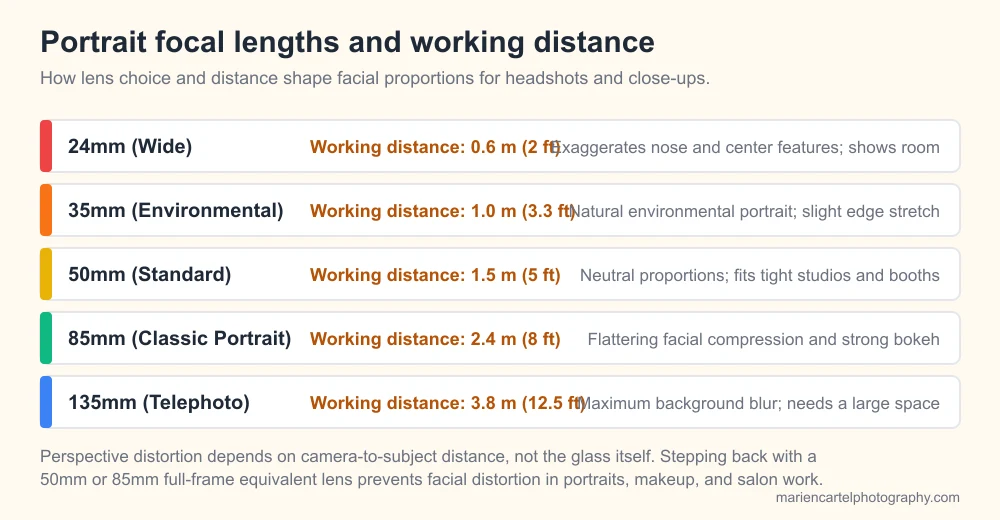
How working distance and focal length (24mm to 135mm) affect facial proportions and background separation.
Real-World Use Cases: Matching Your Camera & Lens to Your Beauty Workflow
| Beauty Use Case | Recommended Focal Length | Aperture & Shutter | Pro Lighting & Setup Tip |
|---|---|---|---|
| Bridal & Client Before/After Stills | 50mm – 85mm equivalent | f/2.8 – f/4, 1/160s | Step back 1.5m–2.2m so nose, jawline, and cheekbones appear in natural proportion |
| Eye & Lip Macro Close-Ups | 60mm – 100mm Macro (or 70–100mm zoom) | f/5.6 – f/8, 1/200s | Stop down to f/5.6+ so both the inner corner and outer wing of eyeliner stay tack-sharp |
| Self-Filmed YouTube & TikTok Tutorials | 24mm – 35mm (wide desk) + 50mm (detail) | f/1.8 – f/2.8, 1/50s (24p) or 1/120s (60p) | Use Sony Product Showcase mode so holding a brush or compact up to the lens never hunts |
| On-Location & Backstage Fashion Gigs | 35mm – 50mm f/1.4–f/1.8 | f/1.8 – f/2.2, Auto ISO | Set custom white balance with an 18% grey card to neutralize mixed hotel/backstage lighting |
Detailed Reviews of the 7 Best Cameras for Makeup Artists
1. Sony Alpha a6400 — Best Overall Mirrorless for Client Stills & Reels
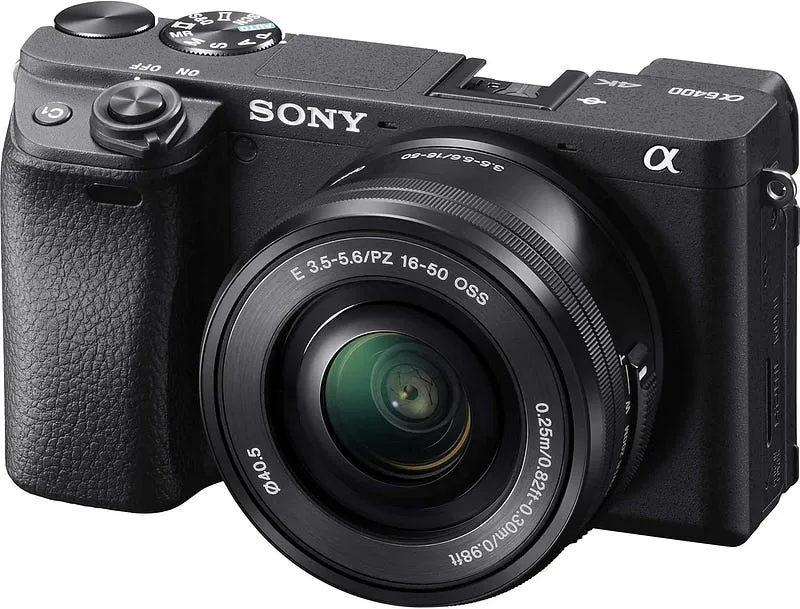
The Sony Alpha a6400 remains one of the most dependable workhorse bodies for working makeup artists because it solves the two biggest problems in beauty photography: missed focus on eyelashes and limited lens choices. Its 24.2-megapixel APS-C sensor uses 425 phase-detection points with Real-Time Eye AF, locking directly onto the client's iris even when their head tilts toward a mirror.
Paired with a Sigma 30mm f/1.4 DC DN (45mm equivalent) or Sigma 56mm f/1.4 DC DN (84mm equivalent), the a6400 delivers creamy background blur that hides cluttered studio shelves while keeping skin texture, lip gloss, and brow strokes razor-sharp. Its 180-degree upward-tilting screen and unlimited 4K recording time also make it easy to record full-length client transformations.
Sony Alpha a6400 — Check Sony Alpha a6400 Price on Amazon
2. Canon PowerShot G7 X Mark III — Best Pocket Camera for Flattering Skin Tones
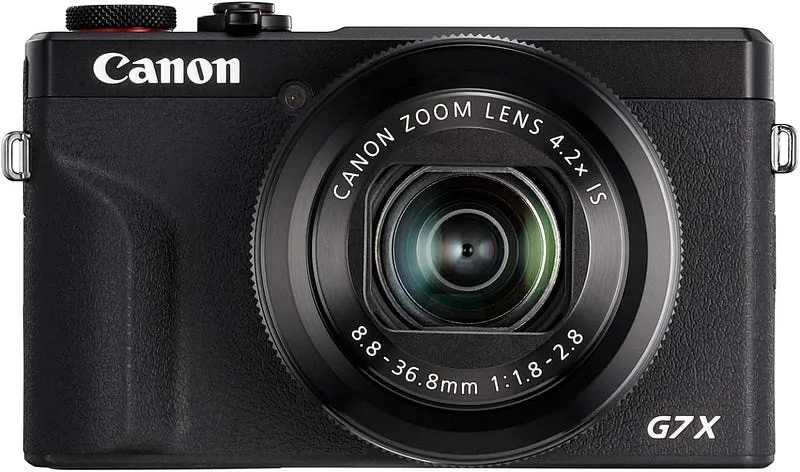
Many beauty creators prefer not to swap lenses between clients. The Canon G7 X Mark III packs a 20.1-megapixel 1-inch stacked CMOS sensor and a built-in 24–100mm equivalent f/1.8–2.8 zoom lens into a body that slips into a makeup kit bag.
What makes the G7 X Mark III a favorite among beauty influencers is the combination of Canon color science and the 70–100mm telephoto end of its zoom lens. Instead of shooting wide at 24mm (which distorts the face), you can step back five feet and zoom to 70mm or 85mm equivalent at f/2.8—producing flattering facial compression and accurate rosy/warm skin undertones straight out of the camera.
Canon G7 X Mark III — Check Canon G7 X Mark III Price on Amazon
3. Canon EOS 90D — Best High-Resolution DSLR for Cropping Macro Eye Details
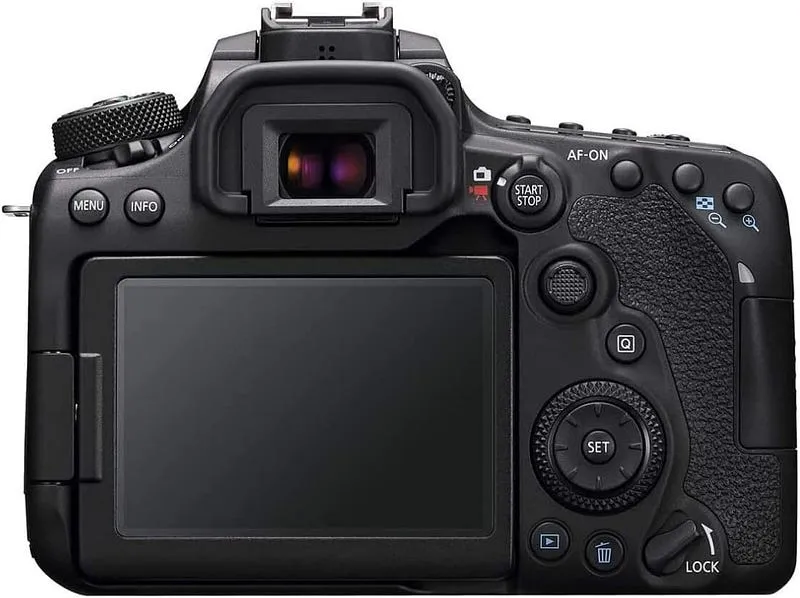
If your portfolio focuses on editorial eye art, cut creases, and micro-detail photography where followers zoom in closely, the Canon EOS 90D provides a 32.5-megapixel APS-C sensor—giving you significantly more cropping headroom than standard 20–24 MP bodies.
In Live View and 4K video mode, Canon's Dual Pixel CMOS AF tracks faces smoothly across the vari-angle touchscreen. Pairing the 90D with the affordable Canon EF 50mm f/1.8 STM (80mm equivalent) or EF-S 60mm f/2.8 Macro USM creates a dedicated studio portrait rig with long optical-viewfinder battery life (rated at 1,300 shots per charge).
Canon EOS 90D — Check Canon EOS 90D Price on Amazon
4. Fujifilm X-T30 — Best Out-of-Camera Color Science & Film Simulations
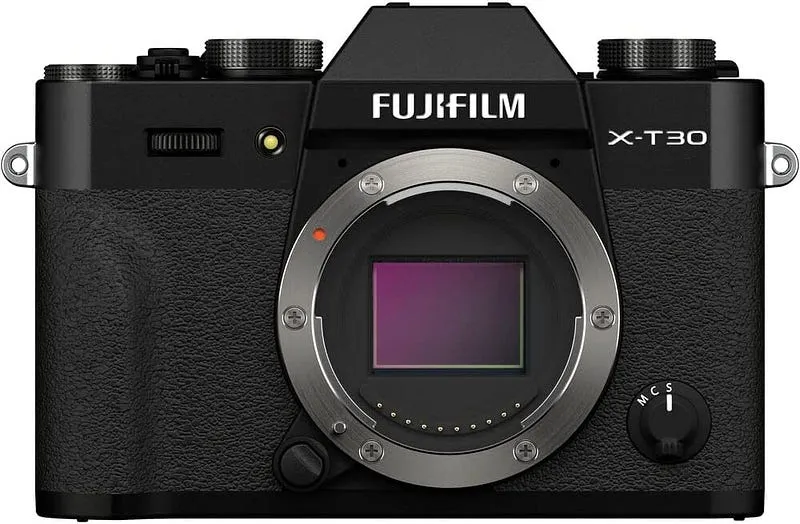
Spending hours in Lightroom correcting yellow or magenta skin casts after every appointment slows down your posting schedule. The Fujifilm X-T30 weighs just 383 grams and uses Fujifilm's 26.1-megapixel X-Trans CMOS 4 sensor alongside built-in film simulation profiles like ASTIA (Soft) and PRO Neg. Std—both specifically tuned for smooth skin-tone roll-off and accurate cosmetics rendering.
Fujifilm X-T30 — Check Fujifilm X-T30 Price on Amazon
5. Sony ZV-1 — Best for Self-Filmed Makeup Tutorials & Product Swatches
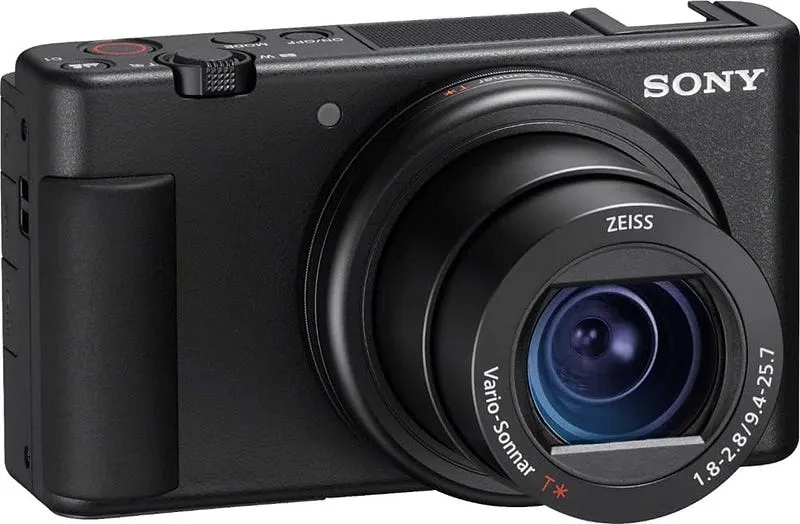
When filming a step-by-step makeup tutorial, holding an eyeliner pencil or foundation bottle up to the lens usually forces a camera to stay stuck focused on your face in the background. The Sony ZV-1 solves this with a dedicated Product Showcase button: the moment you hold a brush or palette in front of the 24–70mm f/1.8–2.8 Zeiss lens, focus snaps to the product immediately, then returns to your eye as soon as you lower your hand.
It also includes a three-capsule directional microphone, a side-flip vari-angle screen, and a built-in ND filter, making it the fastest solo tutorial camera to set up on a vanity desk.
Sony ZV-1 — Check Sony ZV-1 Price on Amazon
6. Fujifilm X-S20 — Best Hybrid for 10-Bit 4:2:2 Studio Video & Stills
For beauty educators selling online masterclasses or filming high-end commercial brand reels, 8-bit video can show blocky banding across smooth forehead and cheek gradients. The Fujifilm X-S20 records internal 10-bit 4:2:2 video (capturing over 1 billion color shades instead of 16.7 million) and adds 5-axis in-body image stabilization rated up to 7 stops for steady handheld B-roll around the styling chair.
Fujifilm X-S20 — Check Fujifilm X-S20 Price on Amazon
7. Canon EOS R50 — Best Entry-Level Mirrorless for New Beauty Creators
The Canon EOS R50 brings Canon's latest DIGIC X processor, uncropped 4K 30p video oversampled from 6K, and a "Close-Up Demo" mode (Canon's version of Product Showcase) into an entry-level RF-mount body. Paired with the inexpensive Canon RF 50mm f/1.8 STM lens, it delivers genuine background blur and flattering portrait proportions at a beginner-friendly price.
Canon EOS R50 — Check Canon EOS R50 Price on Amazon
Studio Lighting & Color Accuracy Rules for Makeup Photography
Even a $2,000 camera will render foundation orange or grey if your lighting has a low Color Rendering Index (CRI). Follow these three studio standards:
- Use CRI 96+ / TLCI 97+ Bi-Color LEDs Set to 5200K–5600K: Cheap ring lights often have a CRI below 85, which spikes green and washes out red/pink lip and blush tones. Use a diffused key panel or octabox rated CRI 96+ at daylight balance (
5400K). - Replace Harsh Ring-Light Catchlights with a Softbox + Clamshell Reflector: Place a diffused key light slightly above eye level at 45 degrees and angle a white bounce card or silver reflector just below chest level to fill under-eye and chin shadows evenly.
- Never Shoot Closer Than 4 Feet (
1.2m) for Full-Face Portraits: Step back 5 to 7 feet and zoom in to50mm–85mmequivalent so ears, cheeks, and nose appear in true human proportion.
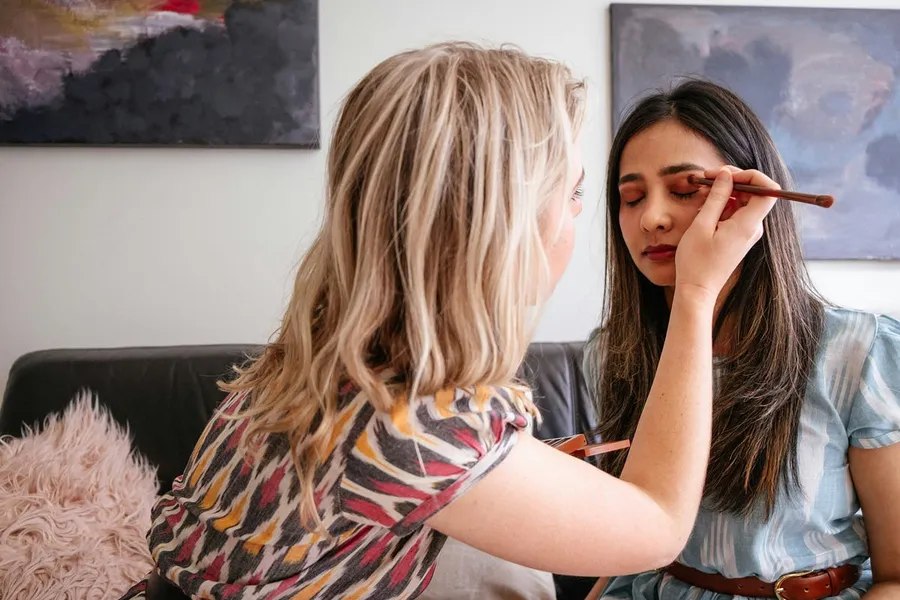
Photo by Johan Mouchet on Unsplash
Frequently Asked Questions
What focal length is best for makeup photography? A 50mm to 85mm full-frame equivalent focal length (which equals 35mm to 56mm on an APS-C camera like the Sony a6400 or Canon R50) is ideal. Wide-angle lenses below 35mm distort facial proportions when used close to the client's chair.
Why does makeup look washed out or different in photos compared to real life? Two culprits cause washed-out makeup photos: harsh direct light bouncing off glossy skin (specular glare) and Auto White Balance shifting under mixed salon bulbs. Lock your white balance to match your key light (typically 5200K–5600K) and diffuse your light through a softbox rather than using bare LED bulbs.
Is Canon or Sony better for makeup artists? Canon cameras (like the G7 X Mark III, EOS R50, and 90D) are widely loved for warm, flattering out-of-camera skin tones with minimal editing. Sony cameras (like the a6400 and ZV-1) lead in eye-tracking autofocus speed, product-showcase focus transitions, and third-party f/1.4 prime lens variety.
Do I need a macro lens for eyeshadow and lip art photos? If you regularly post tight crops of single eyes, intricate liner, or lip texture, a 60mm to 90mm macro lens lets you focus within inches of the skin at f/5.6–f/8 for edge-to-edge sharpness. For full-face before-and-after shots, a standard 50mm or 85mm f/1.8 lens is all you need.
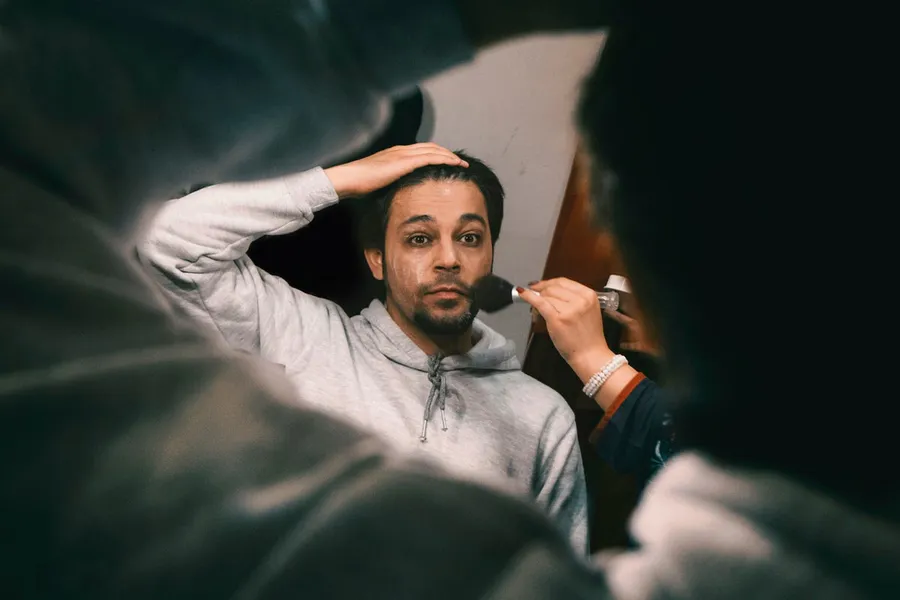
Photo by hessam nabavi on Unsplash
Explore What Are Some Of The Best Travel Photography Tips alongside Best Full-Frame Camera for Beginners and the lens mount checker.
Camera & Lens Settings by Real-World Use Case
Match your focal length, aperture, shutter speed, and lighting modifier to the exact environment you shoot in.
Makeup Artists (MUA) & Beauty Tutorials
- Best Body:
- Sony Alpha a6400 / Canon G7 X Mark III
- Ideal Lens:
- Sigma 56mm f/1.4 DC DN (APS-C) or 50mm–85mm f/1.8 (Full Frame)
- Aperture & Shutter:
- f/2.8 – f/4 for full-face sharpness; f/5.6 for macro eye/lip close-ups · 1/125s for stills; 1/50s (24p) or 1/120s (60p) for video tutorials
- Room Distance:
- 1.2m – 2.2m (4 to 7 ft)
Tattoo Artists & Micro-Realism Portfolios
- Best Body:
- Sony Alpha a7 III / Fujifilm X-T4
- Ideal Lens:
- 90mm f/2.8 Macro (detail) or 50mm f/1.8 (sleeves & back pieces)
- Aperture & Shutter:
- f/5.6 – f/8 (keeps curved forearms and calves sharp edge-to-edge) · 1/125s – 1/200s handheld (or 1/60s on tripod)
- Room Distance:
- 0.4m – 1.5m (1.5 to 5 ft)
Newborn, Baby, Engagement & Family Portraits
- Best Body:
- Canon EOS R6 Mark II / Sony a7 IV / Nikon Z6 III
- Ideal Lens:
- 35mm f/1.8 (in-home lifestyle & family groups) + 50mm/85mm f/1.8 (tight portraits)
- Aperture & Shutter:
- f/2.0 – f/2.8 (single baby/couple); f/4 – f/5.6 (family of 4+ so every face is sharp) · 1/200s (newborn) / 1/500s – 1/1000s (running toddlers & kids)
- Room Distance:
- 1.0m – 4.0m

Written by
Marien CartelMarien Cartel runs Marien Cartel Photography, a camera and lens buying-guide site, and photographs the gear shown on it.
Related Guides
Best Camera for Tattoo Artists 2026: 4 Picks + Zero-Glare Polarizer Setup
Compare the 4 best cameras for tattoo artists (Sony a7 III, Fujifilm X-T4, Nikon Z6 II, Canon Rebel T7) plus cross-polarized CPL lighting for zero skin glare.
7 Best Sony Camera for Wedding Videography: (2026 Guide & Reviews)
Best Sony Camera for Wedding Videography: a side-by-side look at Sony A1, Sony a7 IV and Sony A7S III, with strengths, trade-offs and buying advice.
Top 10 Best Cameras For Fashion Photography in 2026
Top 10 Best Cameras For Fashion Photography in 2026: Canon 5D Mark IV, Nikon Z6 II and Canon EOS 90D compared on features, price and who each one suits.
Best Camera for Walking Videos (2026): Hero13 vs Osmo Pocket 3
GoPro Hero13 Black, DJI Osmo Pocket 3 or Sony ZV-1 II for walking videos? A quick verdict by terrain, stabilization and whether you talk to the camera.
Best Camera for Professional Photography in 2026
Comparing Canon EOS R5, Nikon Z7 II and Fujifilm X-T4 for Camera for Professional Photography in 2026 — sensor specs, autofocus, pricing.
Best Camera for Sports Photography Beginners (2026)
Canon EOS R10, Sony A6400, Nikon Z50 or Fujifilm X-S20 for a first sports camera? Burst rate, autofocus and price compared, with a quick verdict.