Camera Lenses Explained: What All the Numbers and Letters Mean
As an Amazon Associate we earn from qualifying purchases. Some links in this guide are affiliate links, see our affiliate disclosure for details.
How do you read a camera lens name?
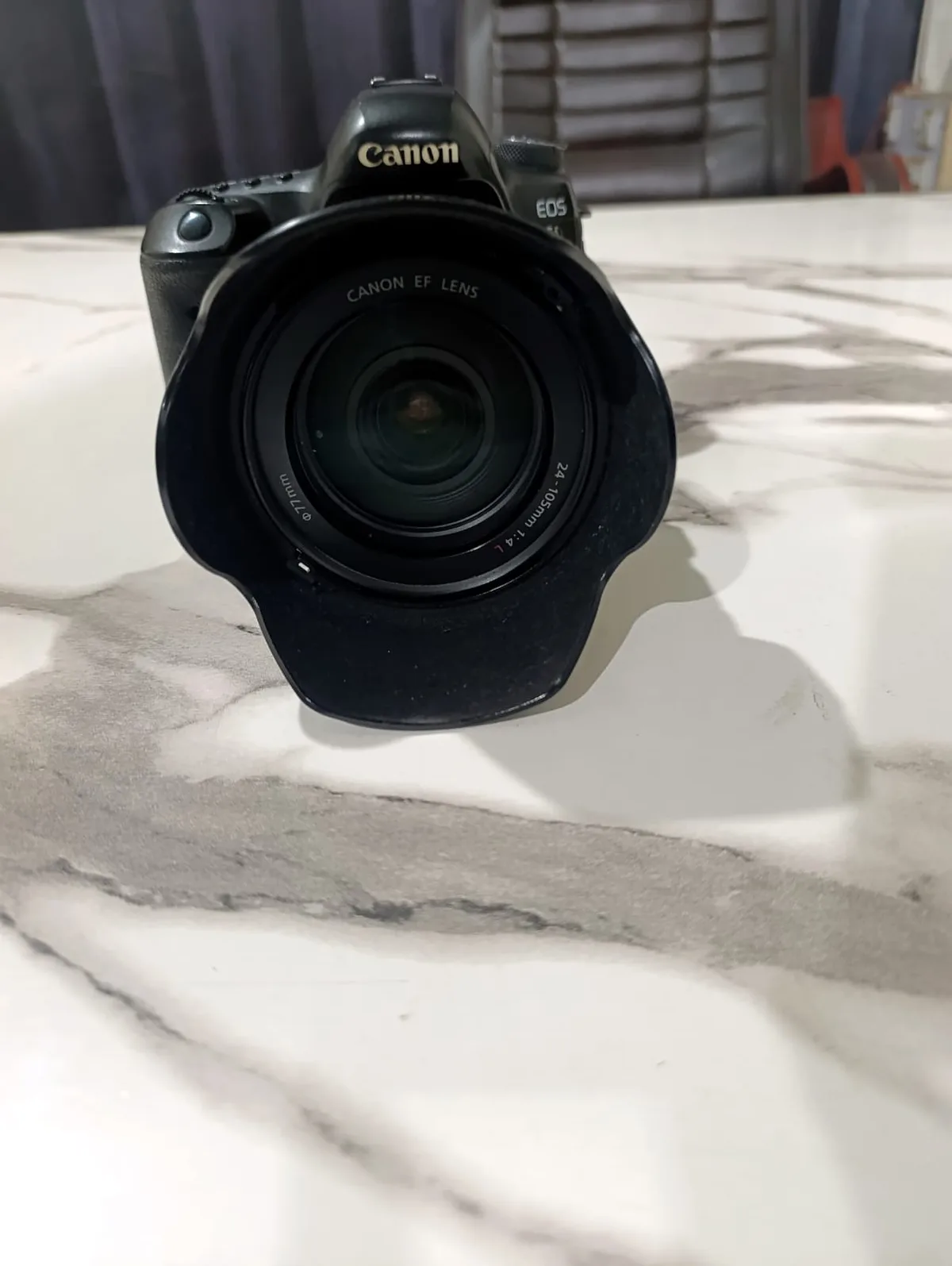
Below is a breakdown of a real lens name, explaining focal length in millimetres, the f-number aperture, constant versus variable aperture, crop factor, prime versus zoom and the letters each brand uses.
That is eight pieces of information crammed into one line, and if you're new to this, not one of them is obvious.
By the end you'll be able to read any lens name on any brand and know exactly what you're looking at.
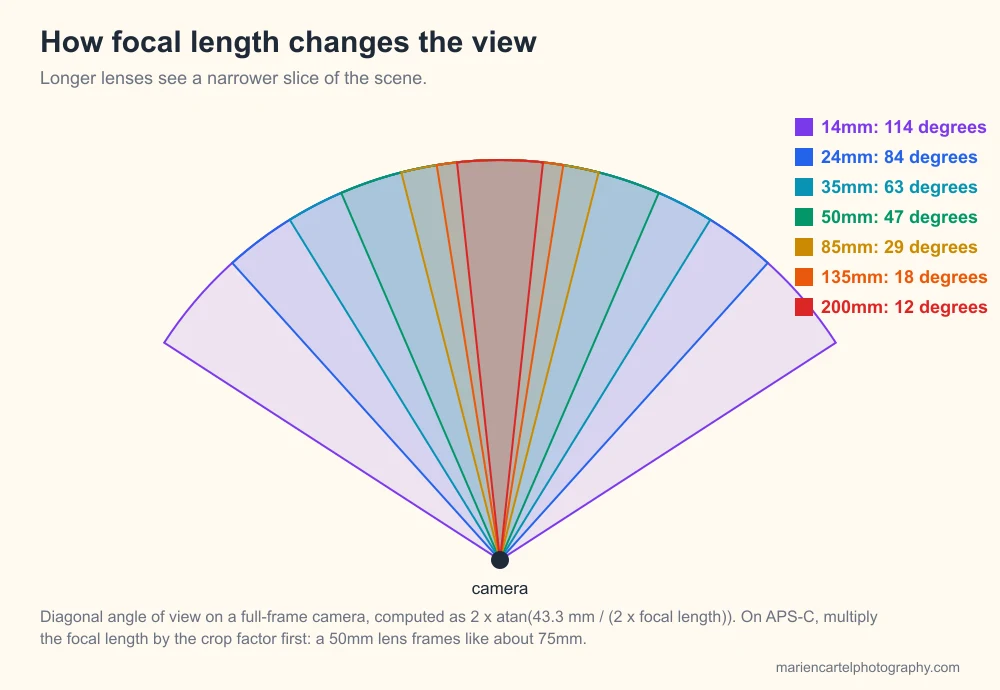
Angle of view by focal length on a full-frame camera. Original diagram for this site.
Decoding a real lens name
| Part | What it means |
|---|---|
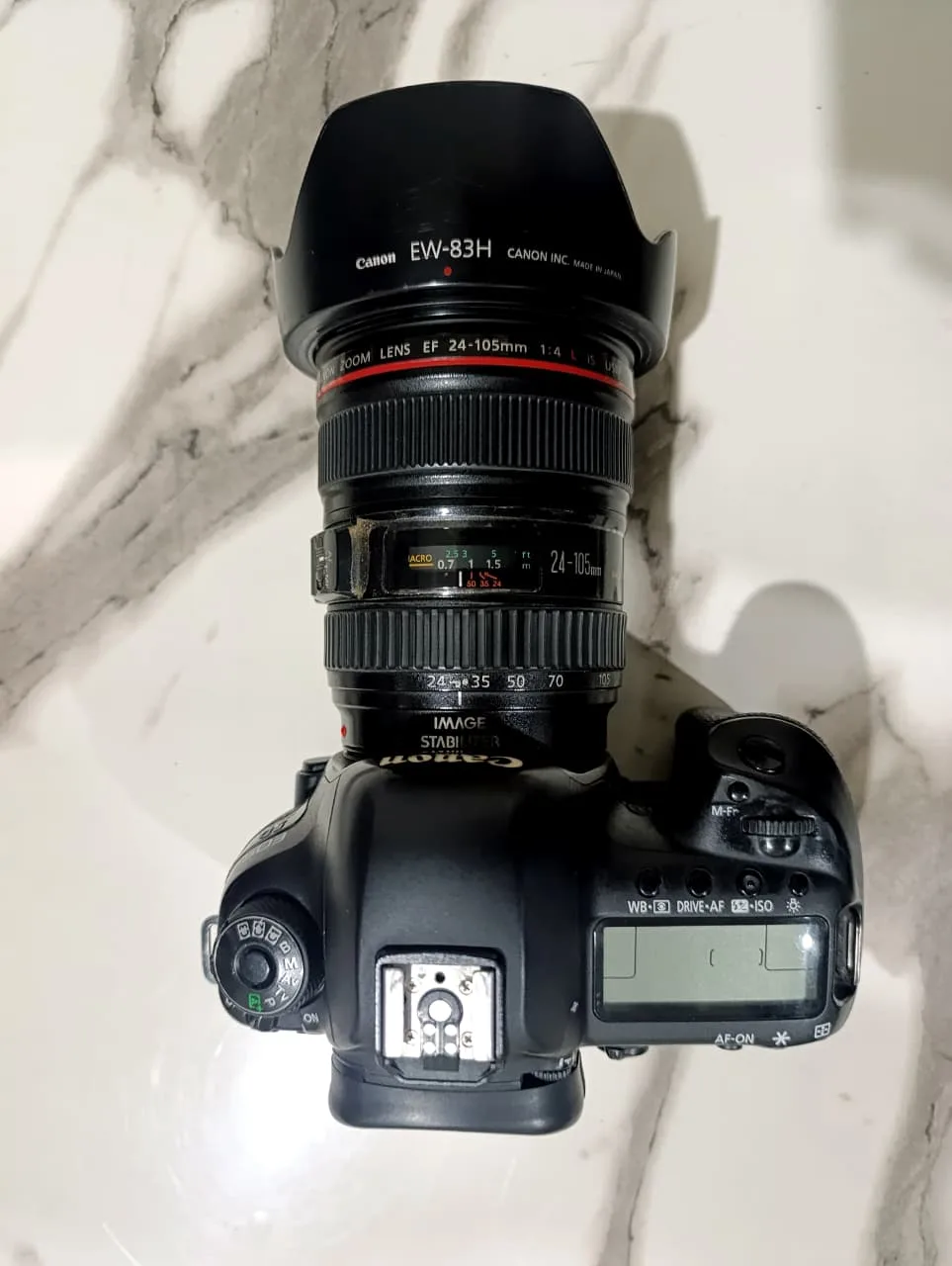
| EF | The mount — Canon's full-frame DSLR fitting |
| 24–105mm | Focal length range: zooms from 24mm wide to 105mm short telephoto |
| f/4 | Maximum aperture, and it stays f/4 across the whole zoom range |
| L | Canon's professional line (the red ring on the barrel) |
| IS | Image Stabilizer — counteracts hand shake |
| USM | Ultrasonic Motor, the type of autofocus motor |
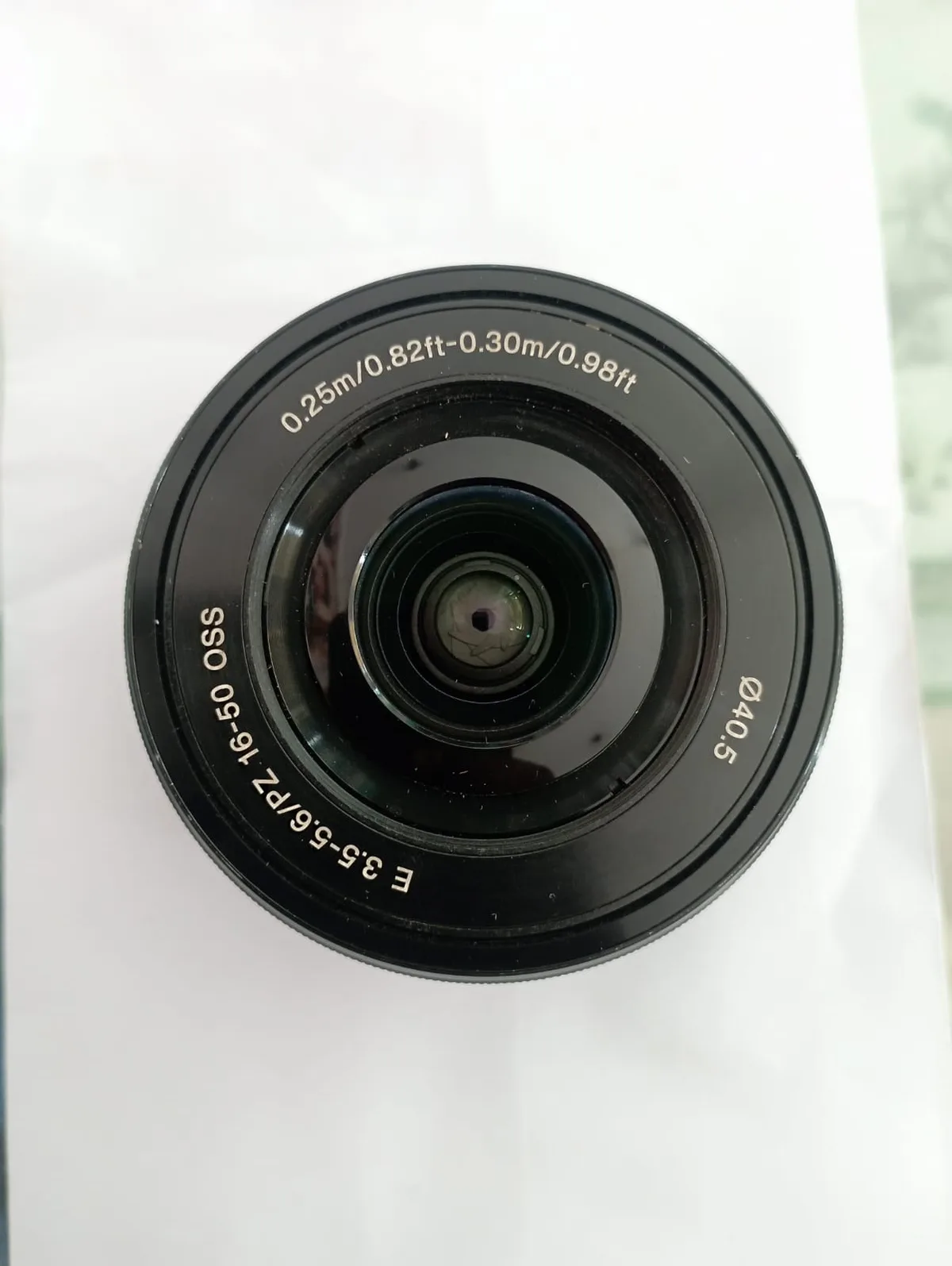
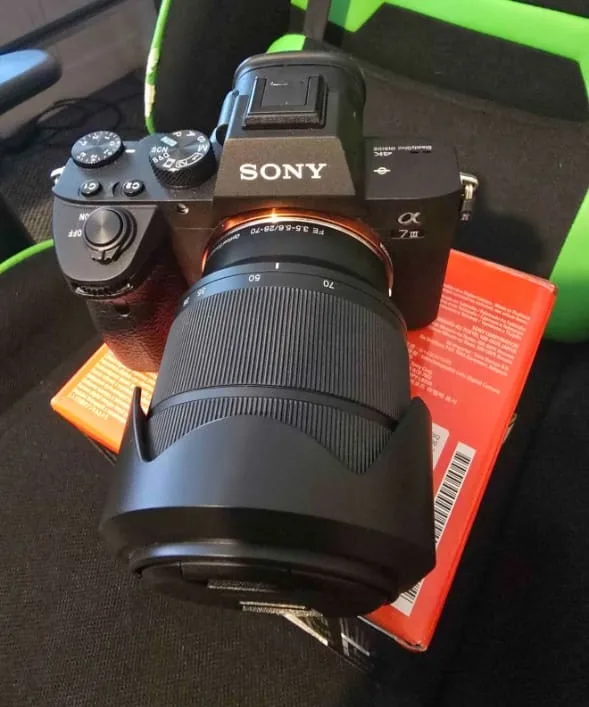
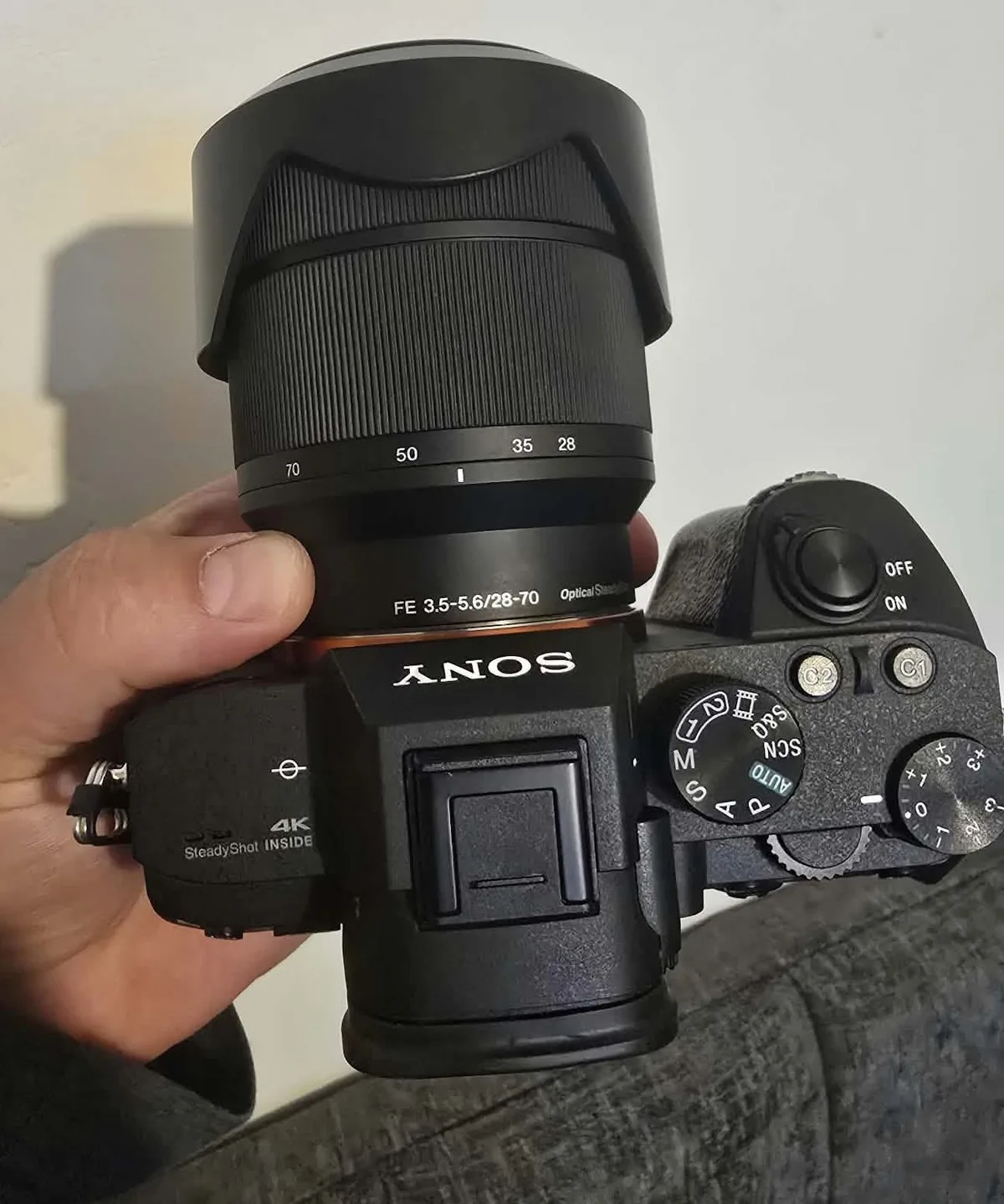
Same idea, three differences. FE means full-frame E-mount. f/3.5–5.6 is a variable aperture — f/3.5 at the wide end, dropping to f/5.6 when zoomed in, which matters more than it sounds. OSS is Sony's name for stabilisation.
And a Nikon: NIKKOR Z 24–120mm f/4 S. Z is the mount, f/4 is constant, and S marks Nikon's premium line.
Once you can see the pattern — mount, focal length, aperture, quality tier, stabilisation, motor — every lens name in every catalogue becomes readable.
Focal length: the millimetre number
Focal length decides how much of the scene fits in the frame. Lower numbers see wider. Higher numbers see narrower and magnify more.
A single number (50mm) is a prime — it doesn't zoom. A range (24–105mm) is a zoom.
| Focal length | What it's for |
|---|---|
| 14–24mm | Interiors, architecture, astrophotography, tight spaces |
| 24–35mm | Landscape, street, environmental portraits |
| 35mm | Documentary and walk-around — close to how you see |
| 50mm | The all-rounder. Natural perspective, cheap and sharp |
| 85mm | Classic portraits. Flatters faces, separates from background |
| 70–200mm | Events, sport, portraits from a distance |
| 300mm and up | Wildlife, birds, stadium sport |
| 90–105mm macro | True 1:1 close-up work |
The one caveat: these are full-frame numbers. On a smaller sensor the same lens frames tighter — a 50mm on APS-C sees roughly what a 75mm sees on full frame. That's crop factor, and it's covered below.
Aperture: the f-number
The f-number is how wide the lens can open. A smaller number means a wider opening and more light.
That feels backwards until you know where the number comes from: it's the focal length divided by the diameter of the opening. A bigger opening gives you a smaller fraction. f/2 is a wide opening; f/16 is a narrow one.
Each full step halves or doubles the light:
f/1.4 · f/2 · f/2.8 · f/4 · f/5.6 · f/8 · f/11 · f/16
Two things follow from a wide aperture. You can shoot in less light without raising ISO, and you get shallower depth of field — the blurred background people buy fast lenses for.
Constant vs variable aperture
This is the specification most worth understanding, because it's where zoom lenses differ most in price.
- Constant (f/2.8 or f/4 throughout) — the aperture doesn't change as you zoom. Predictable exposure, and more light at the long end. Heavier, pricier.
- Variable (f/3.5–5.6) — the maximum aperture shrinks as you zoom in. Lighter, cheaper, and you lose light exactly when you're zoomed in and need it most.
Almost every kit lens is variable.
Is f/2.8 worth it over f/4? One stop of light, for roughly double the weight and price. For weddings and events, yes. For landscape on a tripod, no — the f/4 is a common walk-around choice for that reason. The options are compared in the best zoom lens for Canon full frame.
Crop factor: why 50mm isn't always 50mm
Sensor size changes what a lens sees. Multiply the focal length by the crop factor to get the full-frame equivalent:
| Sensor | Crop factor | A 50mm lens frames like |
|---|---|---|
| Full frame | 1× | 50mm |
| APS-C (Sony, Nikon, Fuji) | 1.5× | 75mm |
| APS-C (Canon) | 1.6× | 80mm |
| Micro Four Thirds | 2× | 100mm |
This cuts both ways. It's a nuisance for wide-angle work — getting a true wide view on APS-C needs a genuinely short lens. It's an advantage for wildlife and sport, because a 400mm lens on APS-C reaches like a 600mm, and long lenses are where the money goes.
The aperture does not change. An f/2.8 lens is f/2.8 on any sensor; it gathers the same light. Only the framing changes.
Prime or zoom?
A prime has one focal length. A zoom covers a range. The trade is real and it goes both ways.
Primes are sharper for the money, lighter for the aperture, and usually much faster — an f/1.8 prime often costs less than a variable-aperture zoom. The catch is that you move instead of zooming, which sometimes isn't possible.
Zooms cover situations you can't predict. On a trip, one zoom beats three primes, because the lens that's fitted is the one you can shoot with.
The letters, by brand
Every manufacturer has its own shorthand.
| Brand | Letters you'll see |
|---|---|
| Canon | RF / EF = full-frame mounts · RF-S / EF-S = APS-C only · L = professional · IS = stabilised · USM / STM = autofocus motor (STM is quieter, better for video) |
| Nikon | Z = mirrorless mount · F = DSLR mount · DX = APS-C · FX = full frame · S = premium line · VR = stabilised · PF = lightweight telephoto design · ED = low-dispersion glass |
| Sony | FE = full-frame E-mount · E = APS-C · GM = G Master, the top line · G = high grade · OSS = stabilised |
| Fujifilm | XF = premium X-mount · XC = budget X-mount · GF = medium format · R = has an aperture ring · WR = weather resistant · OIS = stabilised |
| Panasonic | S = full frame · S PRO = premium · O.I.S. = stabilised · ASPH = aspherical elements |
| Sigma | Art = optical quality first · Contemporary = balanced, compact · Sports = rugged telephoto · DG = full frame · DN = mirrorless-only design |
| Tamron | Di III = mirrorless · Di II = APS-C · VC = stabilised · VXD / RXD = autofocus motor types |
Two practical notes buried in that table. An APS-C-only lens (EF-S, RF-S, DX, E, XC) will either not mount or will heavily crop on a full-frame body — check this before buying used. And R on a Fujifilm lens means a physical aperture ring, which is half the reason people buy into Fuji.
Are third-party lenses as good?
Yes, often, and this is where the real value sits. Sigma's Art line and Tamron's f/2.8 zooms regularly match or beat the camera maker's own optics at a lower price, and on Sony E-mount in particular the third-party selection is a genuine reason to choose the system.
What you occasionally give up: autofocus that's a fraction slower to acquire, and firmware that lags a new camera body by a few months.
What to check before you buy
- The mount. Obvious, and still the most common expensive mistake. Canon RF, Canon EF, Nikon Z, Nikon F, Sony E, Fuji X, L-mount, Micro Four Thirds — none are interchangeable without an adapter.
- Full-frame or APS-C. An APS-C lens on a full-frame body is a problem. Full-frame glass on APS-C is fine — it just frames tighter.
- Filter thread size. Written on the front as ⌀67, ⌀77 and so on. If you own filters, matching thread sizes saves buying them twice.
- Minimum focus distance. Decides how close you can get. A lens that won't focus nearer than 1.5m is no use for detail work.
- Weight. The most underrated specification on the list.
Frequently asked questions
What do the numbers on a lens mean? The millimetre number is focal length — how wide or narrow the view is. The f-number is the maximum aperture — how much light it can let in, where a smaller number means more light.
Is a lower f-number better? It's more capable in low light and gives shallower depth of field, but it costs weight and money. f/1.8 is plenty for most people; f/1.2 is a specialist purchase.
What does 24-105mm mean? It's a zoom that goes from 24mm (wide) to 105mm (short telephoto), covering most everyday shooting in one lens.
Does a 50mm lens stay 50mm on a crop sensor? The lens doesn't change, but the framing does — a 50mm on APS-C shows roughly what a 75mm shows on full frame. The aperture is unaffected.
Can I use a full-frame lens on a crop-sensor camera? Yes, and it works normally with a tighter field of view. The reverse — an APS-C lens on a full-frame body — either won't mount or forces a heavy crop.
What's the difference between IS, VR, OSS and OIS? Nothing functional. They're each brand's name for image stabilisation: Canon calls it IS, Nikon VR, Sony OSS, Fujifilm and Panasonic OIS.
Should I buy a prime or a zoom first? A zoom, so you learn which focal lengths you actually use. Then buy a fast prime at the one you keep coming back to.
Where to go next
If you now know what you're looking for, the buying guides are where the specific recommendations live — walk-around zooms, 85mm portrait lenses for Canon, Fujifilm primes and macro lenses for Canon among them.
Camera & Lens Settings by Real-World Use Case
Match your focal length, aperture, shutter speed, and lighting modifier to the exact environment you shoot in.
Tattoo Artists & Micro-Realism Portfolios
- Best Body:
- Sony Alpha a7 III / Fujifilm X-T4
- Ideal Lens:
- 90mm f/2.8 Macro (detail) or 50mm f/1.8 (sleeves & back pieces)
- Aperture & Shutter:
- f/5.6 – f/8 (keeps curved forearms and calves sharp edge-to-edge) · 1/125s – 1/200s handheld (or 1/60s on tripod)
- Room Distance:
- 0.4m – 1.5m (1.5 to 5 ft)
Barbershops, Hairstylists & Color Salons
- Best Body:
- Sony a7 IV / Canon EOS R6 Mark II
- Ideal Lens:
- 50mm f/1.8 (tight stations) or 85mm f/1.8 (spacious salons)
- Aperture & Shutter:
- f/1.8 – f/2.8 (blurs background chairs while keeping the lineup tack-sharp) · 1/160s – 1/250s (freezes subtle head movement in the chair)
- Room Distance:
- 1.5m – 2.4m (5 to 8 ft from the styling chair)
Makeup Artists (MUA) & Beauty Tutorials
- Best Body:
- Sony Alpha a6400 / Canon G7 X Mark III
- Ideal Lens:
- Sigma 56mm f/1.4 DC DN (APS-C) or 50mm–85mm f/1.8 (Full Frame)
- Aperture & Shutter:
- f/2.8 – f/4 for full-face sharpness; f/5.6 for macro eye/lip close-ups · 1/125s for stills; 1/50s (24p) or 1/120s (60p) for video tutorials
- Room Distance:
- 1.2m – 2.2m (4 to 7 ft)

Written by
Marien CartelMarien Cartel runs Marien Cartel Photography, a camera and lens buying-guide site, and photographs the gear shown on it.
Related Guides
Aperture, Shutter Speed and ISO: The Exposure Triangle, Properly Explained
The triangle is taught as three equal controls. It isn't — each one has a side effect, and the side effect matters more than the brightness. Here's how.
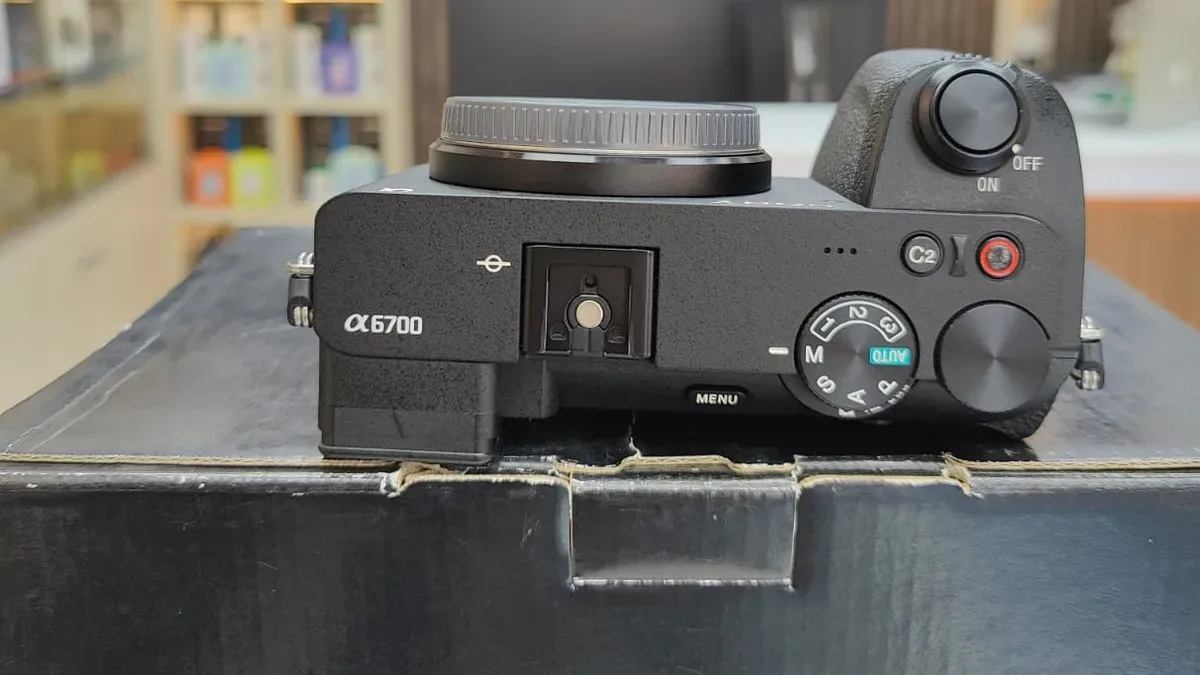
Which Camera Shooting Mode Should You Use? Auto, P, A, S and M Explained
Auto, Program, Aperture Priority, Shutter Priority and Manual: what each mode controls, what you still set yourself, and how to choose one for a shot.
Do You Need a Telephoto Lens? Telephoto Lenses Explained
What counts as telephoto, why it isn't the same thing as a zoom, the three costs nobody mentions, and the lens design that halves the weight.
How to Choose a Lens for Wildlife and Bird Photography
Choosing a lens for wildlife and bird photography comes down to focal length, maximum aperture, stabilization and weight. Here's how each one trades off.
Prime vs Zoom Lenses: Which Should You Actually Buy First
This breakdown challenges the common advice to simply buy a prime. It describes a buying mistake that cost two lens purchases and then gives the order in which.
Why Are My Photos Blurry? How to Diagnose It From the Photo
Four different causes produce four different kinds of blur. Work out which one you have by looking at the picture, then fix that one — not all of them.