Hasselblad XCD 75mm f/3.4 P Review: Prime & Zoom Options Compared
As an Amazon Associate we earn from qualifying purchases. Some links in this guide are affiliate links, see our affiliate disclosure for details.
Is the Hasselblad XCD 75mm f/3.4 P worth buying?
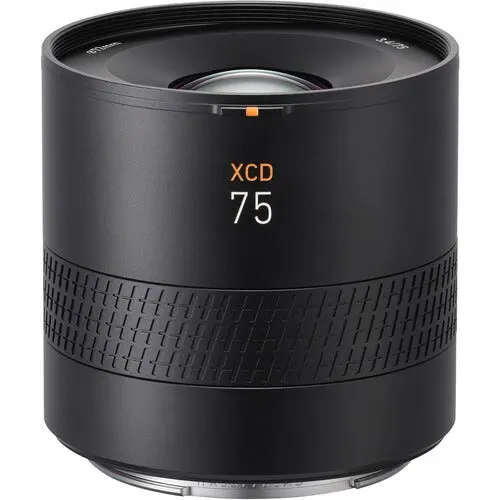
The Hasselblad XCD 75mm f/3.4 P is worth buying for medium-format shooters who want a compact, light lens with a natural "normal" field of view and who put image quality ahead of a wide aperture. It weighs about 398 g with a 72 mm filter thread, has a leaf shutter and is sold for the X system. It is less suited to buyers who want extreme background blur or close focusing, and it is a premium-priced lens, so compare it with the alternatives below first.
Key specifications
| Spec | XCD 75mm f/3.4 P |
|---|---|
| Focal length | 75mm (about 59mm in 35mm-format terms on the 44 x 33 mm sensor) |
| Maximum aperture | f/3.4, minimum f/32 |
| Weight | About 398 g |
| Filter thread | 72 mm |
| Minimum focus distance | 55 cm |
| Maximum magnification | 0.17x |
| Shutter | Leaf shutter, up to 1/2000 s, flash sync at all speeds |
Sources: Adorama's listing and Photo Specialist's listing. Weights and dimensions can differ slightly between retailers, so check Hasselblad's page for current numbers.
Build quality and handling

Photo by Harry Dona on Unsplash
At about 398 g, the lens is light for medium format, which makes a large difference on a body such as the X2D 100C. The leaf shutter is built into the lens, which allows flash sync at every speed, a practical advantage for portraits and studio work with strobes.
Image quality and character
A 75mm lens on the 44 x 33 mm sensor frames like a normal lens. It is a natural choice for portraits, street scenes, travel and environmental work, where the subject sits in context rather than isolated. The f/3.4 maximum aperture gives gentler background separation than a full-frame f/1.4 lens, but medium-format sensors keep depth of field thin enough for pleasing subject isolation at moderate distances.

Photo by Calvin Chai on Unsplash
What are the limits?
- Aperture. f/3.4 is slower than some alternatives, so low-light work relies on the sensor and stabilization.
- Close focus. A 55 cm minimum focus distance and a 0.17x magnification make it unsuited to close-up work.
- Price. Hasselblad lenses cost more than many alternatives; check current pricing.
- System lock-in. The lens fits Hasselblad's X system, not other mounts.

Photo by Mateusz Wysocki on Unsplash
Who should buy it?
- Portrait and street shooters who want a light normal lens.
- Travel photographers with an X2D who want to save weight.
- Studio shooters who benefit from leaf-shutter flash sync.
Anyone who wants shallow depth of field above all else may prefer a faster lens in the same system. The guides to the best lenses for the Hasselblad X2D 100C and the comparison of the Hasselblad X2D and Fujifilm GFX 100 II give more context.
Frequently asked questions
Does the lens work on non-Hasselblad cameras? It is made for the Hasselblad X system. Check the maker's page for compatible bodies.
What is a leaf shutter? A shutter built into the lens that allows flash sync at all shutter speeds, which suits studio and outdoor fill-flash work.
Is it sharp? Check independent tests for sharpness and corner performance at the aperture you plan to use, because a 100-megapixel sensor shows lens weaknesses.
Is it good for portraits? Yes. The roughly 59mm-equivalent view is a natural portrait and environmental-portrait length, though the aperture limits extreme blur.
Camera & Lens Settings by Real-World Use Case
Match your focal length, aperture, shutter speed, and lighting modifier to the exact environment you shoot in.
YouTube Talking-Head, Podcasting & Desk Streaming
- Best Body:
- Sony ZV-E10 II / Sony a6700 / Canon EOS R50
- Ideal Lens:
- Sigma 16mm f/1.4 DC DN (APS-C) or 24mm f/1.8 (Full Frame)
- Aperture & Shutter:
- f/1.4 – f/2.0 (separates speaker from a close desk wall within 4 feet) · 1/50s (for 24fps) or 1/60s (for 30fps) — 180-degree shutter rule
- Room Distance:
- 0.8m – 1.4m (2.5 to 4.5 ft desk arm mount)
Wildlife, Safari, Whale Watching & Birds in Flight
- Best Body:
- Canon EOS R7 / Nikon Z8 / Sony a6700 / OM System OM-1 Mark II
- Ideal Lens:
- 100–400mm, 150–600mm, or Nikon Z 180–600mm f/5.6–6.3 VR
- Aperture & Shutter:
- f/5.6 – f/8 (wide open on super-telephotos for maximum shutter speed) · 1/1000s (whales/bears from a moving boat) to 1/2000s – 1/3200s (birds in flight)
- Room Distance:
- 10m – 80m+
Tattoo Artists & Micro-Realism Portfolios
- Best Body:
- Sony Alpha a7 III / Fujifilm X-T4
- Ideal Lens:
- 90mm f/2.8 Macro (detail) or 50mm f/1.8 (sleeves & back pieces)
- Aperture & Shutter:
- f/5.6 – f/8 (keeps curved forearms and calves sharp edge-to-edge) · 1/125s – 1/200s handheld (or 1/60s on tripod)
- Room Distance:
- 0.4m – 1.5m (1.5 to 5 ft)

Written by
Marien CartelMarien Cartel runs Marien Cartel Photography, a camera and lens buying-guide site, and photographs the gear shown on it.
Related Guides
Best Lenses for Interior Photography: Prime & Zoom Options Compared
Best Lenses for Interior Photography: Canon R6 Mark II and Canon EOS R6 Mark II compared on features, price and who each one suits.
Best Lenses for Canon EOS C80: Prime & Zoom Options Compared
Best Lenses for Canon EOS C80: Canon RF 35mm f/1.4 L and Canon RF 50mm f/1.2L USM compared on features, price and who each one suits.

Best Lenses for Safari Photography: Prime & Zoom Options Compared
Best Lenses for Safari Photography — a practical buying guide covering what matters, common mistakes and what to buy.

Best Lens for Landscape Photography: Prime & Zoom Options Compared
Comparing Canon 16–35mm f/4L IS USM and Sony, that 16–35mm f/2.8 GM for Lens for Landscape Photography — sensor specs, autofocus, pricing.

Best Camera Lens for Everyday Use: Prime & Zoom Options Compared
Compare the best everyday camera lenses—from 35mm f/1.4 and 50mm f/1.8 primes to versatile 24-70mm f/2.8 standard zooms for street, travel, and family photos.
Best Lenses for Canon EOS R5: Prime & Zoom Options Compared
Best Lenses for Canon EOS R5 — a practical buying guide covering what matters, common mistakes and what to buy.