Best Lenses for Canon EOS C50 (2026): CN-E 18-80 T4.4 and More
As an Amazon Associate we earn from qualifying purchases. Some links in this guide are affiliate links, see our affiliate disclosure for details.
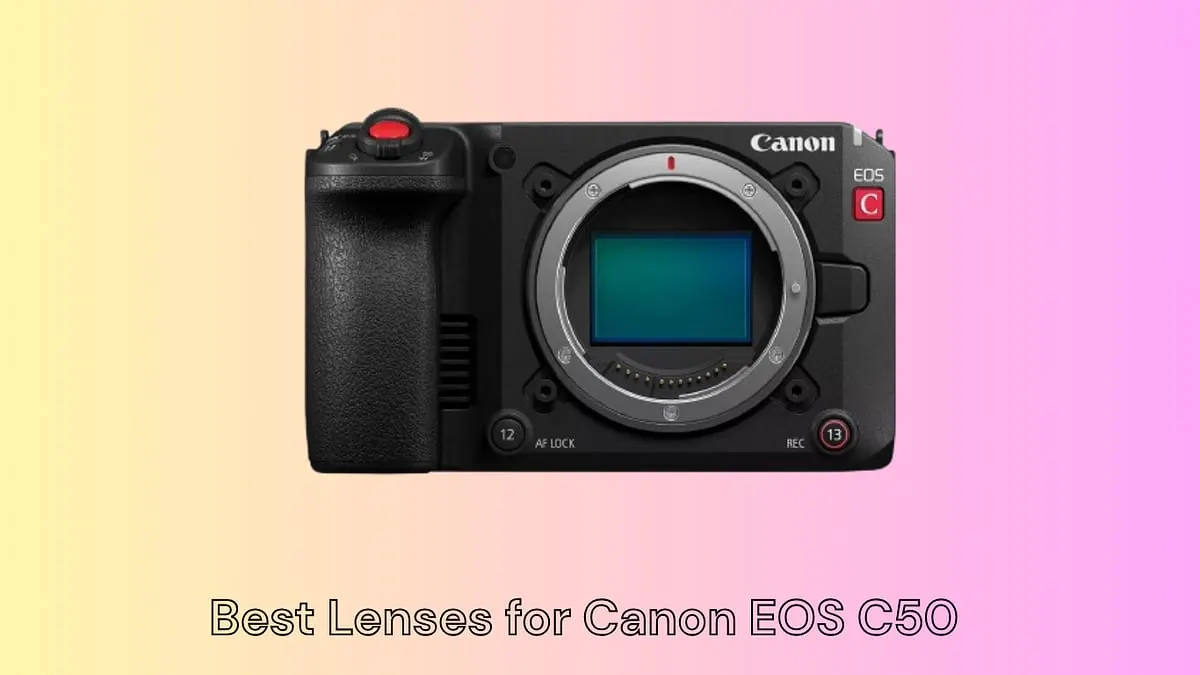
The Canon EOS C50 is a cinema camera, so lens choice is about workflow as much as image quality: a servo zoom for solo shooters, a fast lens for low light, and a cine prime or two for a deliberate look. Adapters open up many EF lenses on the RF mount.
This guide covers seven lenses from a cine servo zoom to RF L glass. The table gives the short version, and the sections below explain each pick.
Quick verdict
| Your situation | Pick | Why |
|---|---|---|
| A reliable all-round cine zoom | Canon CN-E 18–80mm T4.4 L | Integrated servo zoom, optical stabilization and parfocal design, though not the fastest at T4.4 |
| Low light and run-and-gun work | Sigma 18–35mm f/1.8 DC HSM Art | f/1.8 aperture; adapted EF lens that keeps autofocus |
| A cine prime | Canon CN-E Prime 35mm T1.5 | Fast cine prime with a T1.5 aperture |
| A full-frame cine lens | Meike 50mm T2.1 Full Frame Cine Lens | A full-frame cine lens |
| A fast standard zoom | Canon 24–70mm f/2.8 L II | Constant f/2.8, used on the C50 through an adapter |
| A native wide zoom | Canon RF 15–35mm f/2.8 L IS USM | RF-mount wide zoom with image stabilization |
| A native fast prime | Canon RF 50mm f/1.2 L USM | RF-mount f/1.2 prime for very shallow depth of field |
1. The Workhorse & Foundation: Canon CN-E 18–80mm T4.4 L
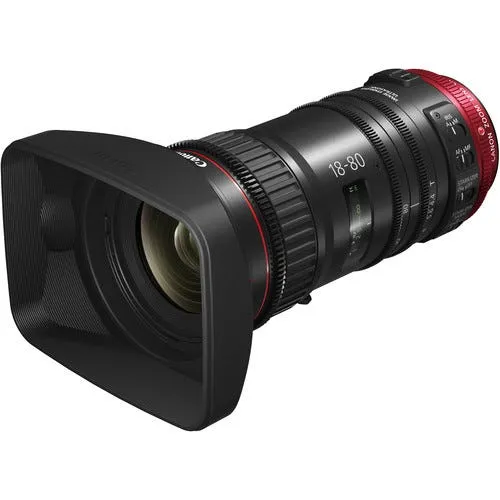
The integrated servo grip allows smooth zoom shots, for example during food plating sequences, which is difficult with a manual zoom ring. This lens doesn’t add “character”; it adds reliability, which is the most valuable character trait on a paid shoot.
Pros:
- Built for the Craft: Parfocal, constant T-stop, geared rings for follow focus. It makes you work like a cinematographer.
- Integrated Servo Zoom: A game-changer for solo shooters. Smooth, slow zooms are possible with one hand.
- Optical Stabilization: Invaluable for handheld or bumpy slider shots.
- Sharp & Neutral: Provides a clean, professional look that’s a perfect starting point for grading.
Cons:
- Price: It’s a significant investment, often costing more than the C50 body itself.
- Weight & Size: It balances well on the camera but adds considerable bulk to your kit.
- T4.4 Aperture: Not the fastest. You’ll need light or higher ISO in low-light situations.
- “Character-Lite”: It’s almost too perfect sometimes, lacking the distinct flair of older glass.
2. The Low-Light Magician: Sigma 18–35mm f/1.8 DC HSM ART
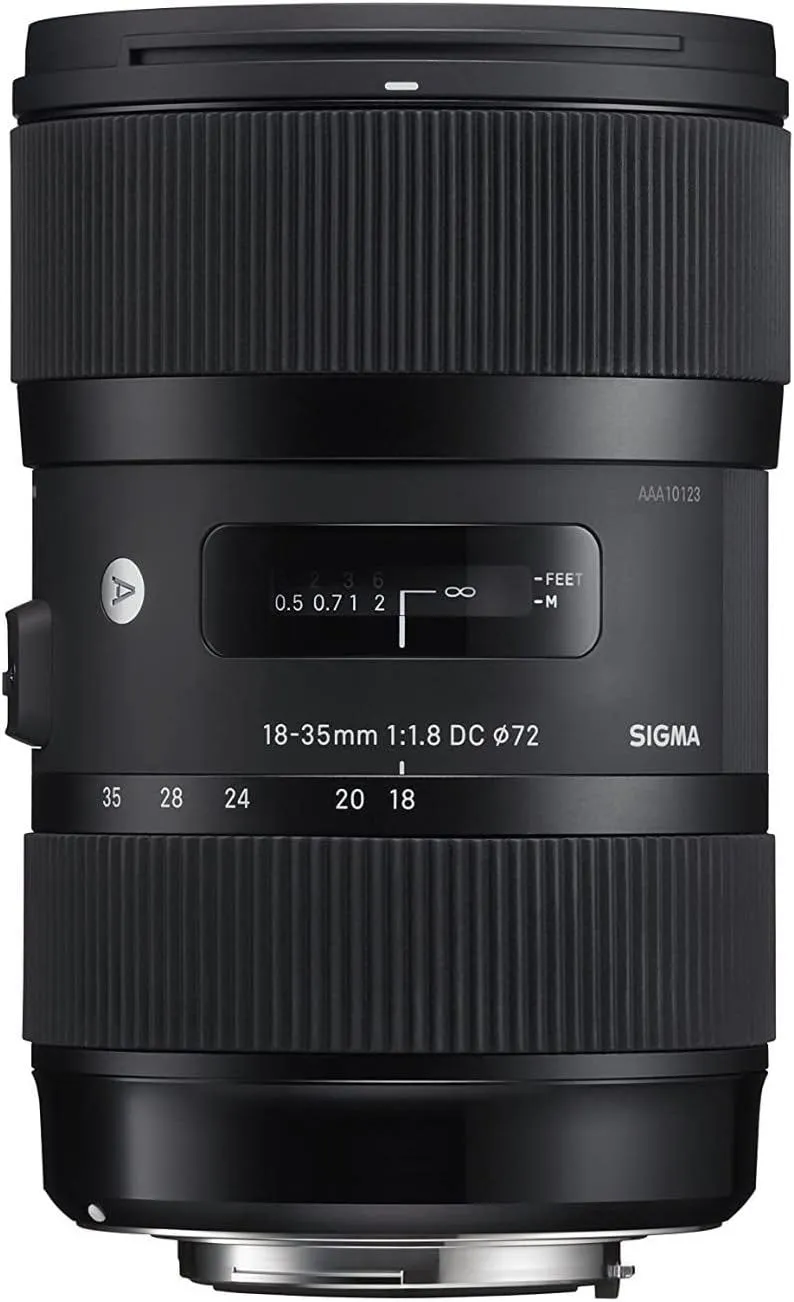
Sometimes, you need speed. For run-and-gun events, weddings, or moody narrative work, the Sigma 18–35mm is a miracle worker. Adapted via the Canon Control Ring Mount Adapter, it retains autofocus (which, while not cinema-grade, is useful for solo shooting) and communicates flawlessly.
At f/1.8 the depth of field is very thin, which directs attention to the subject, for example a couple’s expressions at a wedding.
Pros:
- Blazing Fast Aperture: f/1.8 across the zoom range is incredible for low light and shallow depth-of-field.
- Extreme Sharpness: Razor-sharp even wide open, which is rare.
- Great Value: Delivers premium image quality for a fraction of a true cinema lens price.
- Compact & Light: Easy to pack as a backup or specialty lens.
Cons:
- Stills Lens Quirks: Focus breathing, short focus throw, and non-declicked aperture (without mods).
- Adaptation Required: Requires the EF-to-RF adapter, adding a point of failure.
- No Stabilization: All camera shake is yours to manage.
- Plastic Build: Doesn’t feel as rugged as cinema-built lenses for run-and-gun doc work.
3. The Budget Character Actor: Tokina 11–16mm f/2.8 AT-X116 Pro DX II
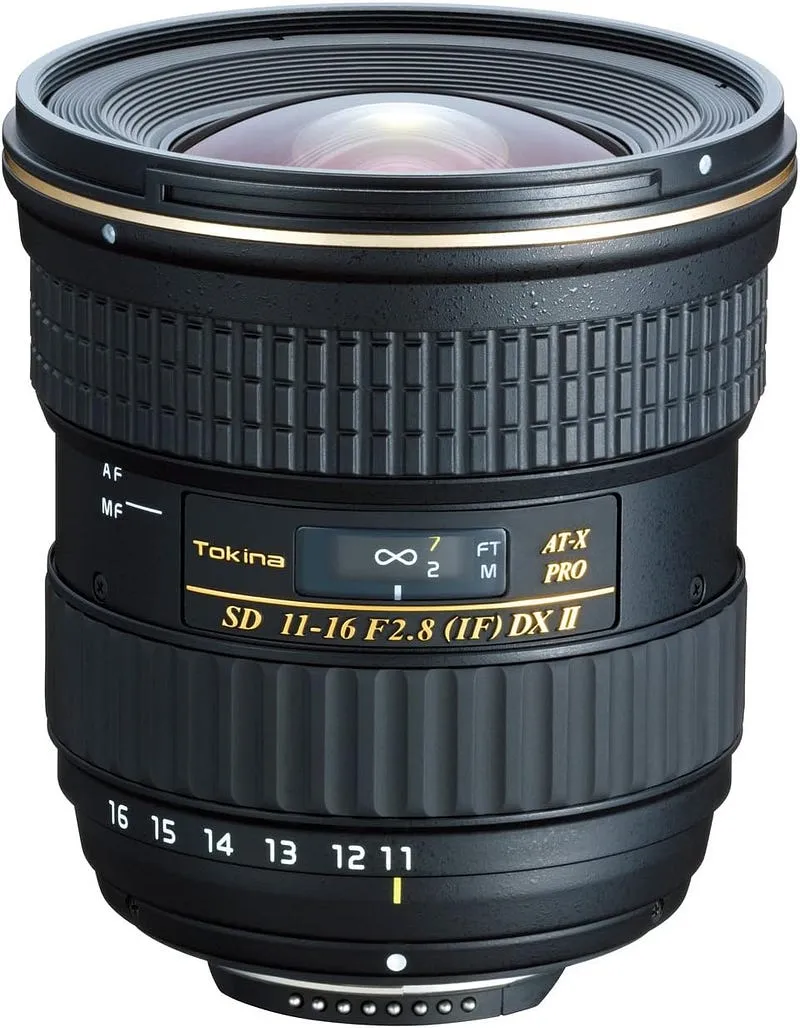
Wait, a vintage crop-sensor lens? Absolutely. It is often available at a low price on the used market, and it requires a simple EF-RF adapter. Note that APS-C lenses such as this one and the Sigma 18–35mm cover only the Super 35 area, so they need the camera’s Super 35 crop mode.
The Adapter is Your Best Friend
It’s not just a spacer; it’s a key. It unlocks the entire world of legendary, affordable EF and EF-S glass. For the C50 shooter, it’s non-negotiable. It turns the Sigma 18–35mm and lenses like the Canon 24–105mm f/4 into powerful options.
Takeaway: Build for Your Stories
- For interviews, corporate work, and any project where reliability is king.
The C50 is a capable and forgiving canvas, but the lenses are the brushes. Choose the ones that fit the stories you most want to paint.
What’s in your C50 kit bag? Share your own lens adventures and hard-won lessons in the comments below!
Compare with Best Lenses for Canon EOS R5 and Best Lenses for Canon EOS R5 Mark II, or check the workflow setup chart.
Common Buying & Setup Questions
What is the top pick in Best Lenses for Canon EOS C50?
The Quick verdict (Full-Frame · 18–80mm · f/1.8 · Optical IS, Canon RF (Full Frame)) leads our shortlist as the top overall pick, followed closely by the Tokina 11 - 16mm f/2.8 AT - X116 Pro DX II (APS-C · 16mm · f/2.8).
What focal length, aperture, and shutter speed work best for tattoo artists & micro-realism portfolios?
For tattoo artists & micro-realism portfolios, pair a 50mm – 90mm (never below 35mm, which warps limb proportions) lens at f/5.6 – f/8 (keeps curved forearms and calves sharp edge-to-edge) with a shutter speed of 1/125s – 1/200s handheld (or 1/60s on tripod) and a working distance of 0.4m – 1.5m (1.5 to 5 ft). Recommended setup: CRI 95+ 5600K LED panel covered with Linear Polarizing Film + Circular Polarizer (CPL) lens filter rotated 90°..
Camera & Lens Settings by Real-World Use Case
Match your focal length, aperture, shutter speed, and lighting modifier to the exact environment you shoot in.
Tattoo Artists & Micro-Realism Portfolios
- Best Body:
- Sony Alpha a7 III / Fujifilm X-T4
- Ideal Lens:
- 90mm f/2.8 Macro (detail) or 50mm f/1.8 (sleeves & back pieces)
- Aperture & Shutter:
- f/5.6 – f/8 (keeps curved forearms and calves sharp edge-to-edge) · 1/125s – 1/200s handheld (or 1/60s on tripod)
- Room Distance:
- 0.4m – 1.5m (1.5 to 5 ft)
Barbershops, Hairstylists & Color Salons
- Best Body:
- Sony a7 IV / Canon EOS R6 Mark II
- Ideal Lens:
- 50mm f/1.8 (tight stations) or 85mm f/1.8 (spacious salons)
- Aperture & Shutter:
- f/1.8 – f/2.8 (blurs background chairs while keeping the lineup tack-sharp) · 1/160s – 1/250s (freezes subtle head movement in the chair)
- Room Distance:
- 1.5m – 2.4m (5 to 8 ft from the styling chair)
Makeup Artists (MUA) & Beauty Tutorials
- Best Body:
- Sony Alpha a6400 / Canon G7 X Mark III
- Ideal Lens:
- Sigma 56mm f/1.4 DC DN (APS-C) or 50mm–85mm f/1.8 (Full Frame)
- Aperture & Shutter:
- f/2.8 – f/4 for full-face sharpness; f/5.6 for macro eye/lip close-ups · 1/125s for stills; 1/50s (24p) or 1/120s (60p) for video tutorials
- Room Distance:
- 1.2m – 2.2m (4 to 7 ft)

Written by
Marien CartelMarien Cartel runs Marien Cartel Photography, a camera and lens buying-guide site, and photographs the gear shown on it.
Related Guides
Canon EOS R10 Review: Image Quality, Shooting Speed & More
Canon EOS R10 Review: what to look for, what to skip and how to choose the right one for your budget. Updated for 2026.
Best Lenses for Canon EOS C80: Prime & Zoom Options Compared
Best Lenses for Canon EOS C80: Canon RF 35mm f/1.4 L and Canon RF 50mm f/1.2L USM compared on features, price and who each one suits.
Best Lenses for Canon EOS R100: Native & Third-Party Glass Compared
Best Lenses for Canon EOS R100: Canon RF-S 18–45mm f/4.5–6.3 IS and Canon RF 50mm f/1.8 STM evaluated side by side on specs, lens options, and value for money.

Best Camera for Nature: Nikon Z 6III, Canon EOS R10 & More
Best Camera for Nature — OM SYSTEM OM-1 Mark II, Nikon Z 6III and Canon EOS R10 compared, with pros, cons and who should buy which.
Best Lenses for Canon EOS R50: Top Optics by Budget & Use Case
Best Lenses for Canon EOS R50: Canon RF-S 55–210mm f/5–7.1 IS and Canon RF-S 18–150mm f/3.5–6.3 IS compared on features, price and who each one suits.
Best Lenses for Canon EOS R5: Prime & Zoom Options Compared
Best Lenses for Canon EOS R5 — a practical buying guide covering what matters, common mistakes and what to buy.