Best Mid-Range Canon Camera: Low-Light, Autofocus & Value Picks
As an Amazon Associate we earn from qualifying purchases. Some links in this guide are affiliate links, see our affiliate disclosure for details.
Which mid-range Canon camera is best?
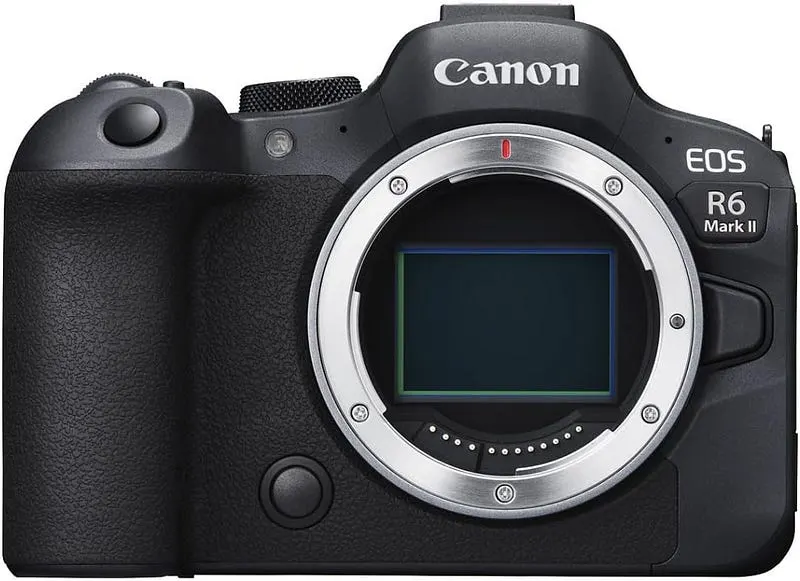
The top pick is the Canon EOS R6 Mark II. It explains why it earns the best mid-range Canon crown and also covers its limits.
Where the R6 Mark II Truly Shines (Through Lens)
- Autofocus That Reads Minds (Almost): This is the game-changer. Canon’s Dual Pixel CMOS AF II is witchcraft. Human eye detection? Flawless, even through glasses or slightly turned heads. Animal eye AF? Car/Bike tracking? Essential for motorsports or kids on bikes. It locks on with terrifying speed and accuracy, even in challenging light. At a recent wedding, capturing the groom’s tearful reaction as the bride walked down the aisle — perfectly focused, first try, in dim church lighting. That moment alone justified the purchase. The 40fps electronic shutter (with AF/AE!) is insane for action. Birds in flight? No longer a lottery.
- Low Light Liberator: The 24.2MP full-frame sensor is a low-light beast. Shooting a live band in a moody bar? No flash needed. Candlelit dinners? Rich detail, not noisy mush. This freedom is transformative.
- Stabilization Sorcery (IBIS + Lens IS): Combining the 5-axis in-body stabilization with lens IS gives up to 8 stops of shake reduction. Handheld 1-second exposures? Possible. Smooth video walking shots without a gimbal? Absolutely. This feature alone saves weight and setup time.
- Video Powerhouse (For Real This Time): The original R6’s overheating issues were a major concern. Canon listened. The Mark II delivers oversampled 4K/60p (from 6K) and uncropped 4K/30p with vastly improved heat management. 10-bit 4:2:2 internal (C-Log 3/HDR PQ) gives serious grading flexibility. Full HD at 180fps for buttery slow-mo? Check. It’s genuinely hybrid — equally capable for stills and video creators.
- Speed Demon & Buffer Beast: That 40fps electronic shutter is blistering. But crucially, the buffer is deep. Shooting RAW bursts at a tennis match? It just keeps going. The mechanical shutter is a respectable 12fps. The new sensor scan speed also drastically reduces rolling shutter in e-shutter mode.
- Usability & Refinements: Little things add up:
- The new multi-function shoe powers accessories like the DM-E1D mic without cables.
- Dual UHS-II SD card slots (not CFexpress) — more affordable media.
- Improved menus and a fantastic viewfinder.
- Reliable Bluetooth/Wi-Fi connectivity.
The “Mid-Range” Reality Check (It’s Not Perfect)
Let’s be honest, no camera is flawless:
- 24.2MP: For most, this is plenty. But if you heavily crop wildlife or need massive prints regularly, the R5’s 45MP might be worth the stretch. For web, social, and prints up to A2/A1? It’s fantastic.
- Menus: Canon menus are deep.
- Battery: Good, but not class-leading. Spares are recommended for heavy shooters/videographers.
- No Built-in Flash: Requires an external speedlight (generally better anyway).
Verdict: More Than Just a Camera, It’s Confidence
Confidence to shoot in challenging light. Confidence to track erratic motion.
Is it the absolute best camera ever made? No. But is it the best mid-range full-frame mirrorless camera Canon makes right now, offering the most complete, balanced, and powerful package for the price? Absolutely, unequivocally yes.
If you’re an enthusiast yearning to step up to full-frame, a semi-pro needing a reliable workhorse, or a hybrid shooter demanding quality in both stills and video without maxing out credit cards, the EOS R6 Mark II deserves your serious consideration. It’s not just a tool; it’s the catalyst to capture your vision, reliably and beautifully. Not buying it sooner.





Frequently asked questions
What Canon mirrorless camera is good for a mid-range photographer? The Canon EOS R6 Mark II is the usual pick. It has a 24.2-megapixel full-frame sensor, up to 12 frames per second with the mechanical shutter and 40 with the electronic shutter, in-body stabilization and two SD card slots. The EOS R8 is a lighter, cheaper full-frame option without in-body stabilization, and the EOS R7 is an APS-C body with 32.5 megapixels and stabilization.
Should a mid-range photographer choose the EOS R6 Mark II or the EOS R7? Choose the R6 Mark II for low-light work and portraits, where full frame helps. Choose the R7 for sports and wildlife on a budget, because the APS-C crop gives extra reach from the same lens. See the Canon R7 vs Sony a6700 comparison and the best Canon cameras.
How does the R6 Mark II compare with the R5 Mark II? The R5 Mark II has a 45-megapixel stacked sensor and costs far more. The R6 Mark II is cheaper and has a lower resolution that suits most mid-range work. See the R6 Mark II vs R5 Mark II comparison.
Camera & Lens Settings by Real-World Use Case
Match your focal length, aperture, shutter speed, and lighting modifier to the exact environment you shoot in.
Tattoo Artists & Micro-Realism Portfolios
- Best Body:
- Sony Alpha a7 III / Fujifilm X-T4
- Ideal Lens:
- 90mm f/2.8 Macro (detail) or 50mm f/1.8 (sleeves & back pieces)
- Aperture & Shutter:
- f/5.6 – f/8 (keeps curved forearms and calves sharp edge-to-edge) · 1/125s – 1/200s handheld (or 1/60s on tripod)
- Room Distance:
- 0.4m – 1.5m (1.5 to 5 ft)
Barbershops, Hairstylists & Color Salons
- Best Body:
- Sony a7 IV / Canon EOS R6 Mark II
- Ideal Lens:
- 50mm f/1.8 (tight stations) or 85mm f/1.8 (spacious salons)
- Aperture & Shutter:
- f/1.8 – f/2.8 (blurs background chairs while keeping the lineup tack-sharp) · 1/160s – 1/250s (freezes subtle head movement in the chair)
- Room Distance:
- 1.5m – 2.4m (5 to 8 ft from the styling chair)
Makeup Artists (MUA) & Beauty Tutorials
- Best Body:
- Sony Alpha a6400 / Canon G7 X Mark III
- Ideal Lens:
- Sigma 56mm f/1.4 DC DN (APS-C) or 50mm–85mm f/1.8 (Full Frame)
- Aperture & Shutter:
- f/2.8 – f/4 for full-face sharpness; f/5.6 for macro eye/lip close-ups · 1/125s for stills; 1/50s (24p) or 1/120s (60p) for video tutorials
- Room Distance:
- 1.2m – 2.2m (4 to 7 ft)

Written by
Marien CartelMarien Cartel runs Marien Cartel Photography, a camera and lens buying-guide site, and photographs the gear shown on it.
Related Guides
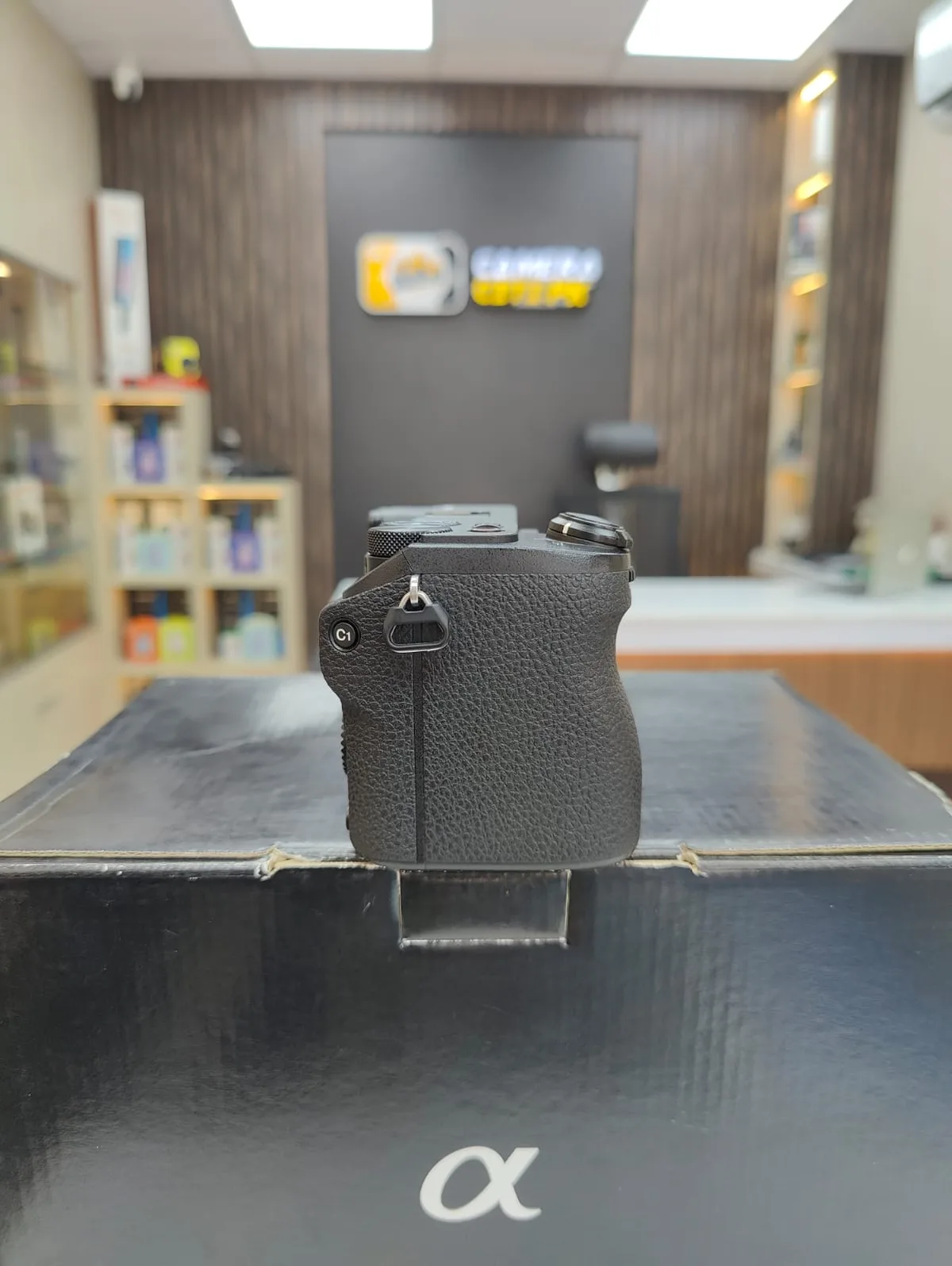
Canon R7 vs Sony a6700: Low-Light, Autofocus & Value Picks
Canon R7 vs Sony a6700 compared — where each one wins, where it falls short, and who should buy which. Updated for 2026.
Best Camera For Cars Photography: Low-Light, Autofocus & Value Picks
Best Camera For Cars Photography: a side-by-side look at Sony a6000 and Sony E 16–55mm f/2.8 G, with strengths, trade-offs and buying advice.
Best Sony Cameras for Sports: Low-Light, Autofocus & Value Picks
Best Sony Cameras for Sports — Sony A7R V, Sony A7C II and Sony A9 III compared, with pros, cons and who should buy which.
Best Camera for Low Light: Low-Light, Autofocus & Value Picks
Best Camera for Low Light: Canon EOS R50, Sony a7S III and Canon EOS R6 compared on features, price and who each one suits.
Best Camera for Karting: Low-Light, Autofocus & Value Picks
Best Camera for Karting: GoPro Hero 12 Black, DJI Osmo Action 4 and Insta360 ONE RS compared on features, price and who each one suits.
Best Camera for Cinematography: Low-Light, Autofocus & Value Picks
Best Camera for Cinematography — Sony VENICE 2], Blackmagic URSA Mini Pro 12K] and Canon C500 Mark II] compared, with pros, cons and who should buy which.