Best Nikon Portrait Lenses: Native & Third-Party Glass Compared
As an Amazon Associate we earn from qualifying purchases. Some links in this guide are affiliate links, see our affiliate disclosure for details.
Top Picks & Key Specifications at a Glance
| Model | Best For | Mount / System | Key Optical & Sensor Specs | Check Price |
|---|---|---|---|---|
1The Nikkor AF-S 85mm f/1.4G: the classic portrait lens | Top Overall Pick | Interchangeable-Lens System | Full-Frame · 85mm · f/1 | Amazon ↗ |
2The AF-S 70-200mm f/2.8G VR II: the location zoom | Recommended Pick | Interchangeable-Lens System | 70-200mm · f/2 · Optical IS | Amazon ↗ |
3The AF-S 35mm f/1.4G: the tight-space solution | Recommended Pick | Interchangeable-Lens System | 35mm · f/1 | Amazon ↗ |
4The AF-S 85mm f/1.8G: the budget breakthrough | Recommended Pick | Interchangeable-Lens System | 85mm · f/1 | Amazon ↗ |
Which Nikon lens is best for portraits?
The Nikkor AF-S 85mm f/1.4G is the classic Nikon portrait lens, with a flattering focal length and a wide aperture for strong background blur. The 85mm f/1.8G is the budget-friendly alternative, the AF-S 70-200mm f/2.8G VR II is the zoom for location and event work, the AF-S Micro Nikkor 105mm f/2.8G is a headshot specialist that doubles as a macro lens, and the AF-S 35mm f/1.4G suits tight spaces. These are F-mount lenses; Z-mount owners can use them with the FTZ adapter or pick Nikkor Z equivalents.
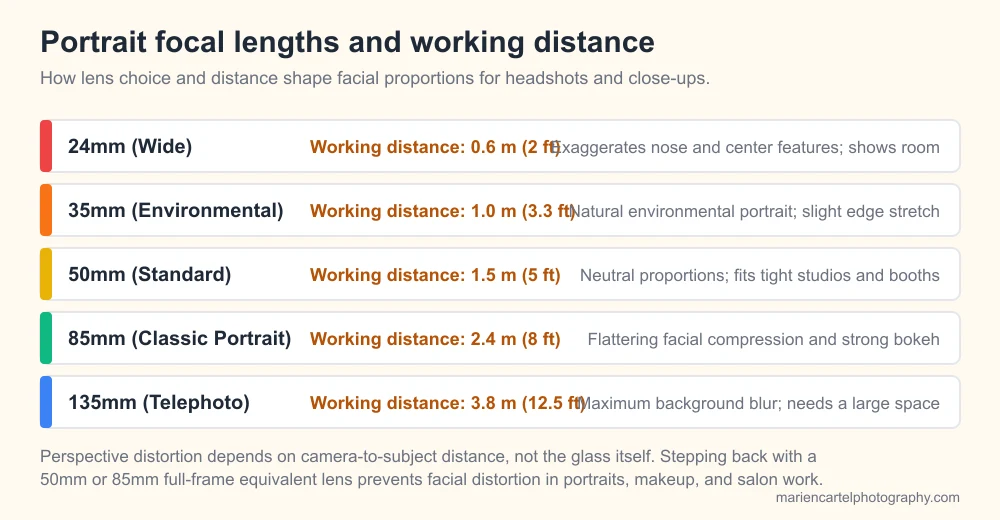
How working distance and focal length (24mm to 135mm) affect facial proportions and background separation.
What makes a good portrait lens?
- A flattering focal length. Between 50mm and 135mm gives natural facial proportions.
- A wide aperture. f/1.4 to f/2.8 blurs backgrounds and helps in low light.
- Fast, accurate autofocus. It keeps eyes sharp, even with moving subjects.
- Pleasing out-of-focus areas. The quality of background blur (bokeh) matters for portraits.
For help choosing a focal length, see the best focal length for portraits.
The Nikkor AF-S 85mm f/1.4G: the classic portrait lens
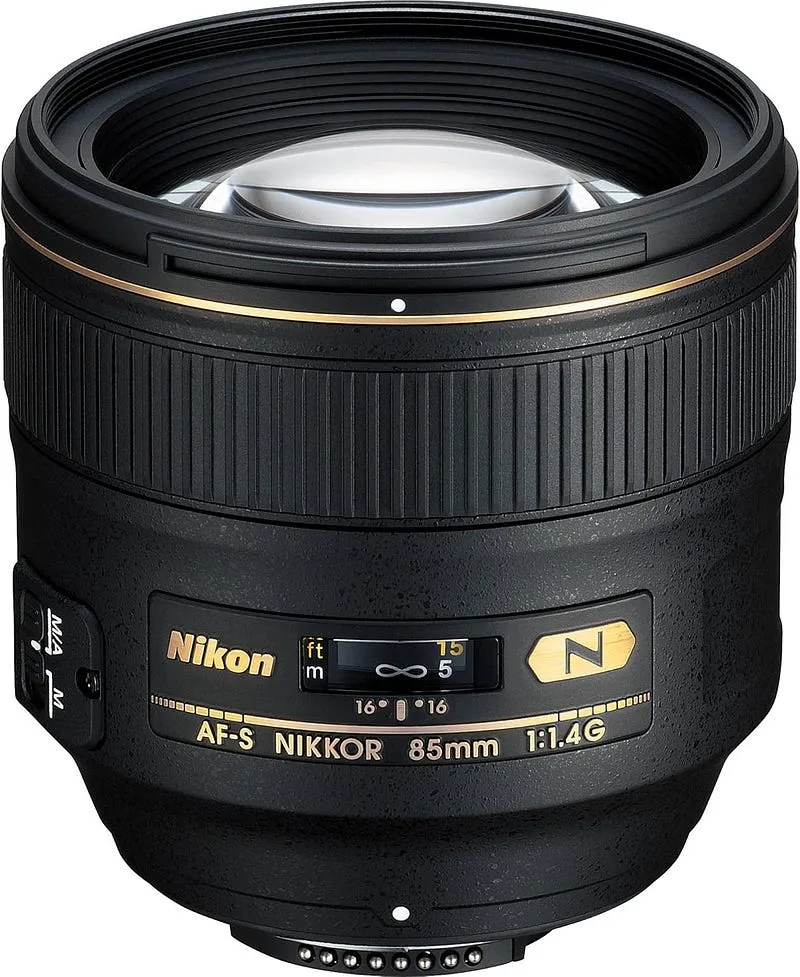
The AF-S Nikkor 85mm f/1.4G is a prime lens with a very wide aperture. It gives smooth, creamy background blur and works well in low light. At 85mm on a full-frame camera, it frames head-and-shoulders portraits from a comfortable distance. On Nikon DX bodies it frames like a longer lens, roughly 127mm.
The AF-S 70-200mm f/2.8G VR II: the location zoom
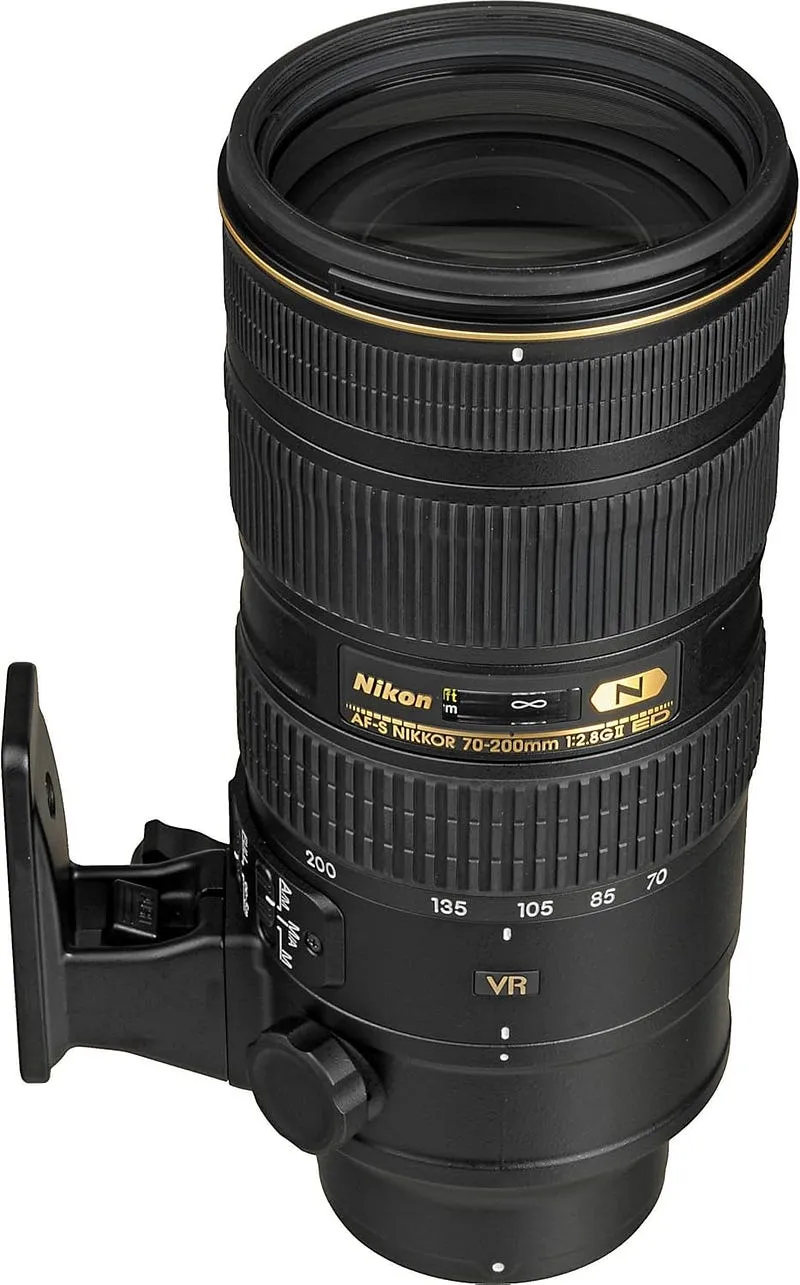
The AF-S Nikkor 70-200mm f/2.8G ED VR II is a professional telephoto zoom with vibration reduction. It focuses quickly and accurately, which helps with active children, events and weddings, and the zoom range allows varied framing without moving. It is large and heavy, so it suits photographers who need versatility more than a light bag.
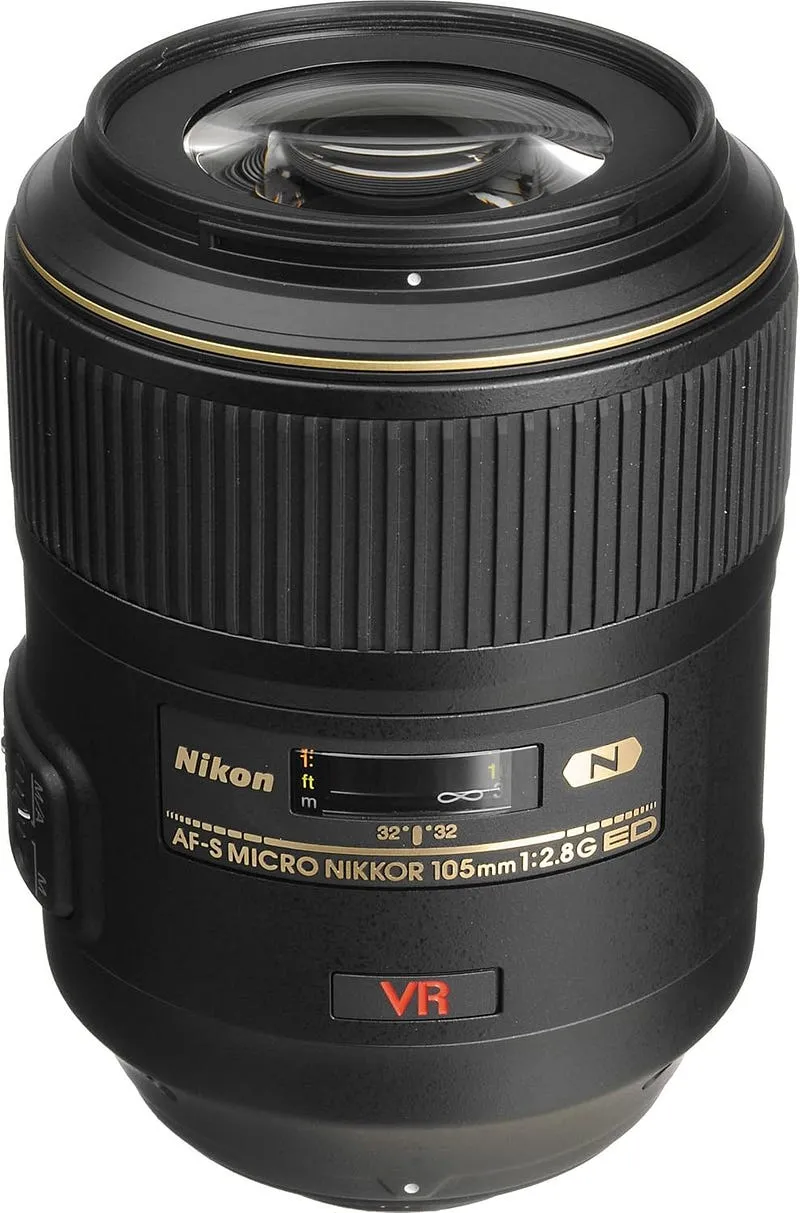
The AF-S Micro Nikkor 105mm f/2.8G: the headshot specialist
The AF-S VR Micro-Nikkor 105mm f/2.8G IF-ED is a macro lens that also makes a good tight portrait lens. Its longer focal length compresses features, and its sharpness suits detailed headshots. It is slower than an f/1.4 prime, so background blur is less extreme, but it adds true macro capability.
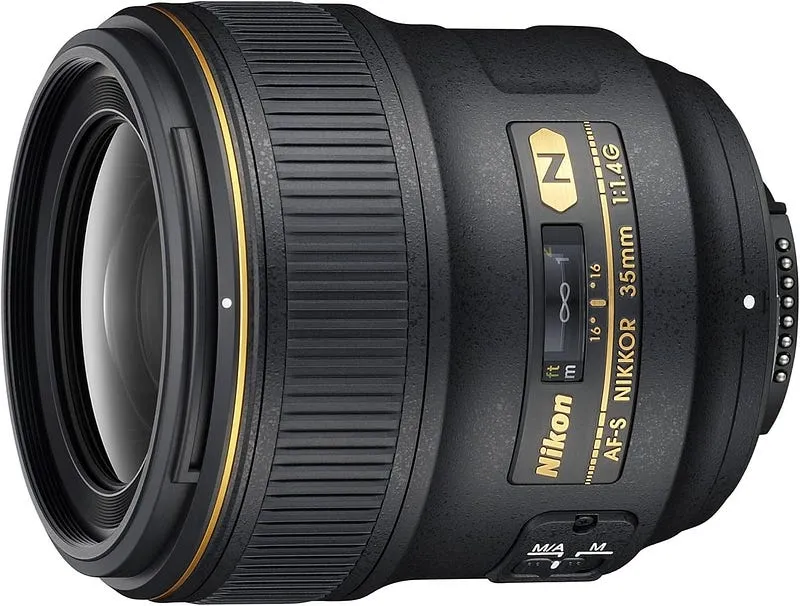
The AF-S 35mm f/1.4G: the tight-space solution
The AF-S Nikkor 35mm f/1.4G is a wide prime for environmental portraits and small rooms. It shows the subject in context and produces attractive background blur for a wide lens, although faces near the frame edges can stretch slightly.
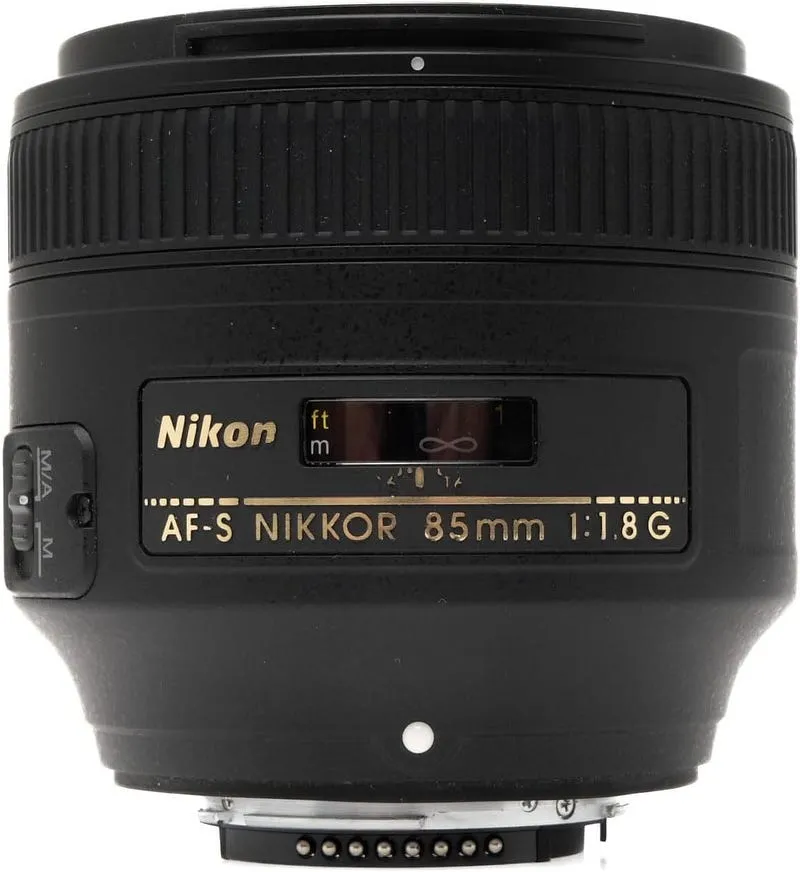
The AF-S 85mm f/1.8G: the budget breakthrough
The AF-S Nikkor 85mm f/1.8G delivers a similar view to the f/1.4 version at a much lower price and weight. It is sharp, focuses quickly and suits beginners and enthusiasts who want a portrait prime without spending much.
How do the five lenses compare?
| Lens | Best for | Trade-off |
|---|---|---|
| AF-S 85mm f/1.4G | Classic portraits and low light | Larger and costlier than the f/1.8 |
| AF-S 85mm f/1.8G | Budget portraits | Less background blur than f/1.4 |
| AF-S 35mm f/1.4G | Environmental portraits | Wide, so closer to the subject |
| AF-S Micro 105mm f/2.8G | Headshots and macro | Slower aperture |
| AF-S 70-200mm f/2.8G VR II | Events and location work | Heavy and costly |
The specifications come from Nikon's lens line-up; check the maker's page for weights and current pricing.
Z-mount options
Photographers using Nikon mirrorless Z cameras can mount these F-mount lenses with the FTZ adapter, and autofocus support depends on the body. Nikon also makes native Nikkor Z lenses, such as the Z 85mm f/1.8 S and Z 50mm f/1.8 S, designed for the Z system. See the best Nikon Z lens for street photography and the best lenses for the Nikon D850 for related choices.
Frequently asked questions
Is the 85mm f/1.8G good enough for portraits? Yes. It gives most of the look of the f/1.4 version at a lower price.
Can these lenses be used on Nikon mirrorless cameras? Yes, with the FTZ adapter. Autofocus support depends on the lens and body.
What is the best Nikon lens for headshots? An 85mm or 105mm lens is a common choice. The 105mm adds compression and macro ability.
Do I need a zoom for portraits? Not necessarily. Prime lenses give better blur, while zooms offer flexibility.

Photo by Jonathan Borba on Unsplash

Photo by Michael Anfang on Unsplash
Camera & Lens Settings by Real-World Use Case
Match your focal length, aperture, shutter speed, and lighting modifier to the exact environment you shoot in.
Newborn, Baby, Engagement & Family Portraits
- Best Body:
- Canon EOS R6 Mark II / Sony a7 IV / Nikon Z6 III
- Ideal Lens:
- 35mm f/1.8 (in-home lifestyle & family groups) + 50mm/85mm f/1.8 (tight portraits)
- Aperture & Shutter:
- f/2.0 – f/2.8 (single baby/couple); f/4 – f/5.6 (family of 4+ so every face is sharp) · 1/200s (newborn) / 1/500s – 1/1000s (running toddlers & kids)
- Room Distance:
- 1.0m – 4.0m
DJ Sets, Boiler-Room Booths & Nightlife Video
- Best Body:
- Sony a7 III / Sony ZV-1 / GoPro HERO 13 (crowd B-cam)
- Ideal Lens:
- 24mm f/1.8 or 16–35mm f/2.8 (tight DJ booth) + 35mm f/1.4 (crowd)
- Aperture & Shutter:
- f/1.4 – f/2.8 · 1/50s – 1/60s (video) or 1/200s (stills)
- Room Distance:
- 0.8m – 1.5m clamped to booth truss or heavy weighted stand (isolated from subwoofers)
Makeup Artists (MUA) & Beauty Tutorials
- Best Body:
- Sony Alpha a6400 / Canon G7 X Mark III
- Ideal Lens:
- Sigma 56mm f/1.4 DC DN (APS-C) or 50mm–85mm f/1.8 (Full Frame)
- Aperture & Shutter:
- f/2.8 – f/4 for full-face sharpness; f/5.6 for macro eye/lip close-ups · 1/125s for stills; 1/50s (24p) or 1/120s (60p) for video tutorials
- Room Distance:
- 1.2m – 2.2m (4 to 7 ft)

Written by
Marien CartelMarien Cartel runs Marien Cartel Photography, a camera and lens buying-guide site, and photographs the gear shown on it.
Related Guides
Best Z Mount Lenses for Nikon: Native & Third-Party Glass Compared
Top picks include the Nikon Z 24-70mm f/2.8 S as the best all-rounder, the Z 24-120mm f/4 S for travel, the Z 14-24mm f/2.8 S for landscapes and the Z 85mm.
Best Lenses for Nikon Z50 II: Native & Third-Party Glass Compared
Best Lenses for Nikon Z50 II: side-by-side comparison of Nikon NIKKOR Z DX 16–50mm and Nikon NIKKOR Z DX 18–140mm covering key specs, real-world handling.
Best Lenses For Sony a6700: Native & Third-Party Glass Compared
Best Lenses For Sony a6700: Tamron 17–70mm f/2.8, Sigma 56mm f/1.4 and Sigma 16mm f/1.4 compared on features, price and who each one suits.
Best Lens for Sony A7iii: Native & Third-Party Glass Compared
Best Lens for Sony A7iii buying guide: Sony 24–70mm f/2.8 GM II, Sony 85mm f/1.8 and Tamron 28–75mm f/2.8 compared on image quality, autofocus, build.
Best Lenses for OM System OM-3: Native & Third-Party Glass Compared
For the OM System OM-3, the best lenses are generally considered to be the M.Zuiko 17mm f/1.8 II and M.Zuiko 25mm f/1.8 II prime lenses…
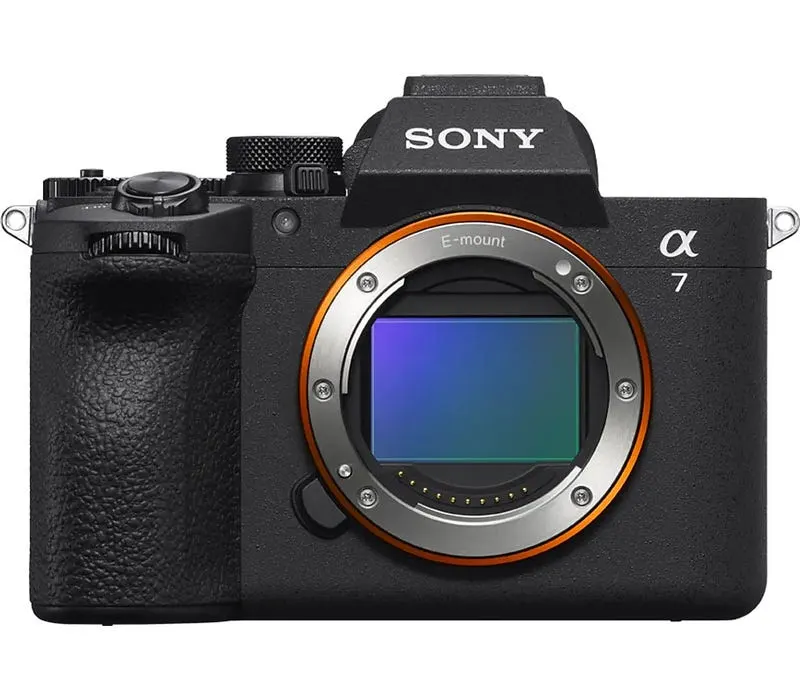
Best Lenses for Sony A7 V: Native & Third-Party Glass Compared
Best Lenses for Sony A7 V: Sony FE 85mm f/1.4 GM, Sony FE 20mm f/1.8 G and Sony FE 24–70mm f/2.8 GM compared on features, price and who each one suits.