Best Camera for DJ Sets 2026: Sony ZV-1 vs a7 III vs GoPro HERO 13
As an Amazon Associate we earn from qualifying purchases. Some links in this guide are affiliate links, see our affiliate disclosure for details.
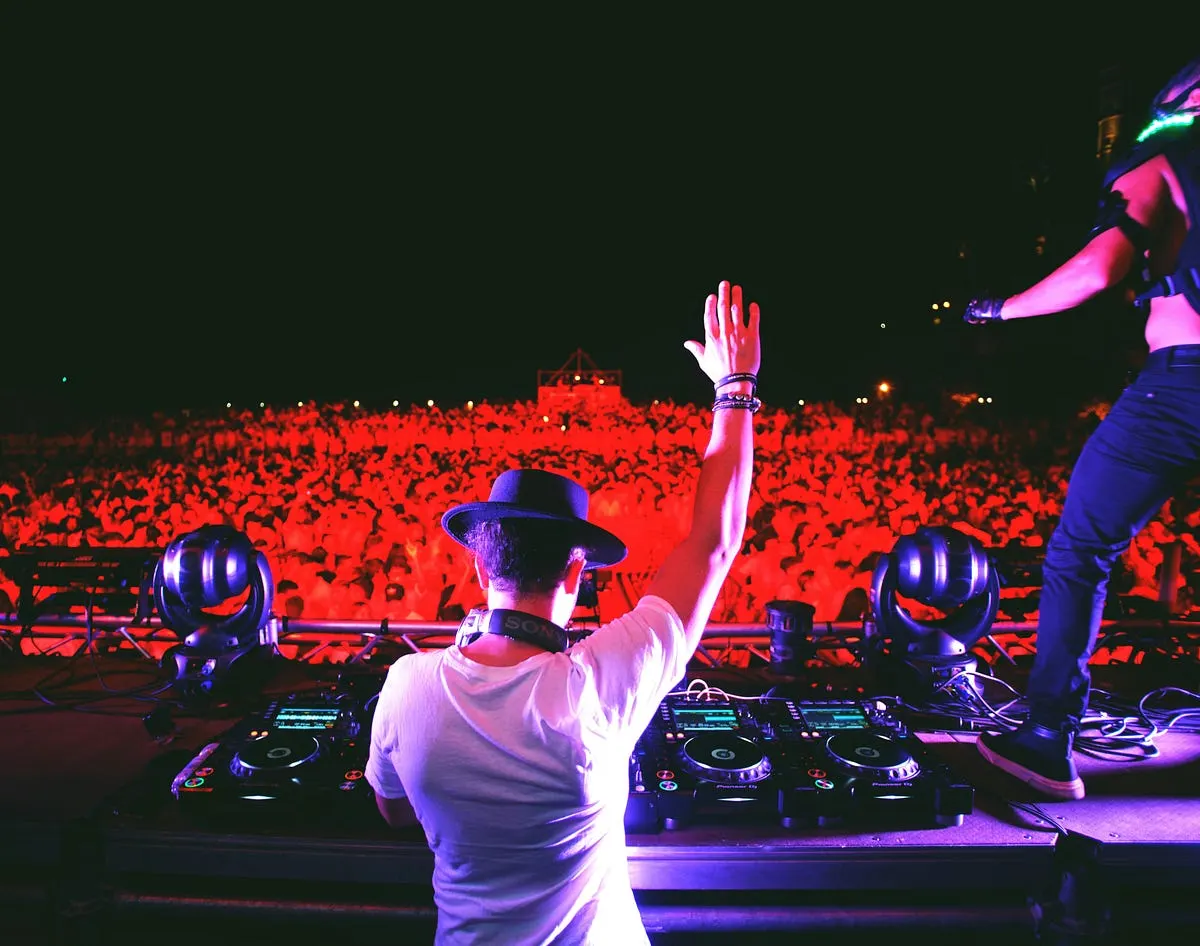
A DJ set is one of the hardest things to film: dim rooms, flashing coloured light, very loud sound and a recording that can run an hour or more. A camera that looks fine in daylight can fall apart here, so low-light performance, a bright lens and clean audio matter more than headline resolution.
Below is a quick verdict on the five cameras compared in this guide. The rest of the page explains what to look for and goes through each camera in turn. In a loud club, the audio source matters as much as the camera.
Quick verdict
| Your situation | Pick | Why |
|---|---|---|
| Easiest all-round camera for one person | Sony ZV-1 | 1-inch sensor, 24-70mm-equivalent f/1.8-2.8 lens, flip-out screen, built-in directional microphone and a mic jack |
| Dark clubs and higher-quality highlight reels | Sony a7 III | 24.2 MP full-frame sensor and 5-axis stabilization; costs more and needs a lens |
| A second angle behind the decks or on the crowd | GoPro HERO 13 | Small, HyperSmooth stabilization, 5.3K at 60 fps; the small sensor struggles in very dark rooms |
| The lowest-cost interchangeable-lens camera | Canon EOS Rebel T7 | 24.1 MP APS-C sensor, 1080p only, no 4K |
| Audio quality first | Zoom Q2n-4K | X/Y stereo microphones recording 24-bit/96 kHz audio, 4K at up to 30p |
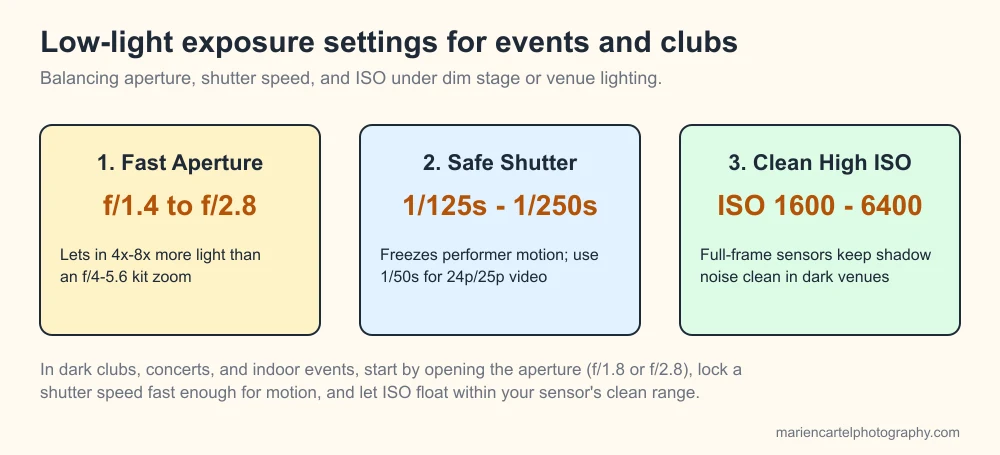
Balancing fast aperture glass, motion-freezing shutter speed, and high-ISO headroom in dim venues.
What should a DJ set camera have?
| Feature | Why it matters for DJ sets | What to check |
|---|---|---|
| Low-light performance | Clubs and bars are dim and lit by moving colour | Sensor size and lens aperture |
| Bright lens | More light lets you keep ISO and noise down | f/1.8 to f/2.8 is helpful |
| Flip-out screen | Lets you frame yourself and check angles | Side-flip or articulating screen |
| Audio quality | Loud rooms distort built-in microphones | An external audio source or a good built-in mic |
| Size and mounting | The camera sits on a small tripod beside the decks | Weight and mounting options |
| Recording limits | A full set can run an hour or more | Recording time, battery and card capacity |
How do the five cameras compare?
The figures come from the makers' pages and specification databases. Weight and other details vary by source, so check the manufacturer's page before you buy.
| Camera | Sensor | Video | Notes |
|---|---|---|---|
| Sony ZV-1 | 20.1 MP 1-inch | 24-70mm equivalent f/1.8-2.8 lens | Side flip-out screen, built-in directional microphone and a 3.5 mm external mic jack |
| Sony a7 III | 24.2 MP full-frame BSI | 4K up to 30p | 5-axis in-body stabilization, native ISO 100-51,200 per Imaging Resource, about 650 g body only |
| GoPro HERO 13 Black | Small action-camera sensor | 5.3K at 60 fps, 4K at 120 fps | HyperSmooth 6.0 stabilization, waterproof to 10 m |
| Canon EOS Rebel T7 | 24.1 MP APS-C | 1080p, no 4K | Interchangeable lenses, ISO 100-6400 |
| Zoom Q2n-4K | 1/2.3-inch | 4K at up to 30p | 150-degree f/2.8 wide lens, X/Y stereo microphones recording 24-bit/96 kHz audio, about 124 g |
Sources: Wikipedia on the Sony ZV-1, Imaging Resource on the Sony a7 III, a Micro Center listing for the GoPro HERO13 Black, DSLRBodies on the Canon Rebel T7 and a PB Tech listing for the Zoom Q2n-4K.
1. Sony ZV-1
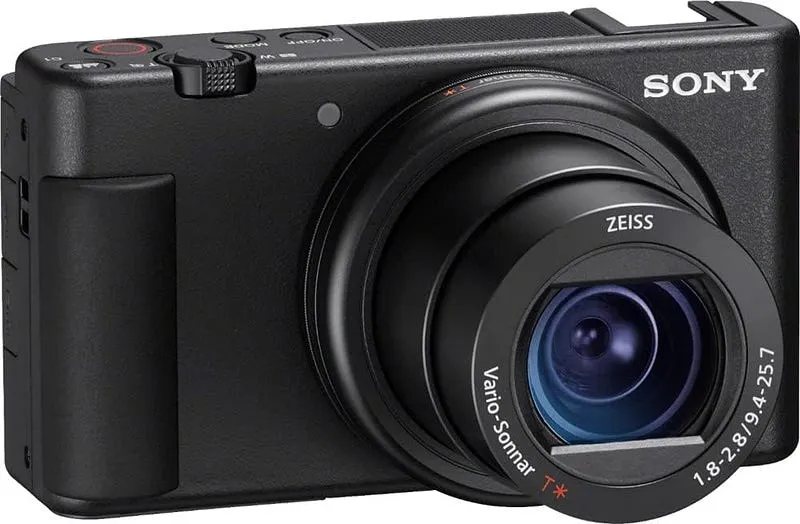
The Sony ZV-1 is built for creators who film themselves. Its 1-inch sensor and bright lens help in dim rooms, the screen flips out to the side so you can frame yourself, and it has both a directional microphone and an external mic jack.
2. Sony a7 III
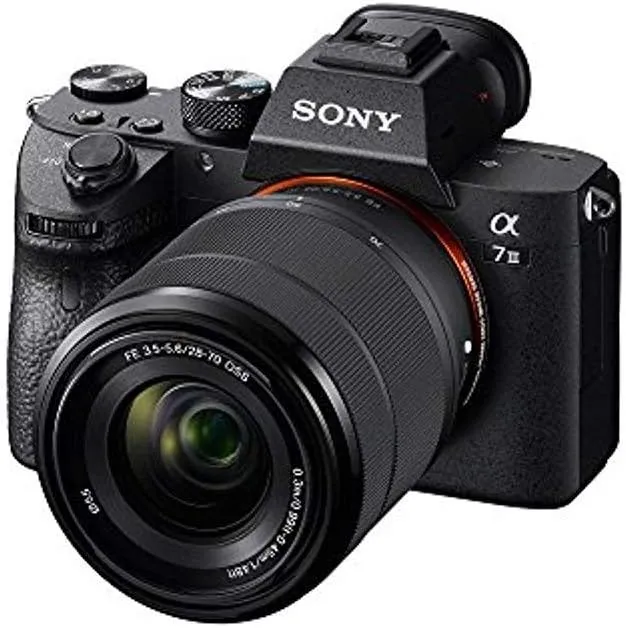
The Sony a7 III has a full-frame sensor and 5-axis in-body stabilization, which makes it a strong choice for low-light clubs and for higher-quality highlight reels. It costs more than the ZV-1, and you need a lens, so its total price is higher.
3. GoPro HERO 13
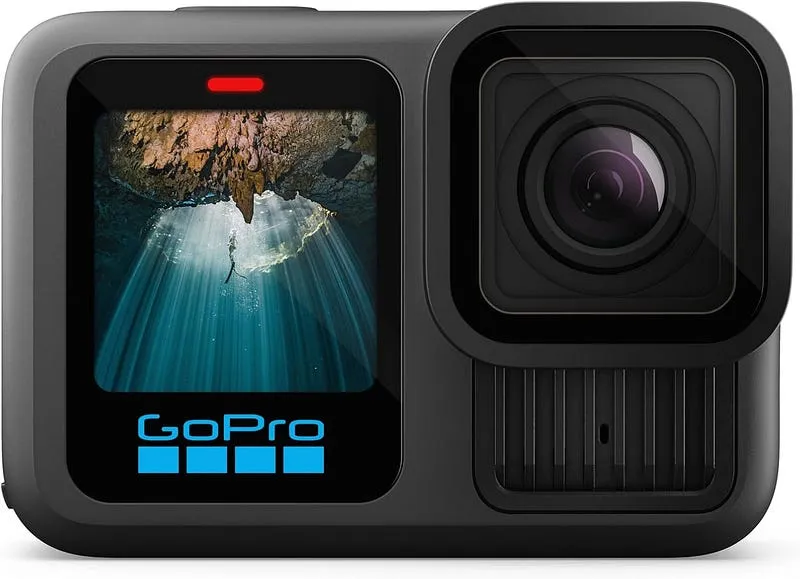
The GoPro HERO 13 is small enough to mount behind the decks or point at the crowd as a second angle. HyperSmooth stabilization and wide-angle video suit crowd shots, though its small sensor struggles more in very dark rooms.
4. Canon EOS Rebel T7
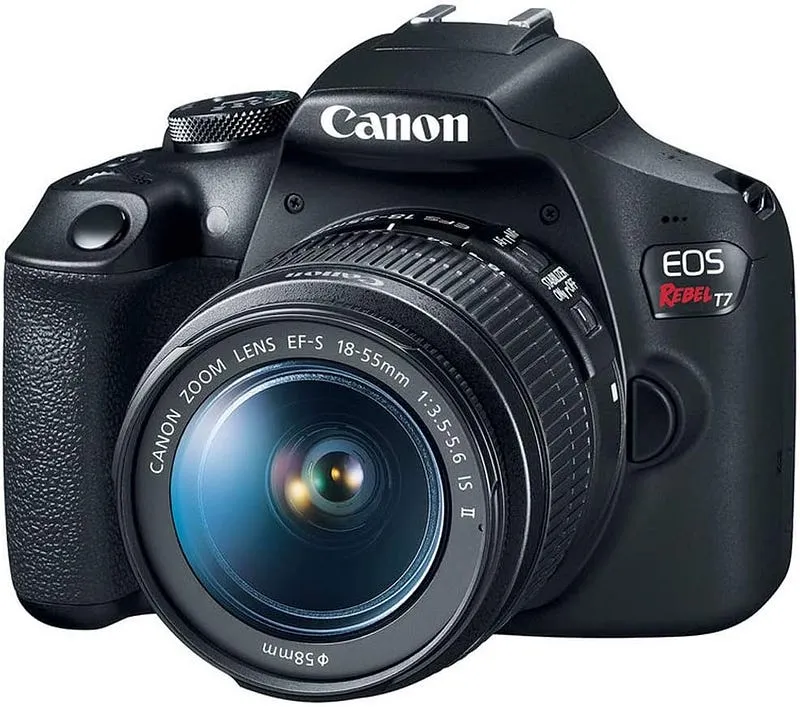
The Canon EOS Rebel T7 is the lowest-cost route to interchangeable lenses. It records 1080p only, so it suits budget setups where a fast lens matters more than 4K.
5. Zoom Q2n-4K
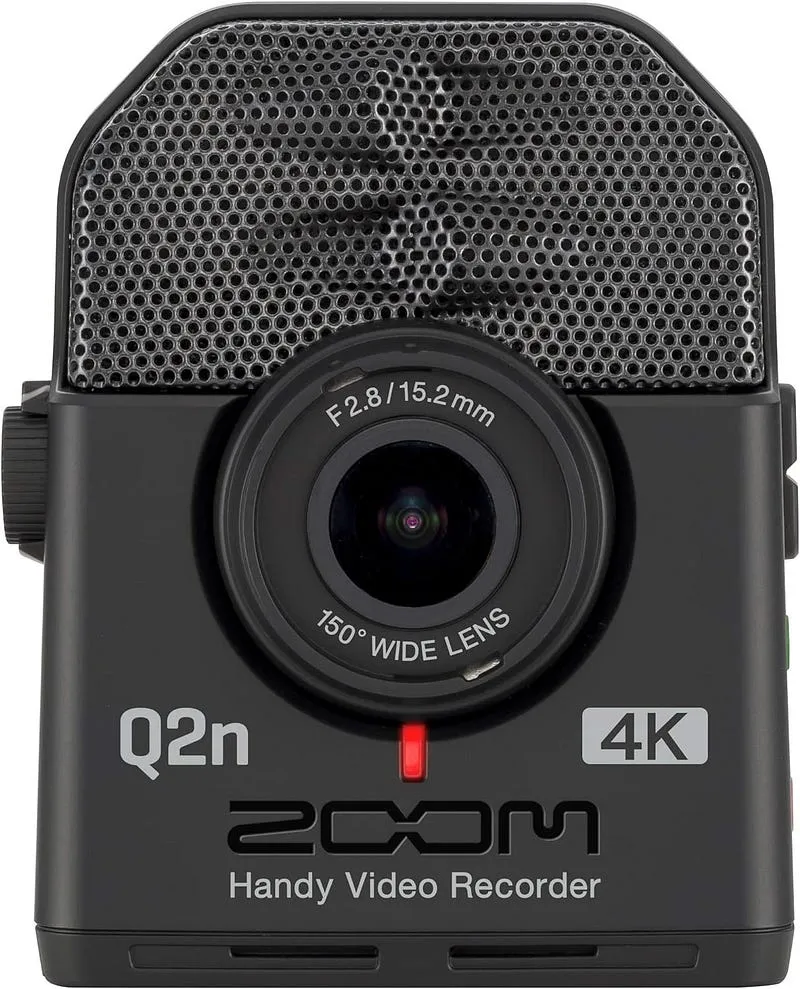
The Zoom Q2n-4K is a handy recorder built around its stereo X/Y microphones, which record 24-bit/96 kHz audio and handle very loud sound. It suits musicians who want good audio from a single small device.
Which camera suits which DJ?
| If you want | Best fit | Why |
|---|---|---|
| The easiest solo setup | Sony ZV-1 | Flip-out screen, bright lens, built-in mic |
| The best low-light quality | Sony a7 III | Full-frame sensor and stabilization |
| A second angle | GoPro HERO 13 | Small, wide and stabilised |
| The lowest price with lens choice | Canon EOS Rebel T7 | Entry-level DSLR |
| The best built-in audio | Zoom Q2n-4K | Stereo mics for loud sound |
How do you film a DJ set well?
Guides from Crossfader and Digital DJ Tips agree on a few points:
- Add light. A small LED panel, a ring light or a lamp bounced off a wall brightens the shot and removes harsh shadows. Place it just out of frame.
- Choose a front angle. A camera in front of the console, slightly above eye level, shows your hands and gear.
- Record audio separately. A separate audio source, not the camera or phone microphone, is a big upgrade in a loud room.
- Test first. Shoot a short clip and review the picture and sound before the real recording.
- Mind reflections. Glossy decks and screens can reflect light, so adjust the light angle or height.
For other video setups, see the best budget vlogging cameras, the best camera for guitar videos, the best camera for music videos and the best camera for long video recording.
Mistakes to avoid when choosing a DJ camera
- Relying on the built-in microphone. Loud rooms distort it, so use a separate audio feed or a recorder.
- Choosing a dim lens. A slow kit lens forces a high ISO and grainy video.
- Ignoring recording limits. Long sets need big cards and a charged battery.
- Placing the camera behind a light. Backlighting turns you into a silhouette.
- Skipping a test run. Check framing, light and sound before the event.
Frequently asked questions
What is the best camera for filming DJ sets in a dark club? A camera with a larger sensor and a bright lens does best. The Sony a7 III has a full-frame sensor, and the Sony ZV-1 has a bright f/1.8-2.8 lens.
Do I need an external microphone? A separate audio source is a big upgrade in a loud room. The Sony ZV-1 has a jack for an external mic, and the Zoom Q2n-4K has stereo microphones built for loud sound.
Can I use a phone? Yes. A phone on a tripod or clamp works for many DJs. A camera with a bigger sensor helps in dim rooms.
Is 4K necessary? No. 1080p is fine for most social posts, though 4K gives room to crop.
Should I film from the front or the side? A front angle slightly above eye level shows your hands and the gear, and a second camera can cover the crowd.
Cover photo by Alfonso Scarpa on Unsplash.
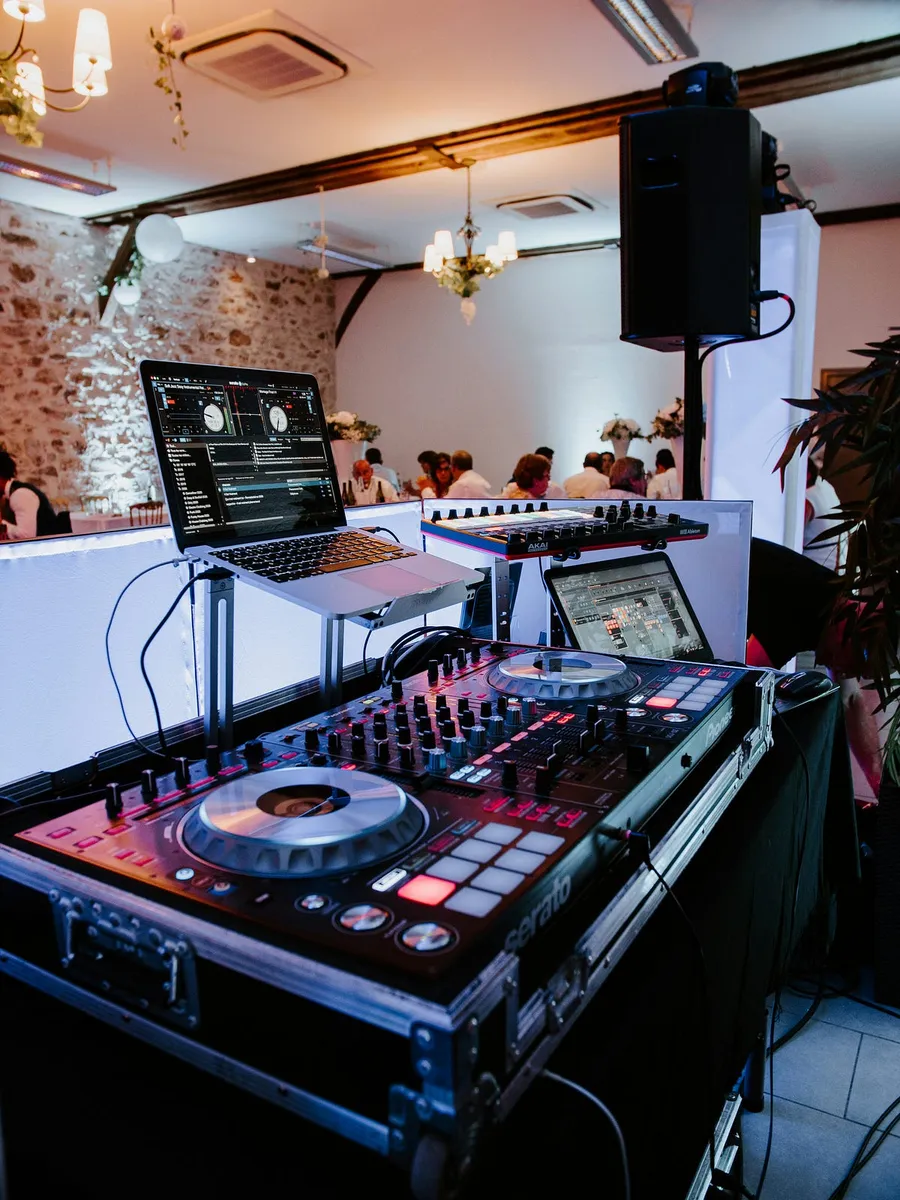
Photo by Yan Berthemy on Unsplash
Camera & Lens Settings by Real-World Use Case
Match your focal length, aperture, shutter speed, and lighting modifier to the exact environment you shoot in.
DJ Sets, Boiler-Room Booths & Nightlife Video
- Best Body:
- Sony a7 III / Sony ZV-1 / GoPro HERO 13 (crowd B-cam)
- Ideal Lens:
- 24mm f/1.8 or 16–35mm f/2.8 (tight DJ booth) + 35mm f/1.4 (crowd)
- Aperture & Shutter:
- f/1.4 – f/2.8 · 1/50s – 1/60s (video) or 1/200s (stills)
- Room Distance:
- 0.8m – 1.5m clamped to booth truss or heavy weighted stand (isolated from subwoofers)
Action Sports, Motorcycle Helmet, Snorkeling & Kayak Fishing
- Best Body:
- GoPro Hero 12 Black / DJI Osmo Action 5 Pro
- Ideal Lens:
- Ultra-Wide 155°–177° fixed f/2.8 with hydrophobic replaceable lens cover
- Aperture & Shutter:
- Fixed f/2.8 (pair with ND8/ND16/ND32 filters for realistic motion blur in moto-vlogs) · Auto (for max stabilization) or 1/120s with ND filter
- Room Distance:
- Chin-mount POV to 3m follow-cam
Guitar, Piano & Solo Musician Performance Videos
- Best Body:
- Zoom Q2n-4K / Sony ZV-1 / Sony a6400
- Ideal Lens:
- 16mm–24mm f/1.8 (APS-C) or 24mm–35mm f/1.8 (Full Frame)
- Aperture & Shutter:
- f/2.8 – f/4 (keeps the entire angled guitar neck in focus from nut to bridge) · 1/60s (30p) or 1/120s (60p to capture fast picking clearly)
- Room Distance:
- 1.0m – 1.8m slightly angled toward the fretboard

Written by
Marien CartelMarien Cartel runs Marien Cartel Photography, a camera and lens buying-guide site, and photographs the gear shown on it.
Related Guides
Best Camera for Guitar Videos 2026: ZV-1F, GoPro, Sony Alpha
Sony ZV-1F, a GoPro or a Sony Alpha for filming guitar? A quick verdict, plus why a good microphone matters more than the camera.
Best Camera for Automotive Photography 2026: R5, a7 IV, Z6 III
Canon EOS R5, Sony a7 IV, Nikon Z6 III, Fujifilm X-H2S and Sony a6400 compared for dealership, rolling-shot and track-day work, with a quick verdict.
Nikon Z6 III vs Sony A7 IV: Sensor Size, Stabilization & Picks
Nikon Z6 III vs Sony A7 IV compared — where each one wins, where it falls short, and who should buy which. Updated for 2026.
Best Camera for Motorsport Photography 2026: R3, Z9, A9 III
Canon EOS R3, Nikon Z9, Sony A9 III, Canon R7 and Nikon Z6 III compared for racing: burst rates, vehicle-detection autofocus and lens reach.
Best Cameras for Snorkeling (GoPro Hero 12 Black & Top Alternatives)
The Best Cameras for Snorkeling: Capture Underwater Magic Like a Pro. What the GoPro Hero 12 Black gets right, what it does not, and who should buy it.
Best Camera for ASMR Content Creators (2026): G100D vs ZV-1
Panasonic Lumix G100D or Sony ZV-1 for ASMR? Why quiet operation, close focus and a flip screen matter more than resolution, with a quick verdict.