Best Sony Macro Lenses: Aperture, Stabilization & Mount Guide
As an Amazon Associate we earn from qualifying purchases. Some links in this guide are affiliate links, see our affiliate disclosure for details.
Top Picks & Key Specifications at a Glance
| Model | Best For | Mount / System | Key Optical & Sensor Specs | Check Price |
|---|---|---|---|---|
1Sony FE 90mm f/2.8 Macro G OSS (The Gold Standard) | Top Overall Pick | Sony FE E-Mount (Full Frame) | 90mm · f/2.8 · Optical IS | Amazon ↗ |
2Sony FE 50mm f/2.8 Macro | Recommended Pick | Sony FE E-Mount (Full Frame) | 50mm · f/2.8 · IBIS | Amazon ↗ |
3Laowa 100mm f/2.8 2X Ultra Macro APO | Recommended Pick | Interchangeable-Lens System | 100mm · f/2.8 · IBIS | Amazon ↗ |
4Sony Alpha camera a7 III | Recommended Pick | Interchangeable-Lens System | 90mm · f/2.8 · IBIS | Amazon ↗ |
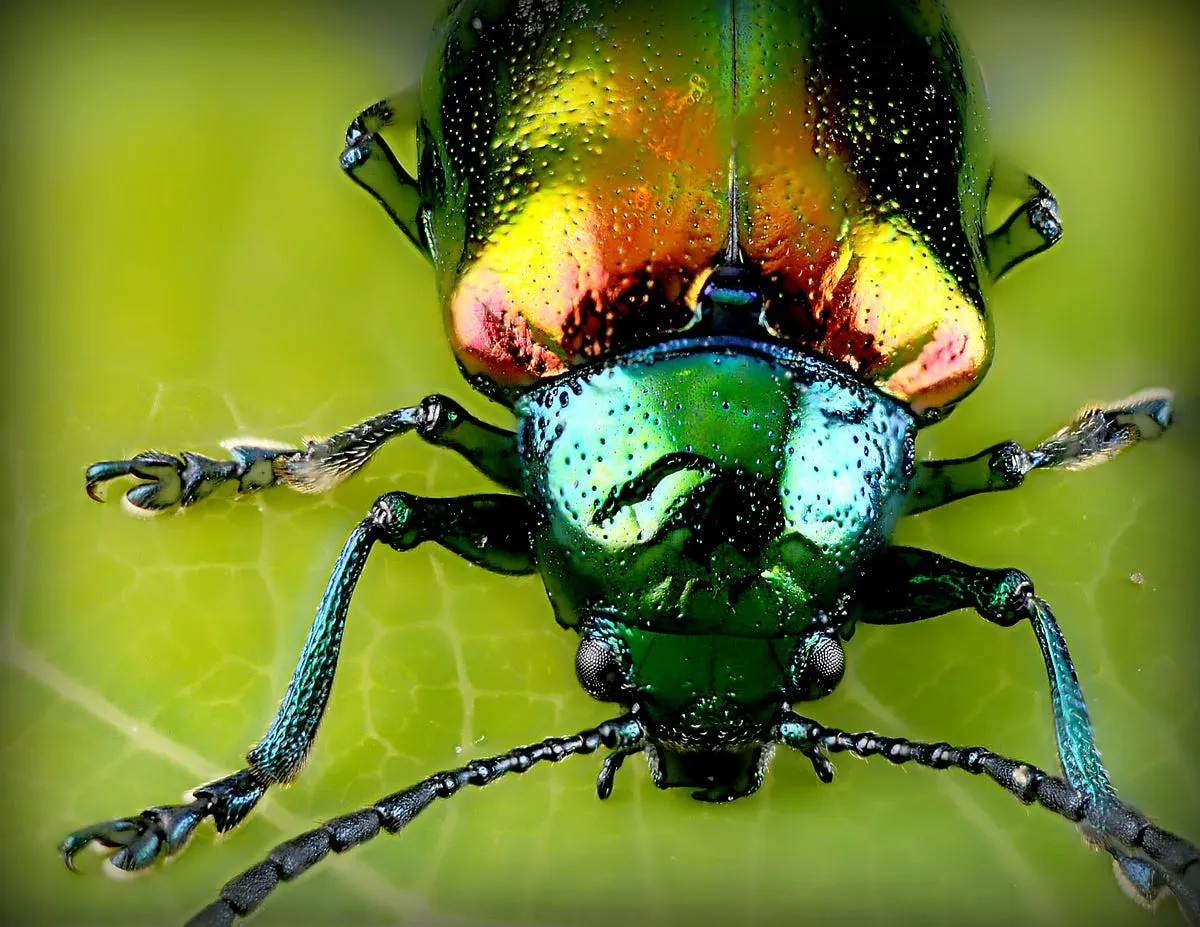
Photo by Alan Emery on Unsplash
Which Sony macro lens is best?
Top recommendations include the Sony FE 90mm f/2.8 Macro G OSS as the gold standard, the FE 50mm f/2.8 Macro as the compact achiever and the Laowa 100mm f/2.8 2X Ultra Macro APO for extreme magnification.
- Sony FE 90mm f/2.8 Macro G OSS — Check Sony FE 90mm f/2.8 Macro G OSS on Amazon
- Sony FE 50mm f/2.8 Macro — Check Sony FE 50mm f/2.8 Macro on Amazon
- Laowa 100mm f/2.8 2X Ultra Macro APO — Check Laowa 100mm f/2.8 2X Ultra Macro APO on Amazon
Accidental Encounter with the Microscopic
Why Sony for Macro?
Sony’s mirrorless cameras offer several advantages for macro enthusiasts:
- Focus Peaking & Magnification: Live view with focus peaking and magnification is a godsend for nailing critical focus in macro, where depth of field is razor-thin.
- Excellent Sensors: The detail and dynamic range from Sony sensors mean you can capture incredible image quality.
- In-Body Image Stabilization (IBIS): Many Sony bodies have IBIS, which helps immensely when shooting handheld at high magnifications, though for serious macro, a tripod is still king.
- Growing Native Lens Selection: Sony has been consistently expanding its E-mount lens lineup, including some stellar macro options.
1. Sony FE 90mm f/2.8 Macro G OSS (The Gold Standard)
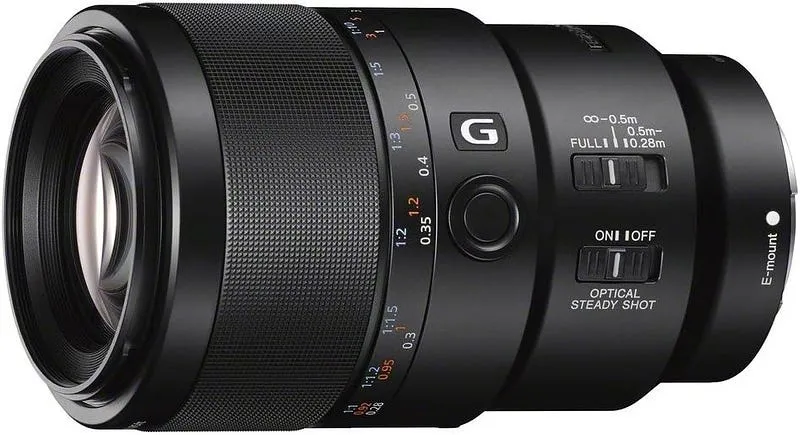
**Key Specs:**90mm focal length, f/2.8 aperture, 1:1 magnification ratio, Optical SteadyShot (OSS).
The 90mm focal length provides a comfortable working distance, meaning you don’t have to get too close to your subject, which is crucial for skittish insects. The sharpness is absolutely breathtaking, edge to edge.
The f/2.8 aperture, while often stopped down in macro for more depth of field, also makes this a surprisingly capable portrait lens. The Optical SteadyShot is a huge help for handheld shots, especially when you’re starting out or if a tripod isn’t practical. The clutch mechanism for switching between auto and manual focus is intuitive and a joy to use.
Pros: Exceptional sharpness, beautiful bokeh, excellent build quality, great working distance, OSS, dedicated focus hold button.
Cons: Can be pricey, relatively large and heavy compared to non-macro primes.
Ideal For: Serious macro enthusiasts, insect photography, floral details, product photography, and even portraits.
2. Sony FE 50mm f/2.8 Macro (The Compact Achiever)
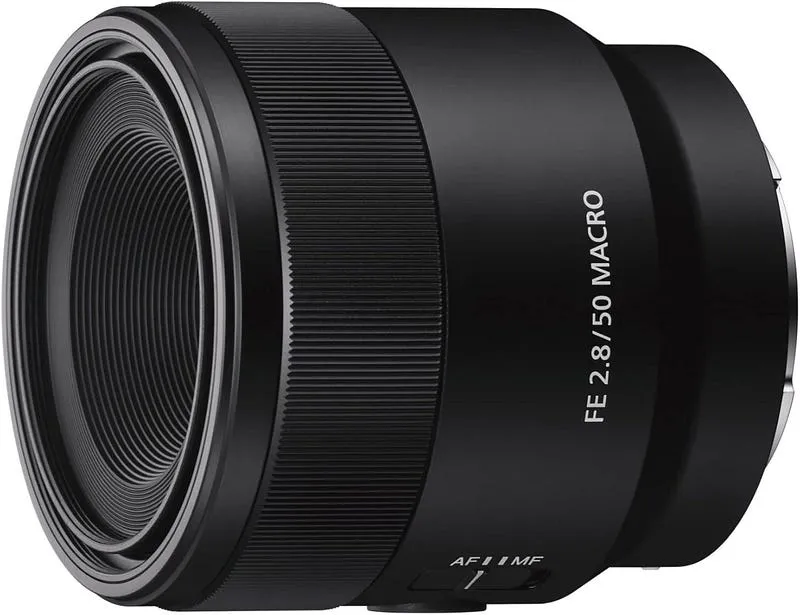
Key Specs: 50mm focal length, f/2.8 aperture, 1:1 magnification ratio.
It still delivers true 1:1 magnification and very good sharpness.
The main difference is the working distance — at 50mm, you’ll need to be significantly closer to your subject to achieve maximum magnification. This can be a challenge for live insects but is perfectly fine for static subjects like flowers, food, or small products.
It also doubles as a decent standard prime lens.
Pros: Affordable, compact and lightweight, good sharpness, 1:1 magnification.
Cons: Shorter working distance (can cast shadows or scare subjects), autofocus can be a bit slower than the 90mm G, no OSS (rely on camera IBIS if available).
Ideal For: Beginners in macro, floral photography, food photography, situations where a compact setup is key.
3. Laowa 100mm f/2.8 2X Ultra Macro APO (The Magnification Maverick — Manual Focus)
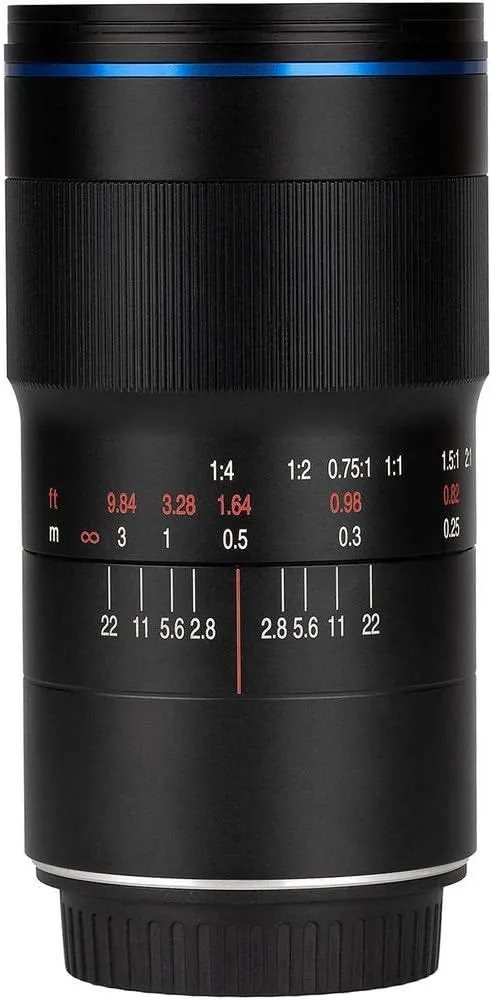
Key Specs: 100mm focal length, f/2.8 aperture, 2:1 magnification ratio, Apochromatic (APO) design. (Available for Sony E-mount)
Why It’s Special (A Note on Third-Party): While this isn’t a Sony native lens, Laowa has made a name for itself with unique, high-quality manual focus macro lenses. The standout feature here is the 2X magnification.
This means you can capture subjects at twice their life-size on the sensor, revealing even more incredible detail than a standard 1:1 macro lens. This is a fully manual lens (manual focus, manual aperture control). For some, this is a deal-breaker.
For dedicated macro photographers who often prefer precise manual control anyway, it’s a non-issue. The APO design helps control chromatic aberration, which is crucial at such high magnifications.
Pros: Incredible 2:1 magnification, excellent sharpness, APO design minimizes color fringing, solid build.
Cons: Manual focus only, no electronic communication with the camera (no EXIF data for aperture, no OSS from the lens).
Ideal For: Advanced macro photographers seeking extreme magnification, focus stacking, studio work, and anyone comfortable with manual focus.
Factors to Consider When Choosing Your Lens:
- Focal Length: Longer focal lengths (90mm, 100mm, 180mm) give you more working distance. Shorter focal lengths (50mm, 60mm) require you to be closer.
- Magnification Ratio: True macro lenses offer at least 1:1 magnification (life-size). Some go even further (like the Laowa 2X).
- Image Stabilization (OSS/IBIS): Very helpful for handheld macro, but a tripod is often preferred for maximum sharpness.
- Autofocus vs. Manual Focus: AF can be handy, but for precise macro work, many photographers prefer manual focus. Sony’s focus peaking makes MF much easier.
- Budget: Macro lenses can range from a few hundred to over a thousand dollars.
Beyond the Lens: Quick Tips for Macro Beginners
- Light is Everything: Good lighting is crucial. Use natural light, a ring light, a macro flash, or even a small LED panel.
- Stability is Key: A sturdy tripod and a remote shutter release (or self-timer) will minimize camera shake.
- Embrace Shallow Depth of Field: At macro distances, DoF is incredibly thin. Use it creatively or learn focus stacking (taking multiple shots at different focus points and merging them in post-production).
- Patience, Patience, Patience: Especially with live subjects. Wait for the right moment.
What are your favorite macro lenses or subjects? Share your thoughts in the comments below!

Photo by Rosie Kerr on Unsplash
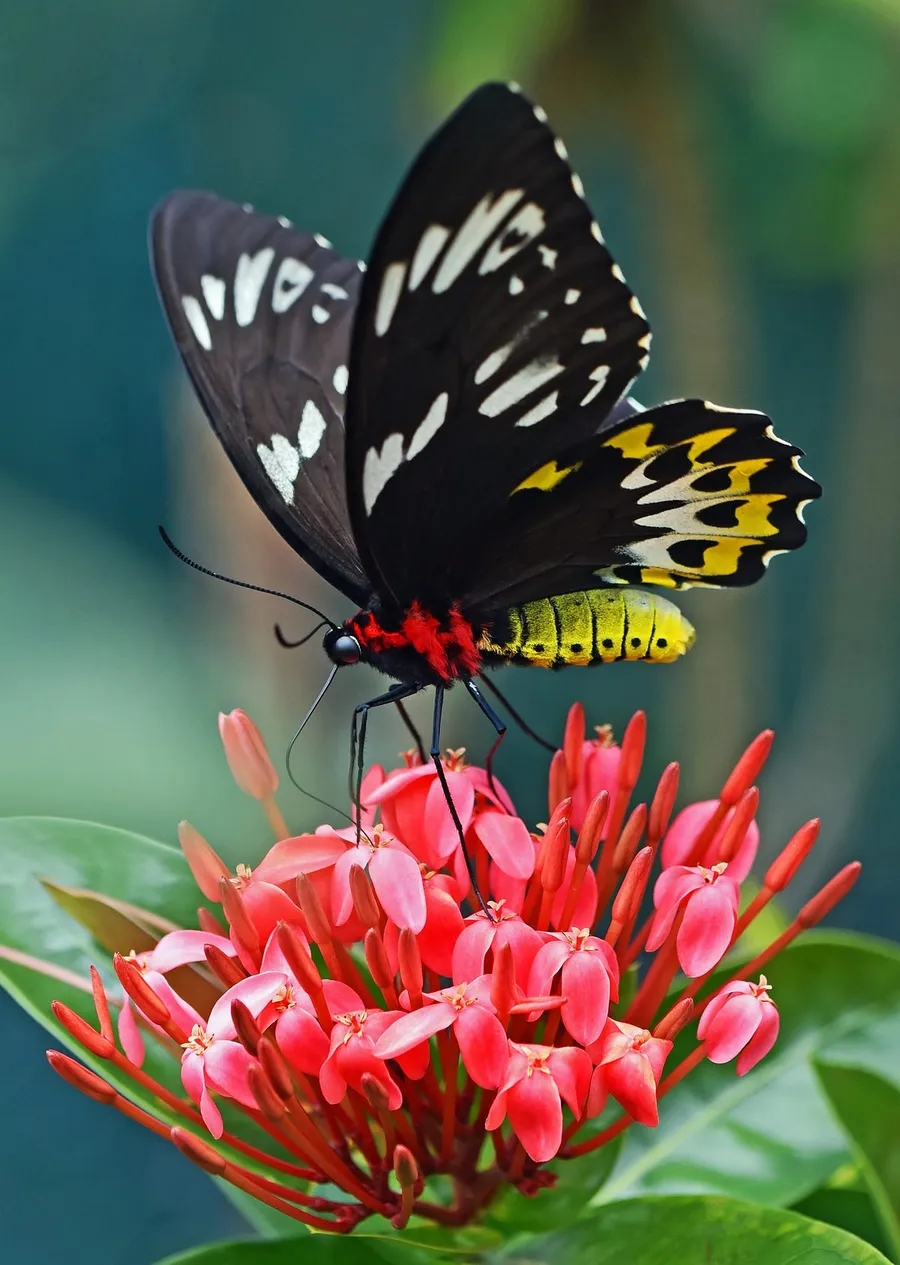
Photo by David Clode on Unsplash
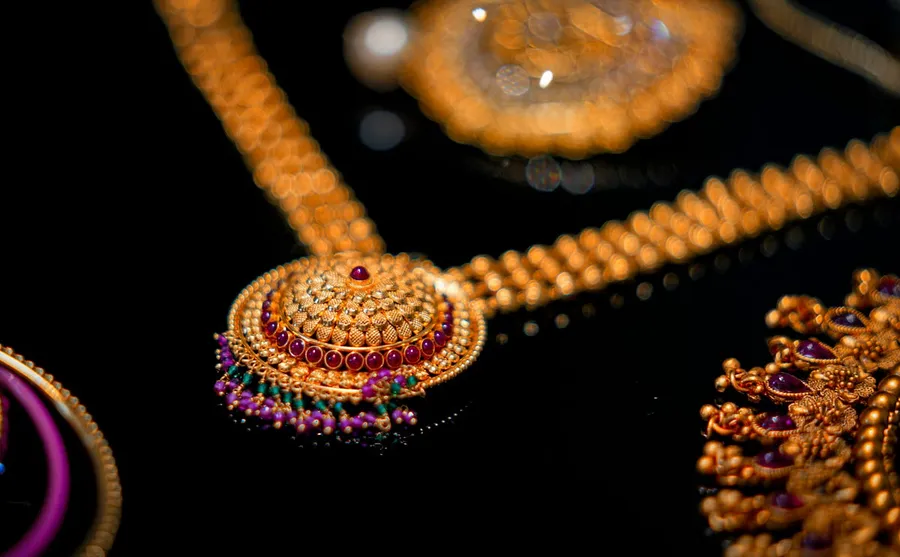
Photo by Vaibhav Nagare on Unsplash
More picks
- Sony Alpha camera a7 III — Check Sony Alpha camera a7 III Price on Amazon
Continue reading: Best Nikon Macro Lenses, Best Lenses for Sony E-Mount, or use the workflow setup chart.
Common Buying & Setup Questions
What is the top pick in Best Sony Macro Lenses?
The Sony FE 90mm f/2.8 Macro G OSS (The Gold Standard) (90mm · f/2.8 · Optical IS, Sony FE E-Mount (Full Frame)) leads our shortlist as the top overall pick, followed closely by the Sony FE 50mm f/2.8 Macro (50mm · f/2.8 · IBIS).
What focal length, aperture, and shutter speed work best for jewelry, watches, diamonds & fine collectibles?
For jewelry, watches, diamonds & fine collectibles, pair a 90mm – 105mm (gives working room so the lens barrel doesn't block light) lens at f/8 – f/11 with 10–25 focus-stacked frames with a shutter speed of Electronic front-curtain shutter on tripod (2-sec self-timer) and a working distance of 0.25m – 0.45m (10 to 18 inches). Recommended setup: Diffused light cone/tent + black flag cards to define metal edges + 5500K high-CRI continuous LEDs..
Camera & Lens Settings by Real-World Use Case
Match your focal length, aperture, shutter speed, and lighting modifier to the exact environment you shoot in.
Jewelry, Watches, Diamonds & Fine Collectibles
- Best Body:
- Canon EOS R5 / Nikon Z7 II / OM System OM-1 Mark II
- Ideal Lens:
- 90mm – 105mm f/2.8 1:1 Macro Lens
- Aperture & Shutter:
- f/8 – f/11 with 10–25 focus-stacked frames · Electronic front-curtain shutter on tripod (2-sec self-timer)
- Room Distance:
- 0.25m – 0.45m (10 to 18 inches)
Dental, Orthodontic & Clinical Documentation
- Best Body:
- Canon EOS R50 / Canon EOS 90D / Nikon Z50 II
- Ideal Lens:
- Canon EF/RF 100mm f/2.8 Macro or Nikon MC 105mm f/2.8 Macro
- Aperture & Shutter:
- f/16 – f/22 (intraoral arch depth of field) or f/8 (extraoral portrait) · 1/160s – 1/200s (X-sync with macro ring or twin flash)
- Room Distance:
- 0.25m – 0.4m (intraoral) / 1.5m (full-face smile portrait)
Tattoo Artists & Micro-Realism Portfolios
- Best Body:
- Sony Alpha a7 III / Fujifilm X-T4
- Ideal Lens:
- 90mm f/2.8 Macro (detail) or 50mm f/1.8 (sleeves & back pieces)
- Aperture & Shutter:
- f/5.6 – f/8 (keeps curved forearms and calves sharp edge-to-edge) · 1/125s – 1/200s handheld (or 1/60s on tripod)
- Room Distance:
- 0.4m – 1.5m (1.5 to 5 ft)

Written by
Marien CartelMarien Cartel runs Marien Cartel Photography, a camera and lens buying-guide site, and photographs the gear shown on it.
Related Guides
Best Lenses for Sony A1 II: Aperture, Stabilization & Mount Guide
Best Lenses for Sony A1 II: a side-by-side look at Sony FE 24–70mm f/2.8 GM and Sony FE 70–200mm f/2.8 GM, with strengths, trade-offs and buying advice.

Canon RF Macro Lens: Sharpness, Aperture & Mount Picks
Shooting close-up with the Canon RF 100mm Macro: what it does brilliantly, the patience it demands, and whether it belongs in your RF kit.
Best Lenses for Sony a6300: Sharpness, Aperture & Mount Picks
Best Lenses for Sony a6300: Sony 18–105mm f/4 G OSS, Sigma 16mm f/1.4 DC DN and Sony 35mm f/1.8 OSS compared on features, price and who each one suits.
Best Lenses for the Sony ZV-E1: Sharpness, Aperture & Mount Picks
Best Lenses for the Sony ZV-E1: Sony FE 16–35mm f/4 G, Sony FE 35mm f/1.8 and Sony FE 20mm f/1.8 G compared on features, price and who each one suits.
Best Lenses for Canon EOS c70: Aperture, Stabilization & Mount Guide
Best Lenses for Canon EOS c70 — Canon RF 15–35mm f/2.8L IS and Canon RF 24–105mm f/4L IS compared, with pros, cons and who should buy which.
Best Lenses for Panasonic S1H: Aperture, Stabilization & Mount Guide
Best Lenses for Panasonic S1H buying guide: Sigma 35mm f/1.4 DG DN and Panasonic Lumix S 85mm f/1.8 compared on image quality, autofocus, build, and price.