6 Best Cameras for Beginner Filmmakers
As an Amazon Associate we earn from qualifying purchases. Some links in this guide are affiliate links, see our affiliate disclosure for details.
Top Picks & Key Specifications at a Glance
| Model | Best For | Mount / System | Key Optical & Sensor Specs | Check Price |
|---|---|---|---|---|
1Sony A7 IV | Top Overall Pick | Sony FE E-Mount (Full Frame) | High-Resolution Optics & Fast AF | Amazon ↗ |
2Fujifilm X | H2S | Fujifilm X-Mount (APS-C 1.5x) | APS-C · 26MP | Amazon ↗ |
3Panasonic Lumix GH5 | Recommended Pick | Micro Four Thirds (2.0x) | APS-C · 4K UHD | Amazon ↗ |
4Canon EOS R7 | Recommended Pick | Canon RF-S / RF (APS-C 1.6x) | Full-Frame · 32.5MP | Amazon ↗ |
Key Picks for beginner filmmakers
For beginners who want a camera that grows with them, the Sony FX3 is the most film-focused choice on this list, with a 12.1-megapixel full-frame sensor and strong low-light video. The Blackmagic Pocket Cinema Camera 6K Pro is a manual, cinema-style option with built-in ND filters, the Sony A7 IV is a reliable hybrid, the Fujifilm X-H2S is a fast stabilized APS-C body, the Sony ZV-E10 II is the affordable creator camera, the Panasonic Lumix GH5 is a long-time video favourite, and the Canon EOS R7 is an APS-C body with strong autofocus. Prices vary widely, so pick by budget and workflow.
What should a beginner filmmaker look for?
- Good codecs and colour. 10-bit recording and a Log profile allow colour grading later.
- Autofocus. Reliable tracking helps one-person crews.
- Stabilization. In-body stabilization smooths handheld shots.
- Audio inputs. A microphone jack and headphone monitoring.
- Lens choice. Affordable lenses expand creative options.
- Ease of use. A friendly interface lets beginners focus on storytelling.
1. Sony FX3
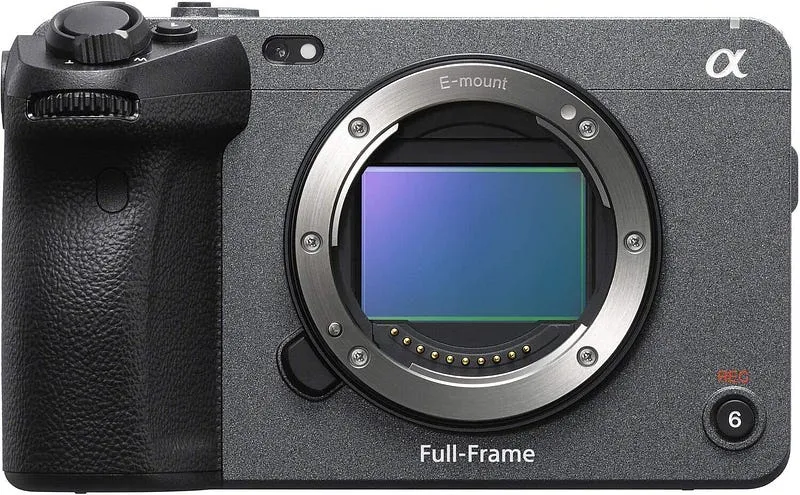
The Sony FX3 is a compact Cinema Line camera with a 12.1-megapixel full-frame Exmor R sensor and 4K recording at up to 120p. Its large pixels give strong low-light performance. It has a built-in cooling fan for long takes, and it uses the Sony E mount. It is expensive for a beginner, but it removes many technical limits.
2. Blackmagic Pocket Cinema Camera 6K Pro
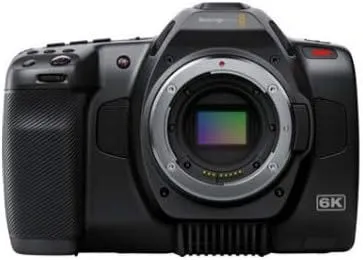
The Blackmagic Pocket Cinema Camera 6K Pro has a Super 35 sensor, built-in ND filters and a DaVinci Resolve Studio licence included. It records high-quality RAW and gives full manual control, which teaches the fundamentals. It is less friendly for run-and-gun work and photos.
3. Sony A7 IV
The Sony A7 IV is a hybrid workhorse with advanced autofocus, good colour and a user-friendly interface. It suits filmmakers who also shoot photos. See the Sony A7 IV guide.
4. Fujifilm X-H2S
The Fujifilm X-H2S is a stylish performer with a stacked 26-megapixel APS-C sensor, strong in-body stabilization and high frame rates. It records in high-quality codecs, which suits serious video work.
5. Sony ZV-E10 II
The Sony ZV-E10 II is affordable and light, with easy autofocus and creator-friendly features, so it suits vlogging and short-form content. Its stabilization uses a crop, but it is a good stepping stone into content creation.
6. Panasonic Lumix GH5
The Panasonic Lumix GH5 is a Micro Four Thirds camera that has long been a hybrid favourite, with 4K recording up to 60p and a flexible set of video tools. Lenses are small and affordable, but the sensor is smaller than APS-C.
7. Canon EOS R7
The Canon EOS R7 is an APS-C camera, not full frame, with a 32.5-megapixel sensor, a robust autofocus system, in-body stabilization and an intuitive control layout.
How do they compare?
| Camera | Sensor | Best for | Trade-off |
|---|---|---|---|
| Sony FX3 | Full frame, 12.1 MP | Low-light video | Price |
| Blackmagic 6K Pro | Super 35 | Learning cinema workflows | Manual and bulky |
| Sony A7 IV | Full frame, 33 MP | Hybrid shooters | 4K60 crop |
| Fujifilm X-H2S | APS-C stacked | Speed and stabilization | Smaller sensor |
| Sony ZV-E10 II | APS-C | Budget and creators | Stabilization crop |
| Panasonic GH5 | Micro Four Thirds | Small lenses and codecs | Weaker low light |
| Canon EOS R7 | APS-C | Autofocus and photos | Rolling shutter in some modes |
The specifications are summarised from the makers' published information; confirm details on each page.
Tips for beginner filmmakers
- Prioritise sound. A good microphone improves a film more than a better camera.
- Learn light. Window light and a bounce card cost little.
- Start with one lens. A standard zoom or a wide prime covers a lot.
- Shoot short projects. Short films teach more quickly than long ones.
See also the best cameras for video under $1000, the best camera for filmmaking on a budget and the best camera for YouTube beginners.
Frequently asked questions
Do beginners need a cinema camera? No. A hybrid camera is enough to learn storytelling.
Is full frame necessary? No. Many films are shot on APS-C and Micro Four Thirds.
What matters most for audio? A microphone close to the subject and a way to monitor sound.
Should I buy used? Used bodies are a good way to afford a better camera.
Camera & Lens Settings by Real-World Use Case
Match your focal length, aperture, shutter speed, and lighting modifier to the exact environment you shoot in.
Tattoo Artists & Micro-Realism Portfolios
- Best Body:
- Sony Alpha a7 III / Fujifilm X-T4
- Ideal Lens:
- 90mm f/2.8 Macro (detail) or 50mm f/1.8 (sleeves & back pieces)
- Aperture & Shutter:
- f/5.6 – f/8 (keeps curved forearms and calves sharp edge-to-edge) · 1/125s – 1/200s handheld (or 1/60s on tripod)
- Room Distance:
- 0.4m – 1.5m (1.5 to 5 ft)
Barbershops, Hairstylists & Color Salons
- Best Body:
- Sony a7 IV / Canon EOS R6 Mark II
- Ideal Lens:
- 50mm f/1.8 (tight stations) or 85mm f/1.8 (spacious salons)
- Aperture & Shutter:
- f/1.8 – f/2.8 (blurs background chairs while keeping the lineup tack-sharp) · 1/160s – 1/250s (freezes subtle head movement in the chair)
- Room Distance:
- 1.5m – 2.4m (5 to 8 ft from the styling chair)
Makeup Artists (MUA) & Beauty Tutorials
- Best Body:
- Sony Alpha a6400 / Canon G7 X Mark III
- Ideal Lens:
- Sigma 56mm f/1.4 DC DN (APS-C) or 50mm–85mm f/1.8 (Full Frame)
- Aperture & Shutter:
- f/2.8 – f/4 for full-face sharpness; f/5.6 for macro eye/lip close-ups · 1/125s for stills; 1/50s (24p) or 1/120s (60p) for video tutorials
- Room Distance:
- 1.2m – 2.2m (4 to 7 ft)

Written by
Marien CartelMarien Cartel runs Marien Cartel Photography, a camera and lens buying-guide site, and photographs the gear shown on it.
Related Guides
Best Camera for Beginner Photography Business
Compare the best cameras for starting a photography business, including the Sony a6400, Canon EOS R10, and Nikon Z6 II for portraits, events, and client work.

Best Camera for Nature Photography Beginner
Best Camera for Nature Photography Beginner: Canon EOS R10, Nikon D7500 and Panasonic Lumix FZ2000 compared on features, price and who each one suits.
Best Beginner Camera: Recommended Bodies & Kit Lenses
Best Beginner Camera: side-by-side comparison of Canon EOS R100, Canon EOS R50 and Nikon Z50 II covering key specs, real-world handling, pros, cons, and value.
Best Sony Camera for a Beginner on a Budget
The top pick is the Sony a6100, with the 16-50mm kit lens and a Sigma 30mm f/1.4 as a first prime. It includes a budget breakdown and beginner tips.
Best Cheap Camera for Photography Beginners
Best Cheap Camera for Photography Beginners — Canon EOS R100, Canon EOS Rebel T7 and Nikon D3500 compared, with pros, cons and who should buy which.
Best DSLR Camera for Amateur Photographers
Best DSLR Camera for Amateur Photographers: what to look for, what to skip and how to choose the right one for your budget.