Best Camera for Japan Trip: Top Picks & Sensor Comparison
As an Amazon Associate we earn from qualifying purchases. Some links in this guide are affiliate links, see our affiliate disclosure for details.
Standout Choices for a trip to Japan
The Sony Alpha 7C is a strong choice for a Japan trip: it is a compact full-frame mirrorless camera with a 24.2-megapixel sensor, in-body image stabilization and interchangeable lenses, in a body of about 500 g. It handles dim temples, neon streets and bright landscapes, while staying small enough for crowded trains. Smaller cameras, such as the Ricoh GR III or the Fujifilm X100VI, are good alternatives if weight and discretion matter most. Pack extra batteries and memory cards.
What does a Japan camera need?
- Portability. Days involve walking, stairs and trains, so weight adds up.
- Low-light performance. Shrines, izakayas and neon districts are dim at night.
- Image stabilization. Slow shutter speeds help indoors where tripods are not allowed.
- Discretion. Quiet shutters and a small body respect crowded and sacred places.
- Battery and storage. Long days need spare power and cards.
Sony Alpha 7C
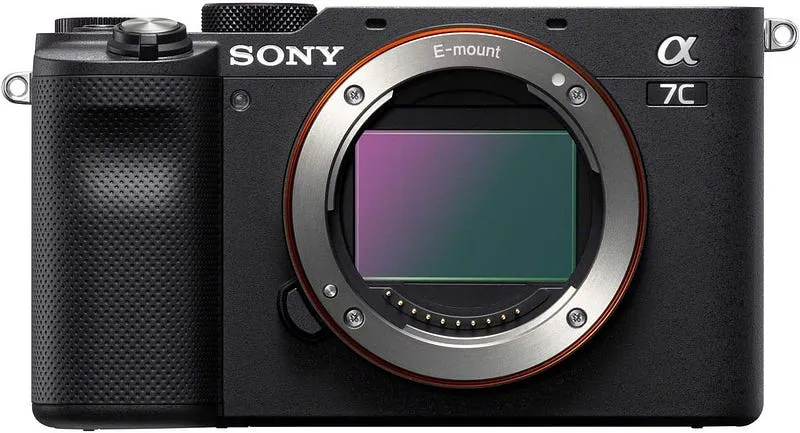
The Sony Alpha 7C was designed as a small full-frame body. Sony's published specifications include:
- 24.2-megapixel full-frame sensor. It gives strong image quality and low-light performance.
- Five-axis in-body stabilization. It helps handheld shots in dim interiors.
- Real-time tracking autofocus. It follows faces and eyes in busy scenes.
- Vari-angle screen and viewfinder. They help with low and high angles.
- E-mount lenses. A wide choice of Sony and third-party lenses, from small primes to zooms.
- Single SD card slot. Daily backups to a drive or cloud storage matter more with one card.
The A7C with a compact kit zoom makes a light travel setup, and a small prime lens makes it even lighter. See the best travel lenses for the Sony A7 IV and the best Sony cameras for travel for lens and body options.
Alternatives
| Camera | Strength | Trade-off |
|---|---|---|
| Ricoh GR III | Pocket-size, discreet | Fixed 28mm lens |
| Fujifilm X100VI | Compact, great colour | Fixed 23mm lens |
| Sony RX100 series | Pocketable zoom | Smaller sensor |
| Micro Four Thirds or APS-C body | Light kit with zooms | Smaller sensor than full frame |
Choosing your own camera
The best camera depends on the traveller. Key factors to consider are:
- Type of camera. Compact cameras are the most portable, while mirrorless and DSLR cameras offer more versatility and image quality.
- Lens selection. A wide-angle lens suits landscapes and city scenes, and a short telephoto helps with details and distant temples.
- Budget. Cameras range from a few hundred to several thousand dollars.
Ultimately, the best camera is the one that gets used.
Practical tips for photographing Japan
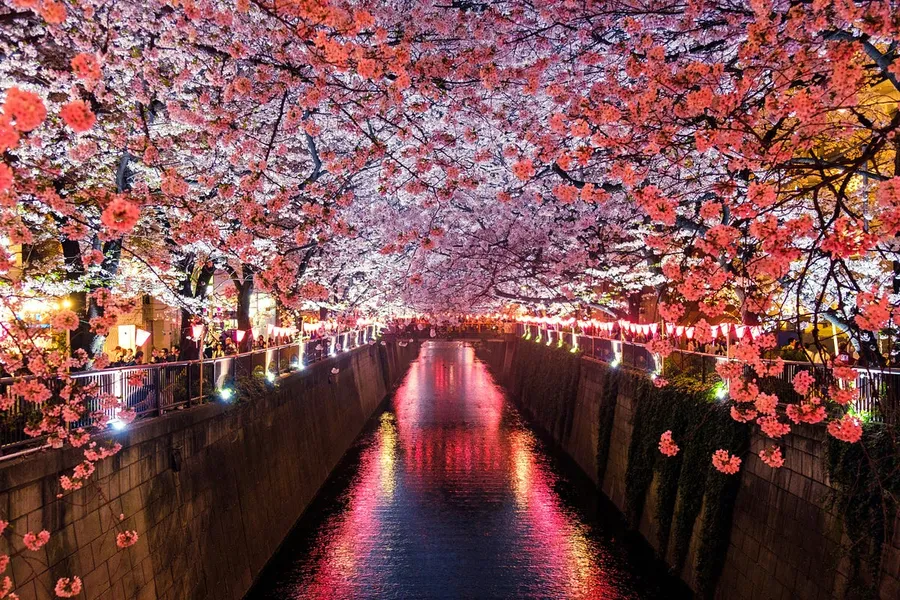
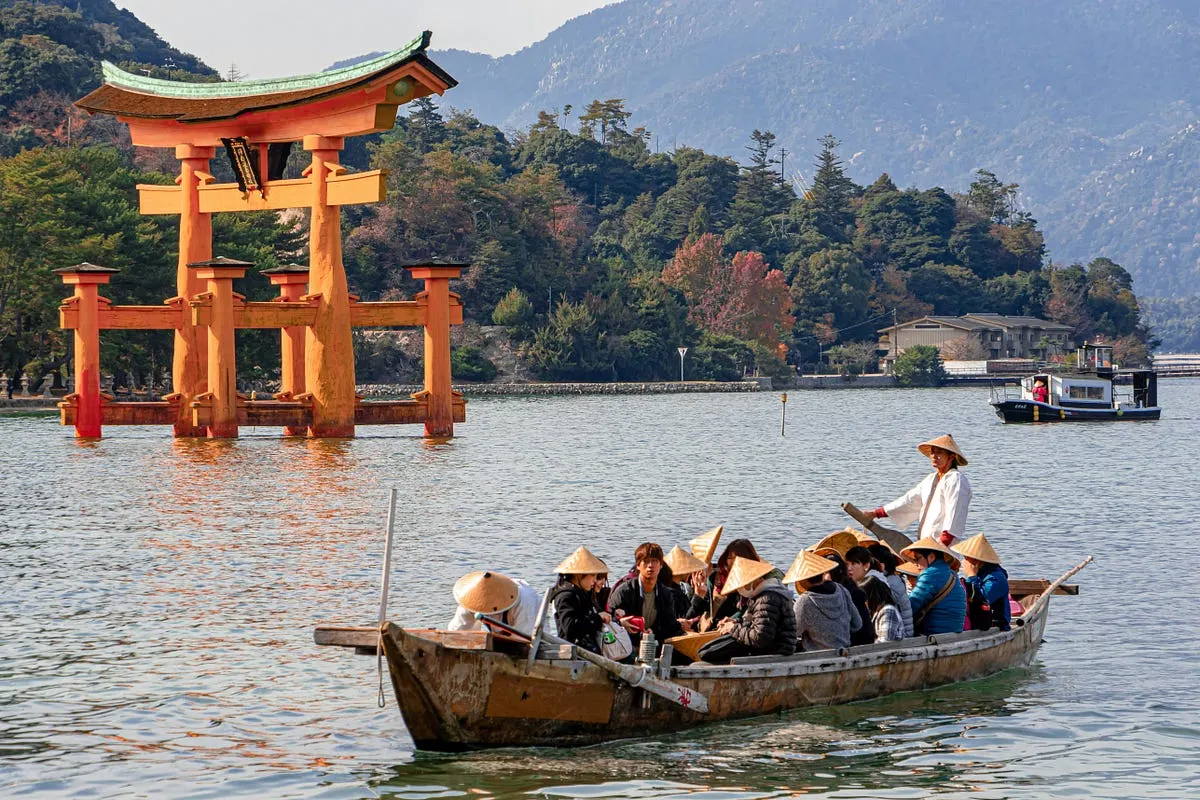
Photo by Sora Sagano on Unsplash
- Check the rules. Some temples, shrines, museums and restaurants restrict photography or tripods. Look for signs and ask when unsure.
- Be discreet with people. Ask before photographing individuals, particularly in traditional districts.
- Plan for seasons. Spring (cherry blossom) and autumn (leaves) are popular times, and crowds are heavy.
- Carry spare batteries and cards. Cold weather drains batteries faster.
- Check drone rules. Japan regulates drones, so read the current requirements before flying one.
- Back up every night. Copy photos to a drive or cloud storage.
For more on planning, see the best travel photography tips, the best 4K travel camera and the best camera for travel photography for beginners.
Frequently asked questions
Is full frame necessary for Japan? No. It helps in low light, but compact and APS-C cameras are lighter and work well.
Can I use a tripod in Japan? Many public places allow them, but some temples, trains and venues do not. Check local signs.
What lens is best for Japan? A versatile zoom such as 24-105mm or a 35mm prime covers most scenes.
How many batteries should I take? At least two or three spares for a full day of shooting.
Camera & Lens Settings by Real-World Use Case
Match your focal length, aperture, shutter speed, and lighting modifier to the exact environment you shoot in.
Street Photography, Japan/Europe Trips & Backpacking
- Best Body:
- Fujifilm X100VI / Ricoh GR III / Fujifilm X-T30 II / Sony a6700
- Ideal Lens:
- 23mm f/2 or 27mm f/2.8 Pancake (APS-C) — 35mm to 40mm equivalent
- Aperture & Shutter:
- f/2.0 (neon night street) or f/5.6 – f/8 (sunny zone-focusing from 2m to infinity) · 1/250s – 1/500s (freezes pedestrians mid-stride)
- Room Distance:
- 1.5m – 5m (candid street distance)
Tattoo Artists & Micro-Realism Portfolios
- Best Body:
- Sony Alpha a7 III / Fujifilm X-T4
- Ideal Lens:
- 90mm f/2.8 Macro (detail) or 50mm f/1.8 (sleeves & back pieces)
- Aperture & Shutter:
- f/5.6 – f/8 (keeps curved forearms and calves sharp edge-to-edge) · 1/125s – 1/200s handheld (or 1/60s on tripod)
- Room Distance:
- 0.4m – 1.5m (1.5 to 5 ft)
Barbershops, Hairstylists & Color Salons
- Best Body:
- Sony a7 IV / Canon EOS R6 Mark II
- Ideal Lens:
- 50mm f/1.8 (tight stations) or 85mm f/1.8 (spacious salons)
- Aperture & Shutter:
- f/1.8 – f/2.8 (blurs background chairs while keeping the lineup tack-sharp) · 1/160s – 1/250s (freezes subtle head movement in the chair)
- Room Distance:
- 1.5m – 2.4m (5 to 8 ft from the styling chair)

Written by
Marien CartelMarien Cartel runs Marien Cartel Photography, a camera and lens buying-guide site, and photographs the gear shown on it.
Related Guides
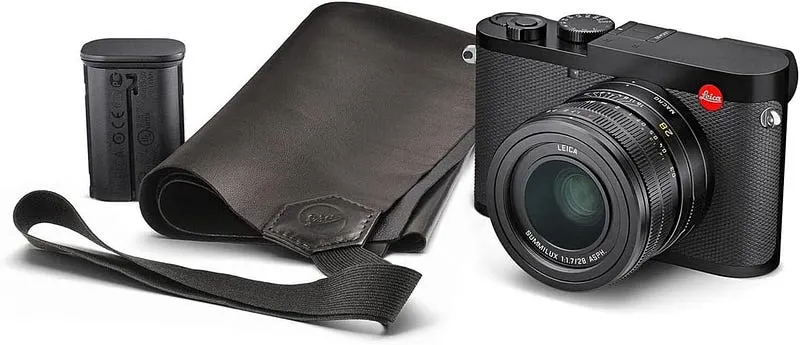
Best Leica Camera for Travel: Top Picks & Sensor Comparison
Best Leica Camera for Travel — what the Leica Q2 offers, where it falls short, and whether it is worth buying.
Best Affordable Camera for Travel: Top Picks & Sensor Comparison
Best Affordable Camera for Travel: a side-by-side look at Canon EOS R50, Sony ZV-E10 and Canon EOS R100, with strengths, trade-offs and buying advice.
Best Camera for Still Photography: Top Picks & Sensor Comparison
Which Camera for Still Photography is worth buying? See how Sony A7R V, Fujifilm X-T5 and Nikon Z8 stack up on specs, performance, and budget.
Best DSLR for Video: Top Picks & Sensor Comparison
Best DSLR for Video — Canon EOS R6 Mark II, Sony A7S III and Panasonic Lumix GH6 compared, with pros, cons and who should buy which.
Best Camera for Green Screen: Top Picks & Sensor Comparison
Best Camera for Green Screen — a practical buying guide covering what matters, common mistakes and what to buy.
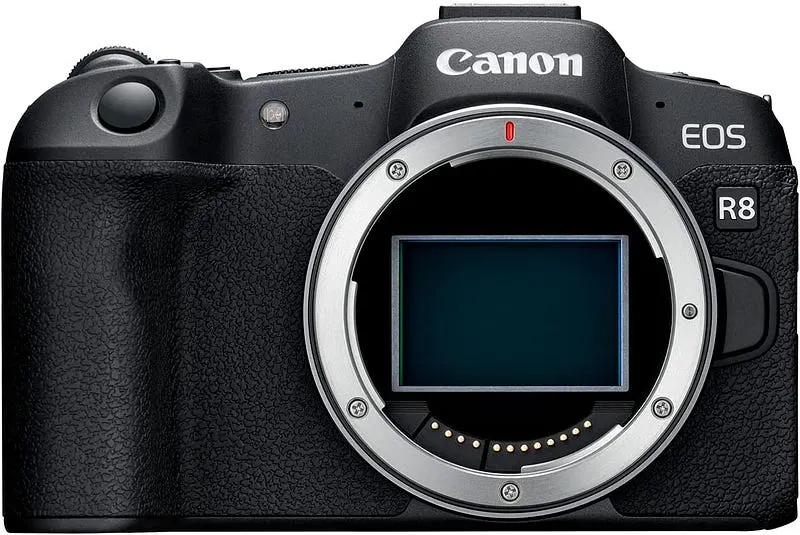
Best Full-Frame Camera for Beginners: Top Picks & Sensor Comparison
Best Full-Frame Camera for Beginners: Canon EOS R8, Nikon Z5 and Sony A7C II compared on features, price and who each one suits.