Best Camera for Social Media Marketing 2026: Reels-Ready Picks
As an Amazon Associate we earn from qualifying purchases. Some links in this guide are affiliate links, see our affiliate disclosure for details.
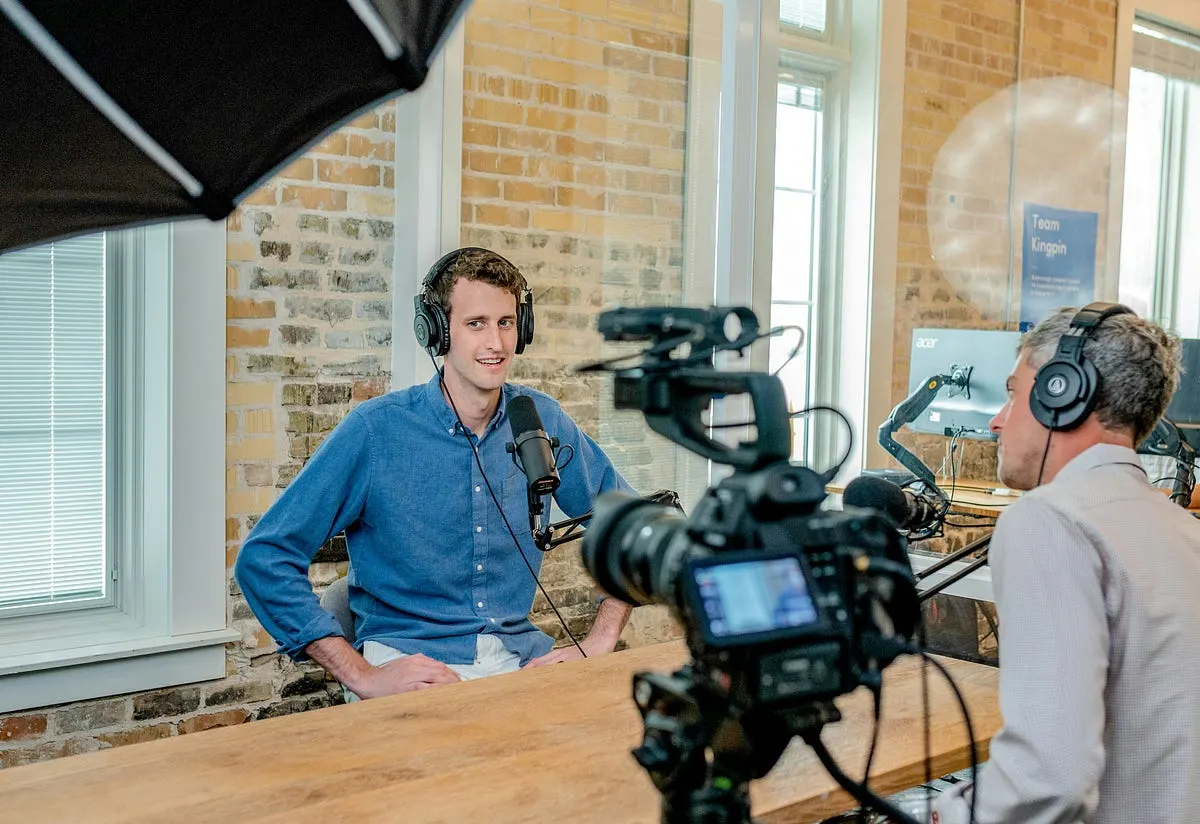
Photo by Austin Distel on Unsplash
Sharpness stopped being the problem a long time ago, because almost every current camera makes sharp photos. What people struggle with now is shaky footage, thin audio and Reels that come out cropped and awkward when the clip looked fine on a laptop.
So this guide ranks cameras by what decides social video: audio input, autofocus that does not hunt, vertical-friendly shooting, stabilization and an easy way to get files onto a phone. Resolution comes last.
Quick verdict
| If you want... | Pick | Why |
|---|---|---|
| A capable all-round value pick | Sony Alpha a6400 | 24.2 MP APS-C, 4K, eye-tracking autofocus, 180-degree flip screen and Wi-Fi transfer |
| A simple, user-friendly body | Canon EOS M50 Mark II | Easy interface and good autofocus; Canon's newer APS-C bodies are on the RF mount, so expect few new EF-M lenses |
| A film-simulation look | Fujifilm X-T30 | Film simulation modes for vintage-style content |
| Video-first shooting | Panasonic Lumix GH5 | Powerful video body; the newer GH7 has replaced it |
| Pocket portability | DJI Pocket 2 | Compact vlogging camera; now two generations old |
What to Look for in a Camera for Social Media Marketing
Before the recommendation, here are the key features to consider when choosing a camera for social media marketing:
- 1. Audio. This is the single biggest quality gap between amateur and professional content, and it has nothing to do with your sensor. A microphone input, or a good wireless mic, will improve your videos more than any camera body upgrade. Non-negotiable.
- 2. Autofocus that never hunts. You are almost always filming yourself, alone, with nobody behind the camera checking focus. Modern AI subject tracking has made this a solved problem — but only on recent bodies.
- 3. Vertical-native shooting. Reels, TikTok and Shorts are vertical. Shooting horizontal and cropping in post throws away both resolution and framing. Some 2026 cameras now include vertical tripod mounts and vertical interfaces. This is a real workflow advantage, not a gimmick.
- 4. Stabilisation. Walk-and-talk footage that jitters is unwatchable. Either get in-body stabilisation, or get a gimbal-based camera that solves it mechanically.
- 5. Workflow and heat management. Can you get files onto your phone in under a minute? Will the camera shut down twenty minutes into a long take? Boring questions — but they decide whether you actually publish.
- 6. Resolution. Last. Genuinely last. Every camera here shoots 4K. Megapixels stopped being the bottleneck years ago. Consistency is what wins.
Top Pick: The Sony Alpha a6400
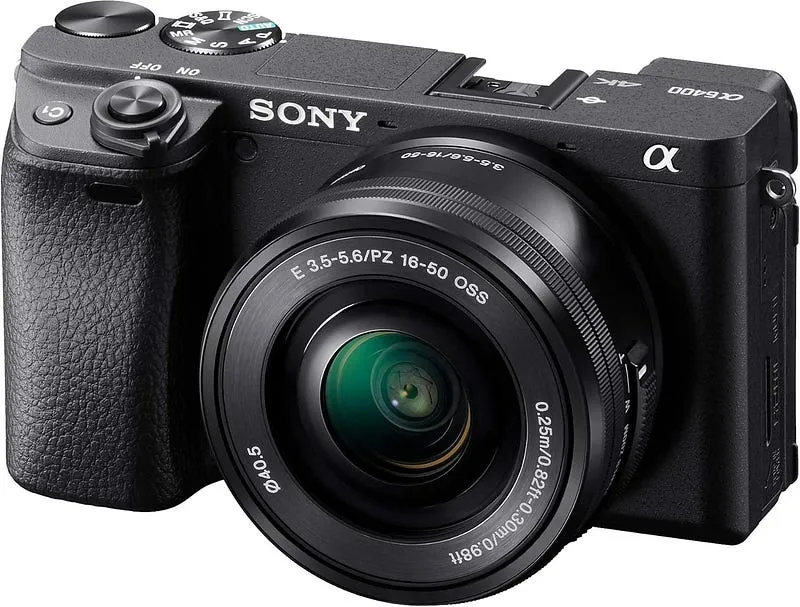
The Sony Alpha a6400 is a popular choice for social media marketing. Here is why:
- Image Quality: The a6400 has a 24.2MP APS-C sensor, delivering high-resolution images that make content pop.
- Video Performance: It shoots 4K video with incredible detail and color accuracy, perfect for creating professional-looking Reels and YouTube videos.
- Autofocus: The real-time autofocus and eye-tracking features help, especially when filming yourself or capturing fast-moving subjects.
- Portability: It’s compact and lightweight, making it easy to carry around for on-the-go content creation.
- Flip Screen: The 180-degree flip screen is ideal for vlogging and selfies, letting you frame shots properly.
- Connectivity: With built-in Wi-Fi, files can be transferred to a phone and posted to social media quickly.
Other Great Options to Consider
While the Sony a6400 is the pick here, there are other excellent cameras for social media marketing, depending on your needs and budget:
- Canon EOS M50 Mark II: A great alternative with a user-friendly interface and excellent autofocus.
- Fujifilm X-T30: Known for its film simulation modes, perfect for creating unique, vintage-style content.
- Panasonic Lumix GH5: A powerhouse for video content creators, especially if you’re into cinematic shots.
- DJI Pocket 2: If portability is your top priority, this compact camera is perfect for vlogging and on-the-go content.
Final Thoughts: Invest in Your Craft
Investing in the right tools is essential for success. While it is possible to start with just a smartphone, upgrading to a quality camera can take content to the next level.
The Sony a6400 is a strong option, but the best camera depends on your specific needs and budget. Whatever you choose, the goal is to create content that resonates with your audience and helps you stand out in a crowded digital landscape.
So, what are you waiting for? It is time to elevate your social media marketing game with the right camera.
Pair this guide with Best Camera for ASMR Content Creators, Best Cheap Camera for Photography Beginners, and the depth-of-field tool.
Common Buying & Setup Questions
What is the top pick in Best Camera for Social Media Marketing 2026?
The Quick verdict (APS-C · 24.2MP · 4K UHD · Eye-AF, Sony E-Mount (APS-C 1.5x)) leads our shortlist as the top overall pick, followed closely by the Other Great Options to Consider (High-Resolution Optics & Fast AF).
What focal length, aperture, and shutter speed work best for short-form reels, tiktok & brand marketing?
For short-form reels, tiktok & brand marketing, pair a 18mm – 50mm on APS-C (27mm–75mm equivalent) lens at f/2.8 constant zoom or f/1.8 prime with a shutter speed of 1/60s (30p) or 1/120s (60p B-roll) and a working distance of 1.0m – 2.5m with L-bracket vertical mount. Recommended setup: L-bracket vertical tripod plate + dual wireless clip-on mics + USB-C to Lightning/USB-C cable for 10-second phone import..
Camera & Lens Settings by Real-World Use Case
Match your focal length, aperture, shutter speed, and lighting modifier to the exact environment you shoot in.
Short-Form Reels, TikTok & Brand Marketing
- Best Body:
- Sony Alpha a6400 / Fujifilm X-S20 / Canon EOS R50
- Ideal Lens:
- Sigma 18–50mm f/2.8 DC DN (covers wide B-roll to tight 50mm talking shots)
- Aperture & Shutter:
- f/2.8 constant zoom or f/1.8 prime · 1/60s (30p) or 1/120s (60p B-roll)
- Room Distance:
- 1.0m – 2.5m with L-bracket vertical mount
YouTube Talking-Head, Podcasting & Desk Streaming
- Best Body:
- Sony ZV-E10 II / Sony a6700 / Canon EOS R50
- Ideal Lens:
- Sigma 16mm f/1.4 DC DN (APS-C) or 24mm f/1.8 (Full Frame)
- Aperture & Shutter:
- f/1.4 – f/2.0 (separates speaker from a close desk wall within 4 feet) · 1/50s (for 24fps) or 1/60s (for 30fps) — 180-degree shutter rule
- Room Distance:
- 0.8m – 1.4m (2.5 to 4.5 ft desk arm mount)
Daily Vlogging, Travel Vlogs & Walk-and-Talk
- Best Body:
- Sony ZV-1 / DJI Osmo Pocket 3 / Sony ZV-E10 II
- Ideal Lens:
- Sony E 11mm f/1.8 or 10–20mm f/4 PZ (APS-C) / Built-in 18–50mm
- Aperture & Shutter:
- f/1.8 – f/2.8 (with built-in ND filter or variable ND outdoors) · 1/50s – 1/120s with ND filter in bright sun
- Room Distance:
- 0.5m – 0.8m (handheld arm's length on grip/tripod)

Written by
Marien CartelMarien Cartel runs Marien Cartel Photography, a camera and lens buying-guide site, and photographs the gear shown on it.
Related Guides
Best Camera for ASMR Content Creators (2026): G100D vs ZV-1
Panasonic Lumix G100D or Sony ZV-1 for ASMR? Why quiet operation, close focus and a flip screen matter more than resolution, with a quick verdict.
10 Best Cameras for Influencers (2026): Guide & Reviews
Ten cameras for influencers compared, from the Sony a7 III and Olympus OM-D E-M1 Mark III to the Fujifilm X-T30 and Canon EOS R.

Best Camera for YouTube Beginners (2026): 5 Picks by Budget
Webcam, Panasonic G7, Sony a6400, a7 III or Canon R6 for starting a YouTube channel? A quick verdict by budget, plus why audio and lighting come first.
Best Cameras for Instagram in 2026
Best Cameras for Instagram in 2026: a side-by-side look at Canon EOS R8, Sony α7 IV and Fujifilm X-T5, with strengths, trade-offs and buying advice.

Best Camera for Walking Videos (2026): Hero13 vs Osmo Pocket 3
GoPro Hero13 Black, DJI Osmo Pocket 3 or Sony ZV-1 II for walking videos? A quick verdict by terrain, stabilization and whether you talk to the camera.
6 Best starter camera for wildlife photography: (2026 Guide & Reviews)
Best starter camera for wildlife photography: Panasonic FZ80, Nikon D500 and Canon EOS 5D Mark IV compared on features, price and who each one suits.