Best Lens For Portrait Photography Canon

As an Amazon Associate we earn from qualifying purchases. Some links in this guide are affiliate links — see our affiliate disclosure for details.
There’s a moment in every photographer’s journey where gear stops being just specs on a page and starts feeling like a magic wand. For me, that moment was all about finding the right portrait lens.
- Canon EF 50mm f/1.8 STM — View on Amazon
- Canon EF 85mm f/1.2L II USM — View on Amazon
- Canon EF 85mm f/1.4L IS USM — View on Amazon
- Canon EF 70–200mm f/2.8L IS II/III USM — View on Amazon
I remember my early days, armed with my first Canon DSLR and the trusty kit lens. I was obsessed with learning composition, lighting, and posing. I took photos of my friends, my family, anyone who would hold still for five seconds. And while I was proud of those photos, something was missing. They were good, but they weren’t great. They looked like sharp, well-composed snapshots, not the professional, soulful portraits I saw in magazines and dreamed of creating.
The background was distracting. The faces, while in focus, didn’t have that beautiful three-dimensional “pop.” My subjects blended into the scene instead of commanding it. I was frustrated. I thought, “Maybe I just don’t have the eye.” It’s a defeating feeling.
Then, at a local photowalk, I saw another photographer with a Canon camera. She was taking a portrait of a model under a bridge, and I peeked at the back of her camera. My jaw dropped. The image was creamy, the background a beautiful, soft blur (what I now know is called bokeh), and the model’s eyes were so sharp and alive you felt like you could step into the photo.
I had to ask. “What lens are you using?!”
She smiled, almost apologetically, as if she knew her secret weapon was about to be revealed. “It’s just the nifty fifty,” she said.
The what?
The “Aha!” Moment: The Canon EF 50mm f/1.8 STM
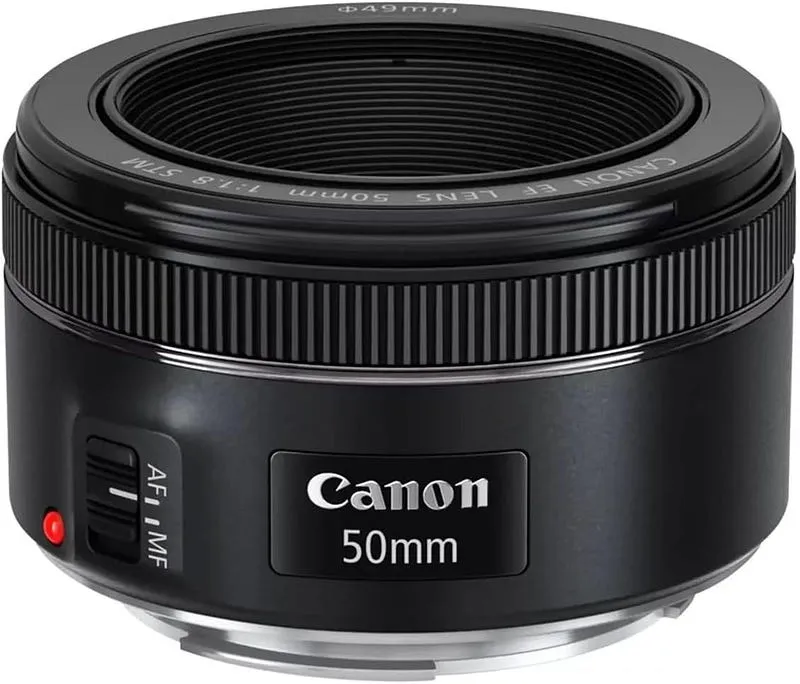
That afternoon, I went straight to the camera store and picked up the most affordable lens in my life: the Canon EF 50mm f/1.8 STM.
It was plastic, it was light, and it felt almost too simple. But that night, I took a photo of my wife reading on the couch. I set my aperture to f/1.8, focused on her eye, and clicked.
When I imported that photo to my computer, I finally had my “aha!” moment. The Christmas tree lights in the background had transformed into soft, glowing orbs. The clutter of the living room had vanished into a gentle, creamy canvas. And my wife? She was sharp, detailed, and separated from the background in a way that felt professional. This was the look I was after.
The 50mm f/1.8 was my gateway drug. It taught me the power of a wide aperture and a prime lens. For under $125, it completely revolutionized my photography. It is, without a doubt, the best starting point for any Canon shooter wanting to dive into portraits.
Canon EF 50mm f/1.8 STM — View on Amazon
But Is It the Best? My Journey Through the Portrait Trinity
The 50mm was a revolution, but as I grew as a photographer, I started to notice its limitations. On my crop-sensor camera at the time, it was a bit tight indoors. Sometimes, I wanted even more background separation or an even more flattering focal length.
I began to rent lenses for specific shoots. I was on a quest to find my best portrait lens. Through this, I learned that “best” is deeply personal — it depends on your budget, your style, and what you shoot.
Here’s the rundown of the lenses I’ve used and loved, the true workhorses of Canon portrait photography.
1. The King of Cream: Canon EF 85mm f/1.2L II USM
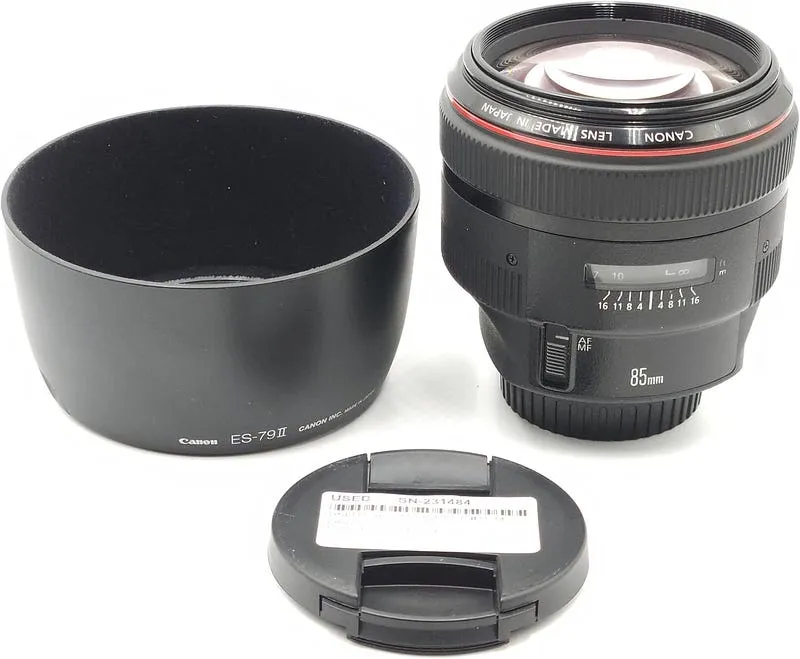
If there is a legendary “king” of portrait lenses, this is it. I rented this lens for a maternity shoot, and the images it produced are still some of my all-time favorites. The bokeh isn’t just blurred; it’s like melting butter. The sharpness on the eyes at f/1.2 is almost surreal.
- Why it’s great: Unmatched bokeh and dreamy quality. Incredibly sharp where it counts.
- The downside: It’s heavy, expensive, and focuses slowly. It’s a specialized tool, not a walk-around lens.
- Best for: Studio photographers and professionals who want that ultimate, creamy, professional look.
Canon EF 85mm f/1.2L II USM — View on Amazon
2. The Modern Workhorse: Canon EF 85mm f/1.4L IS USM
This is the lens I eventually sold my 50mm to help buy. For me, this is the perfect balance. It has nearly the beautiful bokeh of the f/1.2 version but adds something miraculous: Image Stabilization (IS). This means I can shoot handheld in lower light and get tack-sharp images. It’s also lighter and focuses much faster.
- Why it’s great: Excellent sharpness, beautiful bokeh, IS is a game-changer, and it’s more versatile than the f/1.2.
- The downside: It’s still a significant investment (though less than the f/1.2).
- Best for: The professional portrait photographer who needs one reliable, incredible lens for almost every situation.
Canon EF 85mm f/1.4L IS USM — View on Amazon
3. The Versatile Powerhouse: Canon EF 70–200mm f/2.8L IS II/III USM
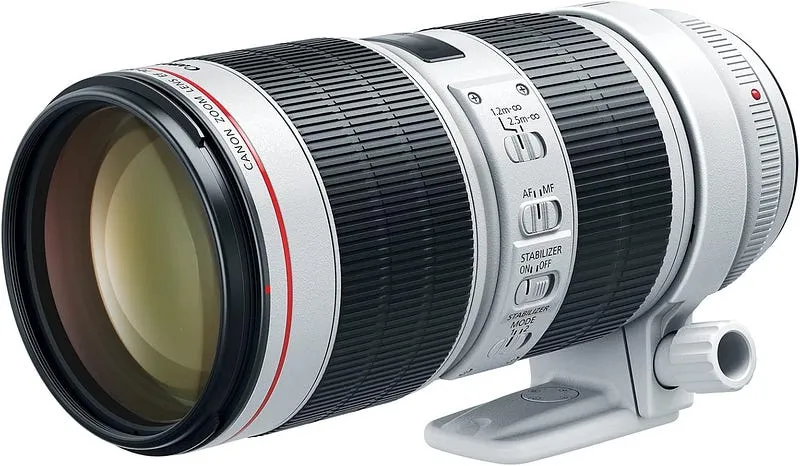
I don’t own this lens, but I rent it for every wedding I shoot. Why? Because it’s incredibly versatile. You can get full-body shots at 70mm and stunning, compressed headshots at 200mm without changing your position. The compression at 200mm flattens facial features beautifully and creates incredible background separation.
- Why it’s great: Incredible versatility, razor-sharp throughout the zoom range, great for events and sports too.
- The downside: It’s big, heavy, and intimidating. It also puts more distance between you and your subject, which can lessen connection.
- Best for: Wedding, event, and outdoor photographers who need one lens to do it all.
Canon EF 70–200mm f/2.8L IS II/III USM — View on Amazon
For the Mirrorless Shooters (The New Frontier)
If you’re on the EOS R system (like with an R5, R6, or R8), you’re in luck. The RF lenses are spectacular. The RF 85mm f/2 Macro is a fantastic and affordable option that also lets you get close for details. But the new holy grail is the RF 85mm f/1.2L USM — it’s a technical masterpiece that is even sharper than its EF counterpart.
My Verdict: So, What’s the Best Canon Portrait Lens?
After all my renting, testing, and shooting, here’s my personal conclusion:
- For beginners: Start with the EF 50mm f/1.8 STM (or the RF 50mm f/1.8 for mirrorless). It will teach you everything you need to know for less than a nice dinner out.
- For the passionate enthusiast / pro: The EF 85mm f/1.4L IS is my desert island lens. It’s the perfect blend of quality, performance, and practicality. For mirrorless users, the RF 85mm f/1.2L is the ultimate goal if budget allows.
- For the storyteller: The 70–200mm f/2.8 is irreplaceable. If you photograph people in dynamic environments, this is your tool.
My journey taught me that the “best” lens isn’t the one with the most impressive specs. It’s the one that feels like an extension of your vision, that gets out of your way and lets you create. It’s the one that gives you the confidence to focus not on your camera, but on your subject’s expression, on the light, on the moment.
That’s where the real magic happens.
What’s your story? What’s your go-to portrait lens and why? Share your experiences in the comments below!
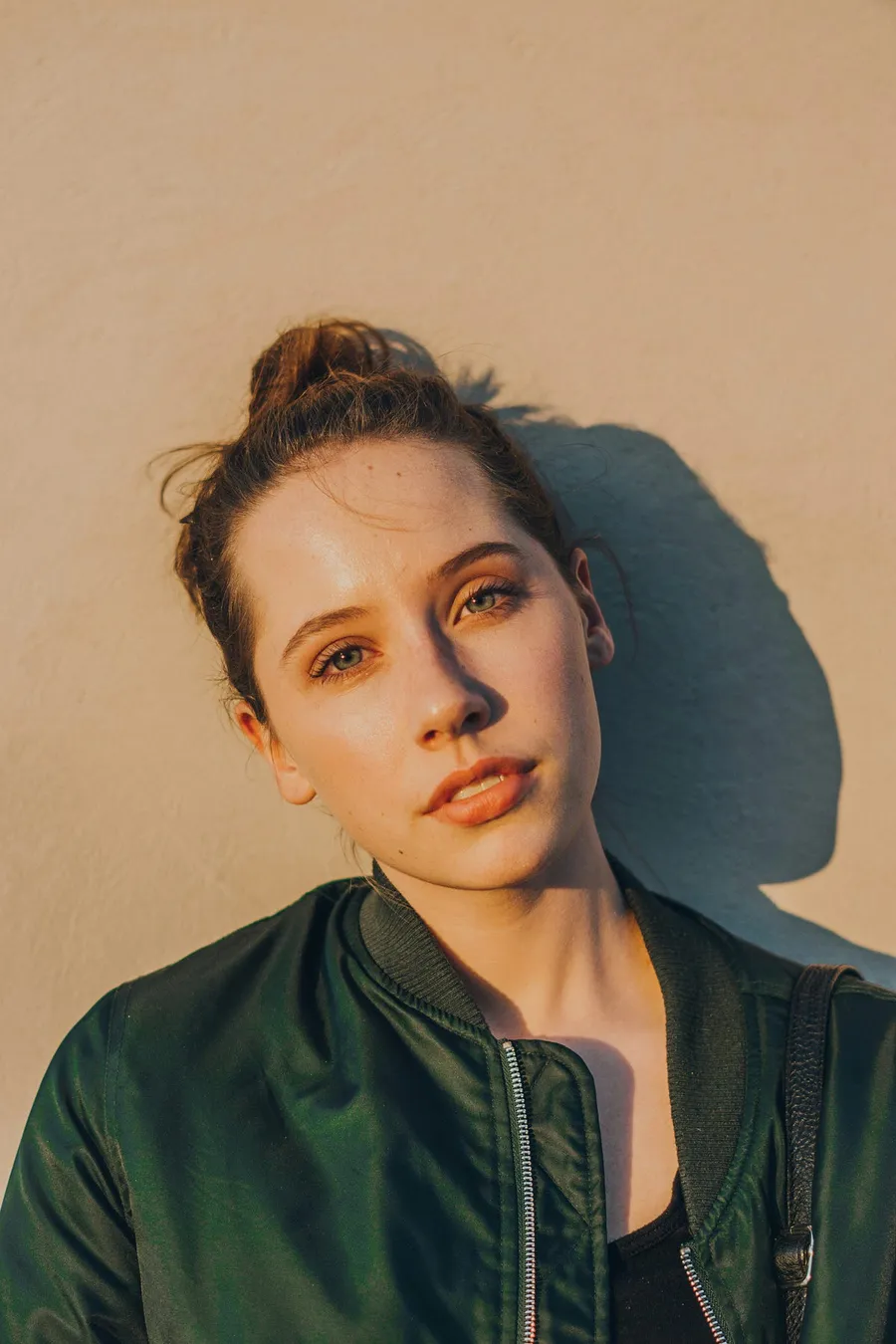
Photo by Haley Lawrence on Unsplash

Photo by Brooke Cagle on Unsplash

Photo by Lotte Mosayebi on Unsplash
Written by
Marien CartelProfessional and Certified Digital Photographer born in the USA, with 22 years of experience in the field of photography.
Related Guides
Best Lens for Panasonic LUMIX S5: (2026 Guide & Reviews)
Unlocking the Cinematic Soul of the L-Mount System
Best Lens for Wide Shots
The Ultimate Guide to the Best Lens for Wide Shots: Field-Tested Review & Personal Experience

Best Lenses for Interior Photography
What I Learned the Hard Way