Sony A7IV Vs Sony A6700: Top Bodies Compared by Budget
As an Amazon Associate we earn from qualifying purchases. Some links in this guide are affiliate links, see our affiliate disclosure for details.
Should you buy the Sony a7 IV or the a6700?
Buy the Sony a7 IV if you want full-frame image quality, the best low-light performance, a wider native ISO range and dual card slots. Buy the Sony a6700 if you want a smaller, lighter and cheaper body with excellent autofocus and good video features. At launch the a6700 cost about $1,000 less than the a7 IV, and it weighs about 165 g less with battery and card, so size and budget usually decide.
How do the Sony a7 IV and a6700 compare?
The figures come from the makers' pages, review sites and specification databases. Sources sometimes disagree, so check Sony's page for current details.
| Feature | Sony a7 IV | Sony a6700 |
|---|---|---|
| Sensor | 33 MP full-frame BSI | 26 MP APS-C BSI |
| Native ISO range | 100 to 51,200 | 100 to 32,000 |
| Stabilization | 5-axis, rated up to 5.5 steps | 5-axis in-body |
| Video | 4K 60p in Super 35 mode, 10-bit | 4K 60p from the full sensor width, up to 120p from a 1.58x crop, 10-bit |
| Card slots | Two (CFexpress A or SD, and SD) | One SD slot |
| Viewfinder and screen | 3.69M-dot EVF, vari-angle touchscreen | Articulating touchscreen |
| Weight | About 658 g with battery | About 493 g with battery and card |
| Launch price | About $2,499 (DPReview) | About $1,000 less than the a7 IV at launch |
Sources: DPReview on the Sony a7 IV, Wikipedia on the Sony a7 IV, DPReview on the Sony a6700, Tom's Guide on the Sony a6700 and PhotographyBlog's comparison.
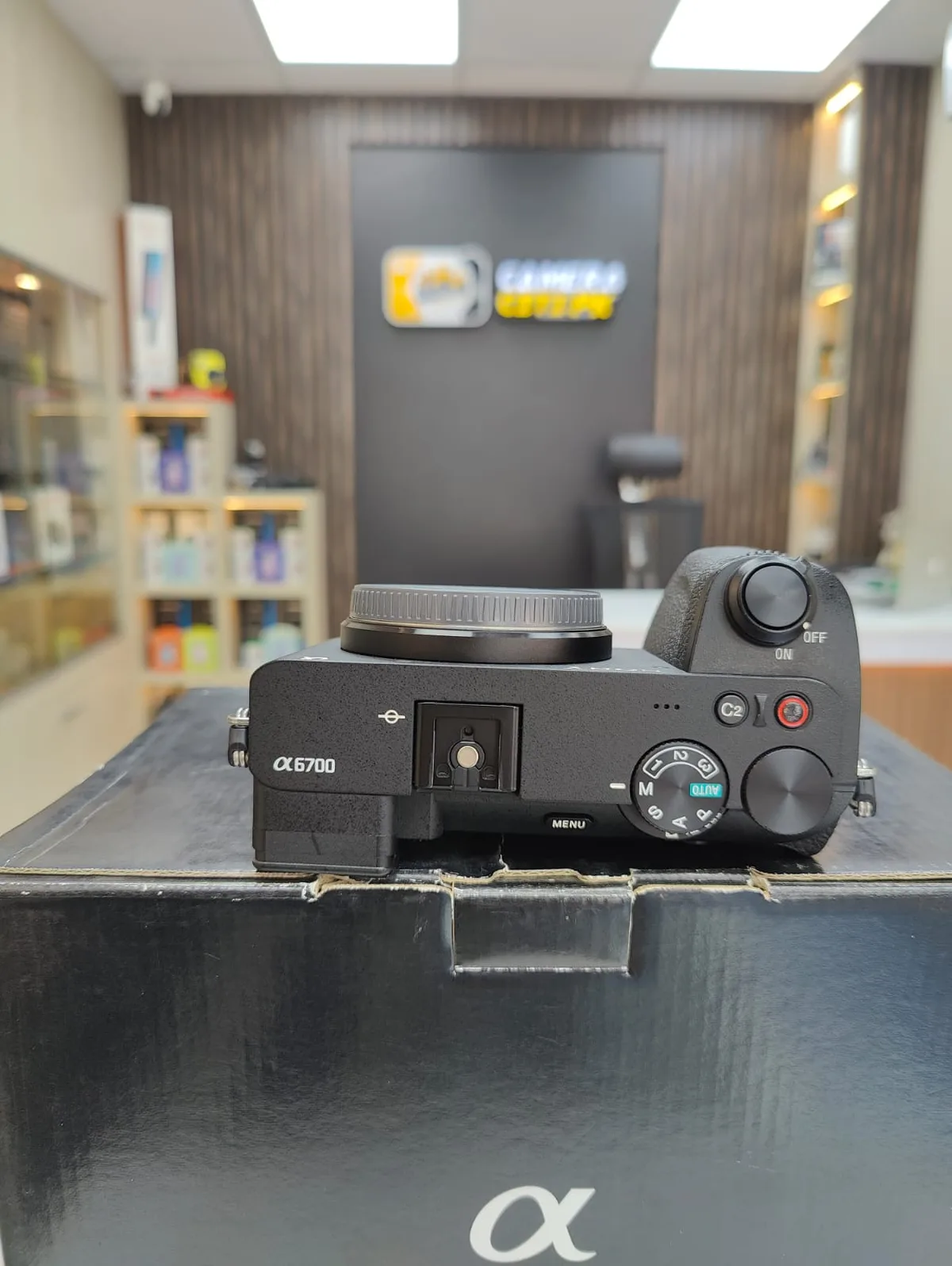
Sony a6700
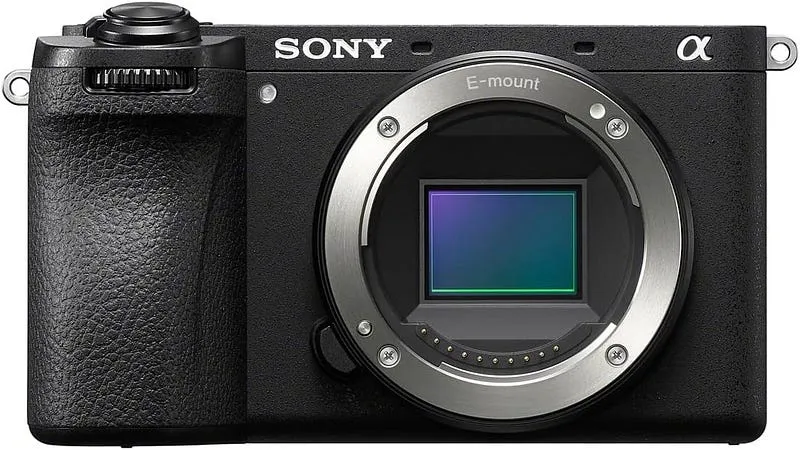
The Sony a6700 is a compact APS-C camera with a 26 MP sensor, a dedicated AI processing unit for subject recognition, and strong video options including 10-bit 4K. It can recognise a person's whole body and posture, according to PhotographyBlog's comparison. Check today's deals on the a6700.
Strengths: small and light, excellent autofocus, 4K 60p from the full sensor width, lower price.
Trade-offs: a smaller sensor gives less low-light performance and dynamic range than full frame, and it has only one card slot.
Sony a7 IV
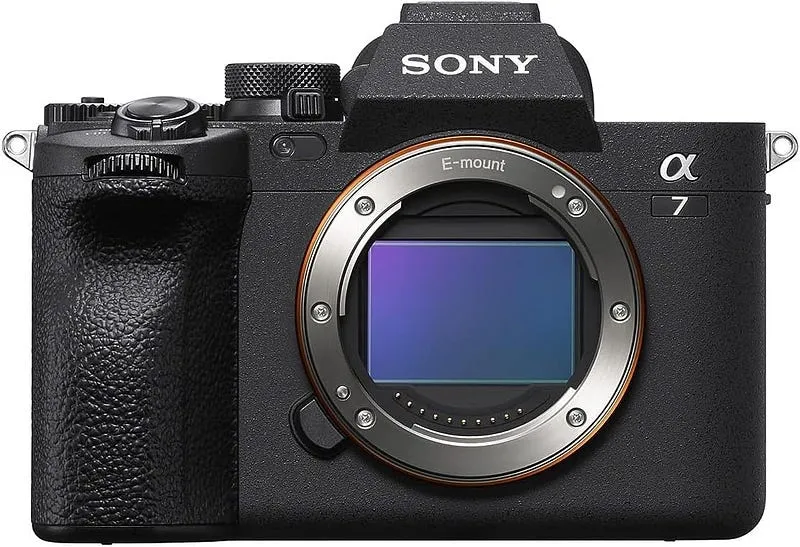
The Sony a7 IV uses a 33 MP full-frame sensor. Reviewers credit full frame with better dynamic range and low-light performance, and it has two card slots, a larger battery and a full-size HDMI port. See the a7 IV deals for current prices.
Strengths: full-frame image quality, wider native ISO range and dual slots.
Trade-offs: it is larger and heavier, and full-frame lenses cost more and are bigger.
Which one should you choose?
| If you want | Best fit | Why |
|---|---|---|
| The best low-light and dynamic range | Sony a7 IV | Full-frame sensor, ISO up to 51,200 |
| A small kit that travels easily | Sony a6700 | About 165 g lighter, with smaller lenses |
| A lower price | Sony a6700 | About $1,000 less at launch |
| Backup card recording | Sony a7 IV | Two card slots |
| 4K 60p without a big crop | Sony a6700 | Full-width 4K 60p |
| Event or wedding work | Sony a7 IV | Dual slots and full-frame quality |
Frequently asked questions
Should I get the a6700 or the a7 IV? Choose the a7 IV for full-frame quality and backup card slots, and the a6700 for a smaller, lighter, cheaper body with excellent autofocus.
Is the Sony a7 IV better than the a6700? For image quality in difficult light, yes, because of the larger sensor. For size, weight and price, the a6700 is better, and its autofocus is described by some reviewers as equal or better.
Which is cheaper, the a6700 or the a7 IV? The a6700 is cheaper. It launched about $1,000 below the a7 IV, though current prices vary by retailer.
How big is the difference in photos between the a6700 and a7 IV? The a7 IV's sensor is physically larger, and reviewers credit it with better dynamic range and low-light performance. In good light the difference is smaller, because the a6700 has a modern 26 MP sensor.
How many megapixels does the a7 IV have in APS-C mode compared with the a6700? The a7 IV's sensor is 33 MP. A crop to APS-C or Super 35 size uses only part of it, which works out to roughly 14 to 15 MP by simple crop-factor arithmetic. The a6700 uses its whole 26 MP sensor.
How do they compare in low light? The a7 IV has the wider native ISO range, 100 to 51,200 against 100 to 32,000, and a larger sensor, so it generally gives cleaner results at high ISO.
Which is better for photography and film with a kit zoom? The a7 IV is commonly sold with the FE 28-70mm f/3.5-5.6 OSS kit lens. For video, the a6700 offers 4K 60p from the full sensor width, while the a7 IV uses a Super 35 crop for 4K 60p.
For related Sony guides, see the best lenses for the Sony a6700, the best lenses for the Sony A7 IV, the best Sony cameras and Canon R7 vs Sony a6700.
Camera & Lens Settings by Real-World Use Case
Match your focal length, aperture, shutter speed, and lighting modifier to the exact environment you shoot in.
Tattoo Artists & Micro-Realism Portfolios
- Best Body:
- Sony Alpha a7 III / Fujifilm X-T4
- Ideal Lens:
- 90mm f/2.8 Macro (detail) or 50mm f/1.8 (sleeves & back pieces)
- Aperture & Shutter:
- f/5.6 – f/8 (keeps curved forearms and calves sharp edge-to-edge) · 1/125s – 1/200s handheld (or 1/60s on tripod)
- Room Distance:
- 0.4m – 1.5m (1.5 to 5 ft)
Barbershops, Hairstylists & Color Salons
- Best Body:
- Sony a7 IV / Canon EOS R6 Mark II
- Ideal Lens:
- 50mm f/1.8 (tight stations) or 85mm f/1.8 (spacious salons)
- Aperture & Shutter:
- f/1.8 – f/2.8 (blurs background chairs while keeping the lineup tack-sharp) · 1/160s – 1/250s (freezes subtle head movement in the chair)
- Room Distance:
- 1.5m – 2.4m (5 to 8 ft from the styling chair)
Makeup Artists (MUA) & Beauty Tutorials
- Best Body:
- Sony Alpha a6400 / Canon G7 X Mark III
- Ideal Lens:
- Sigma 56mm f/1.4 DC DN (APS-C) or 50mm–85mm f/1.8 (Full Frame)
- Aperture & Shutter:
- f/2.8 – f/4 for full-face sharpness; f/5.6 for macro eye/lip close-ups · 1/125s for stills; 1/50s (24p) or 1/120s (60p) for video tutorials
- Room Distance:
- 1.2m – 2.2m (4 to 7 ft)

Written by
Marien CartelMarien Cartel runs Marien Cartel Photography, a camera and lens buying-guide site, and photographs the gear shown on it.
Related Guides
Best Lenses For Sony a6700: Native & Third-Party Glass Compared
Best Lenses For Sony a6700: Tamron 17–70mm f/2.8, Sigma 56mm f/1.4 and Sigma 16mm f/1.4 compared on features, price and who each one suits.

How to become a travel photographer: Top Bodies Compared by Budget
Practical guide to becoming a travel photographer: building a location portfolio, choosing lightweight weather-sealed gear, and pitching tourism clients.
Canon 6D vs Canon 5D Mark III: Top Bodies Compared by Budget
Canon 6D vs Canon 5D Mark III compared — where each one wins, where it falls short, and who should buy which. Updated for 2026.
Canon G7X vs Canon G7X Mark II: Top Bodies Compared by Budget
Canon G7X vs Canon G7X Mark II: key differences in specs, autofocus, video and price, and which one suits you.
Canon R50 vs M50 Mark II: Top Bodies Compared by Budget
Canon R50 vs M50 Mark II compared — where each one wins, where it falls short, and who should buy which. Updated for 2026.
Canon G7X Mark II: Top Bodies Compared by Budget
Canon G7X Mark II: what to look for, what to skip and how to choose the right one for your budget. Updated for 2026.