Canon R50 vs M50 Mark II: Top Bodies Compared by Budget
As an Amazon Associate we earn from qualifying purchases. Some links in this guide are affiliate links, see our affiliate disclosure for details.
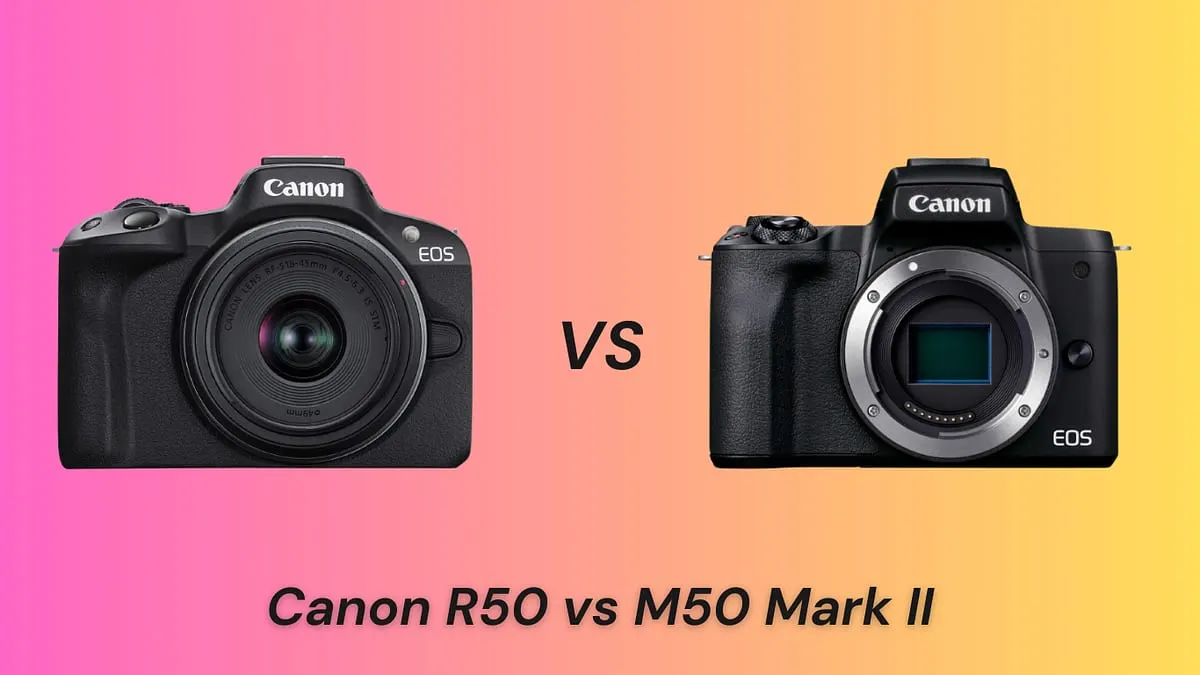
Should you buy the Canon EOS R50 or the M50 Mark II?
This comparison evaluates the EOS R50 and the EOS M50 Mark II, which both offer good image quality, autofocus and a compact design, and lists when to choose each, with a final verdict.
Choosing the right camera can be a daunting task, especially when faced with a plethora of options. If you’re in the market for a versatile and user-friendly mirrorless camera from Canon, you might be torn between the EOS R50 and the EOS M50 Mark II. Both cameras offer excellent image quality, impressive autofocus, and a compact design, but they cater to slightly different needs.
Key Differences
Here’s a breakdown of the key differences between the two cameras:
- Sensor and processor: Both cameras use a 24-megapixel APS-C sensor, so the basic image quality is similar. The R50 has the newer DIGIC X processor, which helps its autofocus and video.
- Autofocus: Both cameras have impressive Dual Pixel CMOS AF. The R50 uses the newer Dual Pixel CMOS AF II with subject detection for people, animals and vehicles, which makes tracking moving subjects easier.
- Lens Mount: The R50 utilizes Canon’s RF lens mount, offering access to a growing range of high-quality RF lenses. The M50 Mark II uses the EF-M mount, which has a more limited lens selection and is no longer being developed.
- Video Capabilities: Both cameras can shoot 4K video, but the R50 records 4K at up to 30p oversampled from 6K, while the M50 Mark II’s 4K is limited to 24p with a heavy crop.
Choose the R50 if
- You want the newer processor and autofocus.
- You want access to a wider range of lenses.
- You need advanced autofocus features for capturing fast-moving subjects.
- You plan to shoot a lot of video.
Choose the M50 Mark II if
- You’re on a tighter budget.
- You prioritize portability and compactness.
- You primarily shoot photos and occasional videos.
- You’re already invested in the EF-M lens ecosystem.
Verdict
Conclusion
Both the Canon EOS R50 and EOS M50 Mark II are excellent cameras that cater to different needs. By carefully considering your priorities and budget, you can choose the camera that best suits your photography and videography aspirations.




More options: Canon R5 Mark II Review, Canon R6 Mark II vs Sony A7 IV, plus the hyperfocal distance tool.
Camera & Lens Settings by Real-World Use Case
Match your focal length, aperture, shutter speed, and lighting modifier to the exact environment you shoot in.
Tattoo Artists & Micro-Realism Portfolios
- Best Body:
- Sony Alpha a7 III / Fujifilm X-T4
- Ideal Lens:
- 90mm f/2.8 Macro (detail) or 50mm f/1.8 (sleeves & back pieces)
- Aperture & Shutter:
- f/5.6 – f/8 (keeps curved forearms and calves sharp edge-to-edge) · 1/125s – 1/200s handheld (or 1/60s on tripod)
- Room Distance:
- 0.4m – 1.5m (1.5 to 5 ft)
Barbershops, Hairstylists & Color Salons
- Best Body:
- Sony a7 IV / Canon EOS R6 Mark II
- Ideal Lens:
- 50mm f/1.8 (tight stations) or 85mm f/1.8 (spacious salons)
- Aperture & Shutter:
- f/1.8 – f/2.8 (blurs background chairs while keeping the lineup tack-sharp) · 1/160s – 1/250s (freezes subtle head movement in the chair)
- Room Distance:
- 1.5m – 2.4m (5 to 8 ft from the styling chair)
Makeup Artists (MUA) & Beauty Tutorials
- Best Body:
- Sony Alpha a6400 / Canon G7 X Mark III
- Ideal Lens:
- Sigma 56mm f/1.4 DC DN (APS-C) or 50mm–85mm f/1.8 (Full Frame)
- Aperture & Shutter:
- f/2.8 – f/4 for full-face sharpness; f/5.6 for macro eye/lip close-ups · 1/125s for stills; 1/50s (24p) or 1/120s (60p) for video tutorials
- Room Distance:
- 1.2m – 2.2m (4 to 7 ft)

Written by
Marien CartelMarien Cartel runs Marien Cartel Photography, a camera and lens buying-guide site, and photographs the gear shown on it.
Related Guides
Canon G7X Mark II: Top Bodies Compared by Budget
Canon G7X Mark II: what to look for, what to skip and how to choose the right one for your budget. Updated for 2026.
Canon G7X vs Canon G7X Mark II: Top Bodies Compared by Budget
Canon G7X vs Canon G7X Mark II: key differences in specs, autofocus, video and price, and which one suits you.
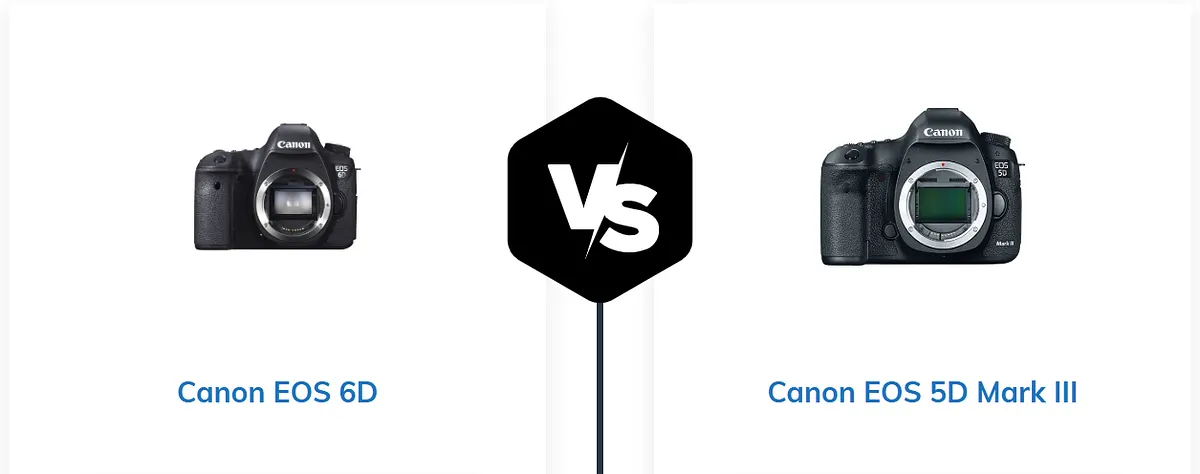
Canon 6D vs Canon 5D Mark III: Top Bodies Compared by Budget
Canon 6D vs Canon 5D Mark III compared — where each one wins, where it falls short, and who should buy which. Updated for 2026.
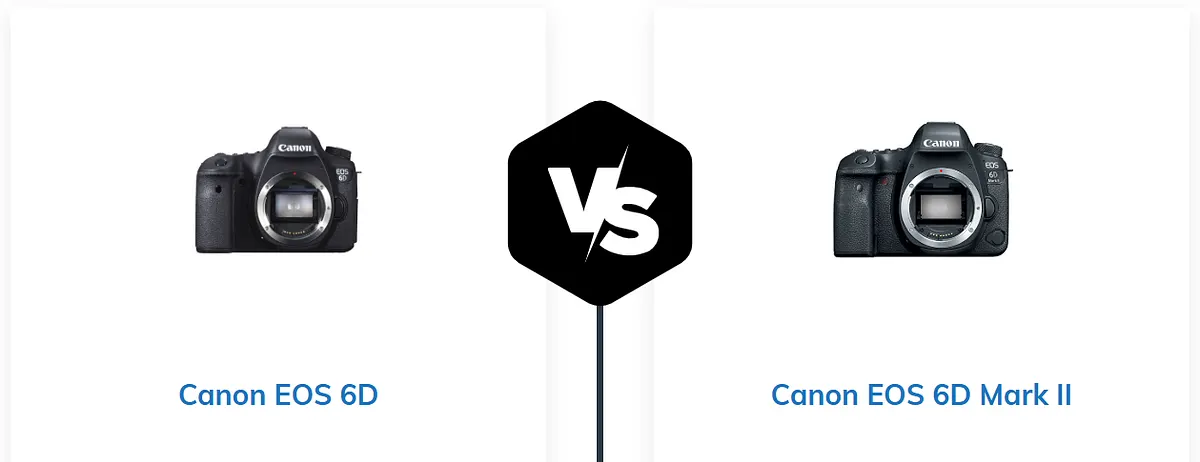
Canon 6D vs Canon 6D Mark II: Recommended Bodies & Kit Lenses
Canon 6D vs Canon 6D Mark II compared — where each one wins, where it falls short, and who should buy which. Updated for 2026.
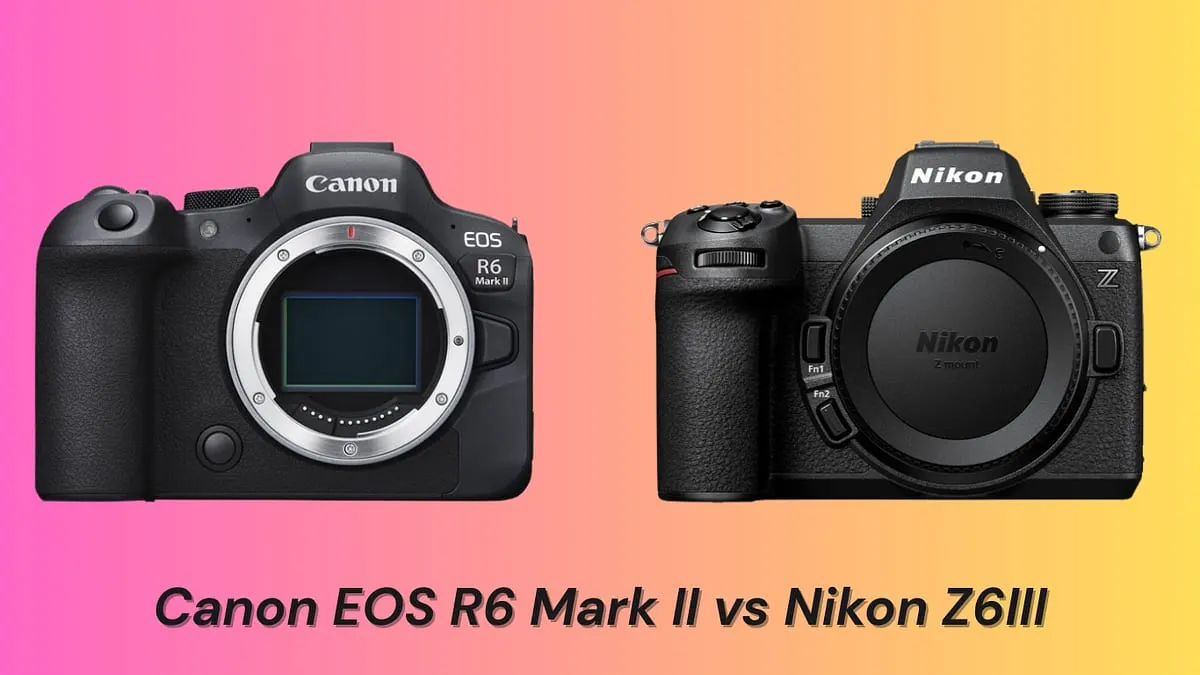
Canon EOS R6 Mark II vs Nikon Z6III: Tested Models & Buying Guide
Canon EOS R6 Mark II vs Nikon Z6III: Which One Should You Choose? — how the Canon EOS R6 Mark II and Nikon Z6III differ in autofocus, viewfinder and video.
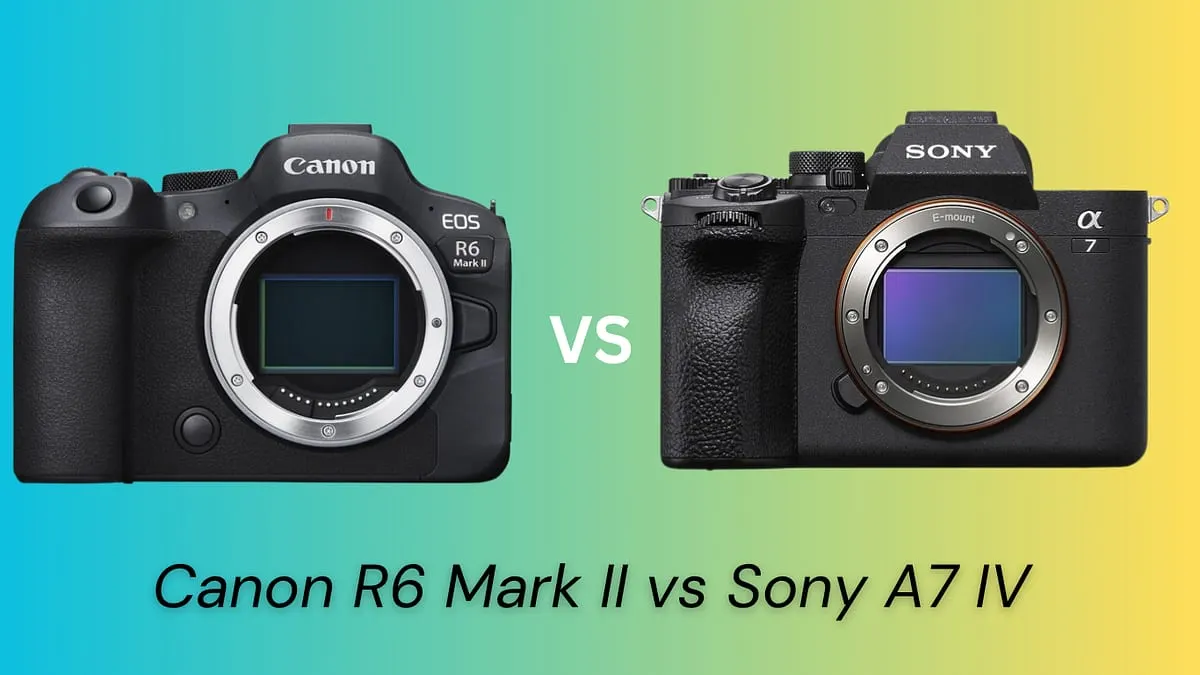
Canon R6 Mark II vs Sony A7 IV (Image Quality & Top Alternatives)
This comparison evaluates the two on image quality, autofocus, video, handling and lens ecosystem, then explains which one to choose depending on your needs.