Best Digital Cameras: DSLRs, Mirrorless cameras & More
As an Amazon Associate we earn from qualifying purchases. Some links in this guide are affiliate links, see our affiliate disclosure for details.
Which digital camera should you buy?
For most buyers, a mirrorless camera is the best digital camera choice today, because it is smaller than a DSLR, has fast autofocus and gets the new lenses. Beginners can start with an entry-level model such as the Nikon D3500 DSLR or a Canon EOS Rebel, enthusiasts can look at the Sony a6000 series or the Fujifilm X-T series, and professionals usually choose a Sony a7 series or a Canon EOS R series body. Choose by budget, what you shoot and how much control you want.
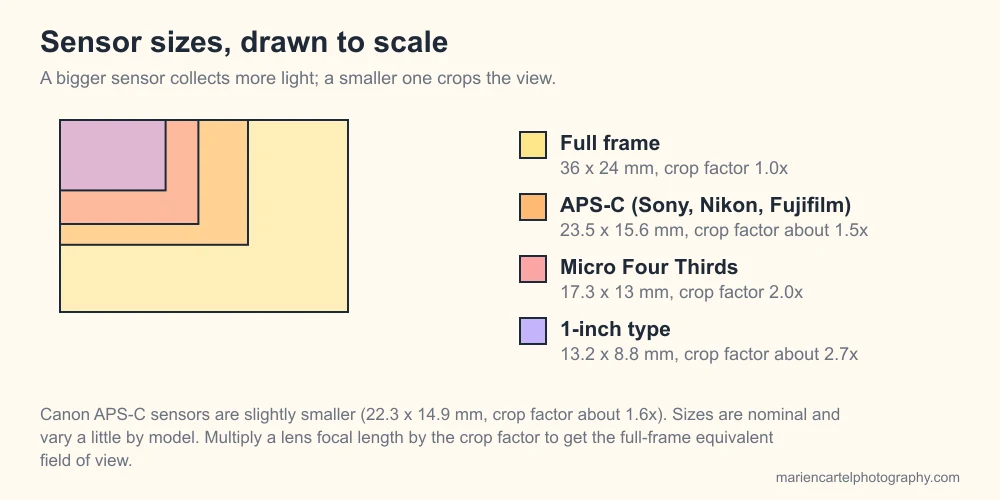
Camera sensor sizes drawn to scale, with crop factors. Original diagram for this site.
How have digital cameras changed?
Point-and-shoot cameras
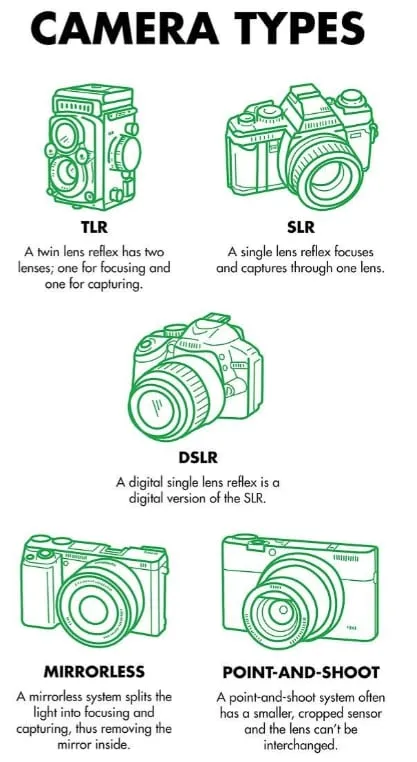
Compact point-and-shoot cameras were the first digital cameras for many people. They are small, simple and cheap, but smartphones have replaced most low-end models. Premium compacts with large sensors and good lenses remain, such as the Sony RX100 series.
DSLRs
Digital single-lens reflex cameras use a mirror and an optical viewfinder. They offer interchangeable lenses, long battery life and good value on the used market. They are larger and louder than mirrorless cameras, and manufacturers have mostly stopped developing new DSLR lenses.
Mirrorless cameras
Mirrorless cameras offer many of the same features as DSLRs in a smaller, lighter package. They are known for fast autofocus, silent shooting and excellent video features, and the electronic viewfinder shows the exposure before the shot. If you want a versatile, travel-friendly camera, they are the main choice today.
How do the camera types compare?
| Type | Strength | Trade-off |
|---|---|---|
| Compact | Pocket size and low price | Small sensor, limited control |
| Premium compact | Large sensor in a small body | Fixed lens |
| DSLR | Battery life and used-market value | Bulky, shrinking lens roadmap |
| Mirrorless | Small, fast autofocus, best video | Shorter battery life than DSLR |
Choosing the right camera
With so many options, choosing a digital camera can be overwhelming. These factors help:
- Budget. How much do you want to spend, including a lens and a memory card?
- Intended use. Portraits, sports, travel, video and landscapes need different strengths.
- Experience level. Beginners benefit from guided modes, and experienced shooters want direct controls.
- Features. Autofocus, stabilization, video quality, screen type and battery life.
Top recommendations
- For beginners: the Canon EOS Rebel series or the Nikon D3500 are affordable DSLRs (Check For beginners Price on Amazon).
- For enthusiasts: the Sony a6000 series or the Fujifilm X-T series offer small bodies and strong features (Check For enthusiasts Price on Amazon).
- For professionals: the Sony a7 series or the Canon EOS R series offer full-frame quality (Check For professionals Price on Amazon).
The Nikon D3500 and Sony a6000 are older models that remain popular on the used market, and newer replacements exist in each line, so compare current prices and availability.
Where to go next
- The Fujifilm X-T5 as a digital camera pick
- Best mirrorless cameras
- Best compact cameras
- Best cameras for photography
- Best camera for a beginner photographer
Conclusion
Finding the right digital camera is a personal decision, and there is no one-size-fits-all solution. The best camera depends on individual needs and preferences, so compare a few models, try them in a shop if possible and put lens quality ahead of small spec differences.
Frequently asked questions
Is a DSLR still worth buying? For a low price or a used bargain, yes. For long-term lens options, mirrorless is better.
How much should I spend? Budget for the camera, one good lens, a memory card and a bag.
Do I need full frame? Not for most uses. APS-C cameras give excellent results.
Is a phone enough? For casual photos, yes. A dedicated camera gives better lenses, handling and low-light performance.
Additional Recommended Options
Depending on your budget and setup preferences, these additional options are also worth comparing:
Camera & Lens Settings by Real-World Use Case
Match your focal length, aperture, shutter speed, and lighting modifier to the exact environment you shoot in.
Tattoo Artists & Micro-Realism Portfolios
- Best Body:
- Sony Alpha a7 III / Fujifilm X-T4
- Ideal Lens:
- 90mm f/2.8 Macro (detail) or 50mm f/1.8 (sleeves & back pieces)
- Aperture & Shutter:
- f/5.6 – f/8 (keeps curved forearms and calves sharp edge-to-edge) · 1/125s – 1/200s handheld (or 1/60s on tripod)
- Room Distance:
- 0.4m – 1.5m (1.5 to 5 ft)
Barbershops, Hairstylists & Color Salons
- Best Body:
- Sony a7 IV / Canon EOS R6 Mark II
- Ideal Lens:
- 50mm f/1.8 (tight stations) or 85mm f/1.8 (spacious salons)
- Aperture & Shutter:
- f/1.8 – f/2.8 (blurs background chairs while keeping the lineup tack-sharp) · 1/160s – 1/250s (freezes subtle head movement in the chair)
- Room Distance:
- 1.5m – 2.4m (5 to 8 ft from the styling chair)
Makeup Artists (MUA) & Beauty Tutorials
- Best Body:
- Sony Alpha a6400 / Canon G7 X Mark III
- Ideal Lens:
- Sigma 56mm f/1.4 DC DN (APS-C) or 50mm–85mm f/1.8 (Full Frame)
- Aperture & Shutter:
- f/2.8 – f/4 for full-face sharpness; f/5.6 for macro eye/lip close-ups · 1/125s for stills; 1/50s (24p) or 1/120s (60p) for video tutorials
- Room Distance:
- 1.2m – 2.2m (4 to 7 ft)

Written by
Marien CartelMarien Cartel runs Marien Cartel Photography, a camera and lens buying-guide site, and photographs the gear shown on it.
Related Guides
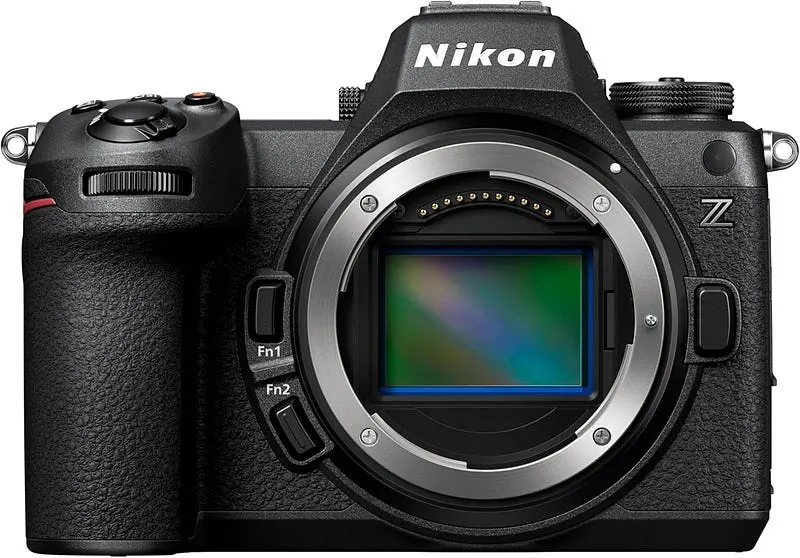
Best Nikon Mirrorless Camera: Tested Models & Buying Guide
The top pick is the Nikon Z6 III. It covers its partially stacked CMOS sensor, autofocus, video features, electronic viewfinder, and its stability.
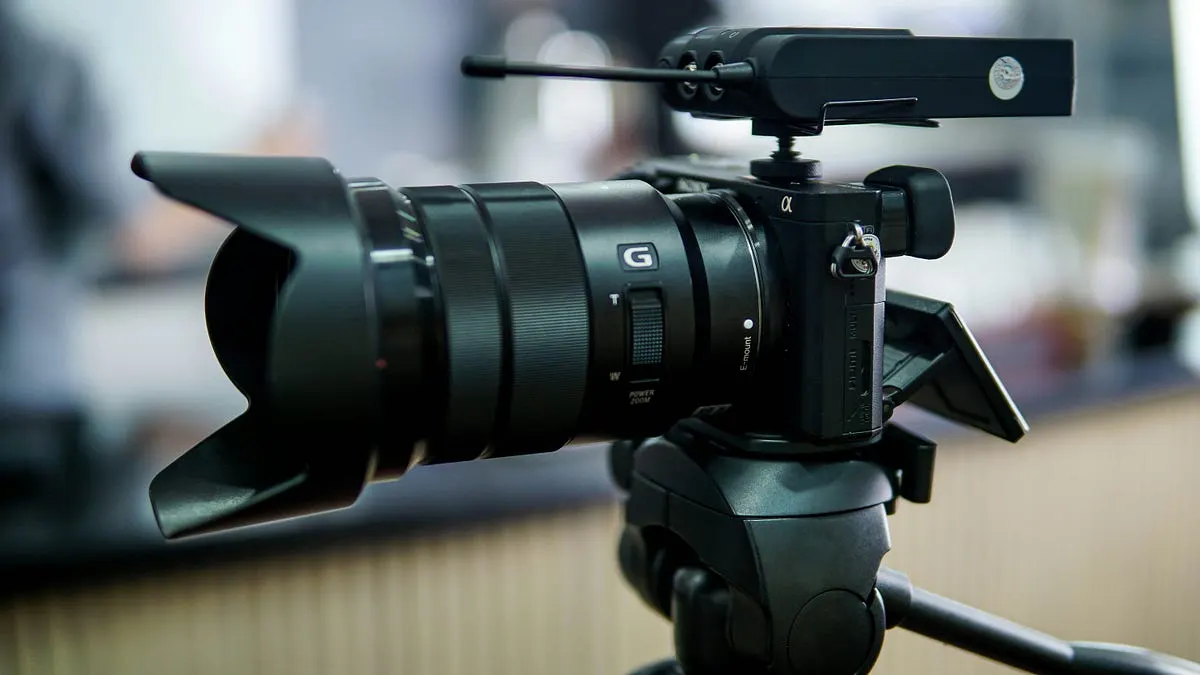
Best Mirrorless Camera for Every Type of Photography
The right mirrorless body for wildlife, travel, portraits, video, landscapes and tight budgets — picked by what you actually shoot.
Best Camera for Digital Nomads: Top Bodies Compared by Budget
Best Camera for Digital Nomads: a side-by-side look at Sony a7C II and Fujifilm X-S20, with strengths, trade-offs and buying advice.

Best Full-Frame Mirrorless Camera 2026: a7R IV vs R5 vs Z 7II
Sony a7R IV, Canon EOS R5 or Nikon Z 7II? A quick verdict on resolution, dynamic range, autofocus and build for landscape work, plus why technique matters.
Best Budget DSLRs: Tested Models & Buying Guide
Canon EOS Rebel SL3 and Nikon D3500 compared for Budget DSLRs: key specifications, trade-offs, and top picks by budget.
Best Camera for Nature: Nikon Z 6III, Canon EOS R10 & More
Best Camera for Nature — OM SYSTEM OM-1 Mark II, Nikon Z 6III and Canon EOS R10 compared, with pros, cons and who should buy which.