Best Lenses for Sony FX30 2026: 16-55mm f/2.8 and Fast Primes
As an Amazon Associate we earn from qualifying purchases. Some links in this guide are affiliate links, see our affiliate disclosure for details.
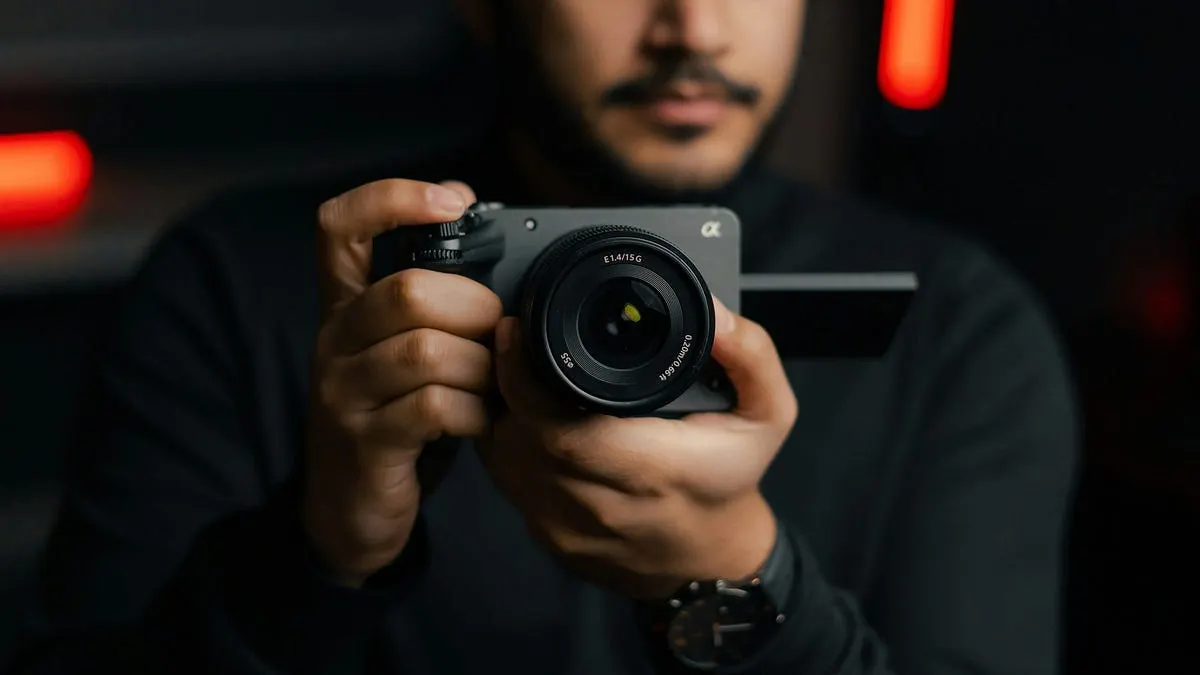
The Sony FX30 is a video-first camera with a 26 MP APS-C (Super 35) sensor, and that sensor changes how every lens behaves: focal lengths frame tighter than on full frame, and 4K at 120p crops in even further. Pick a lens for the way it frames on an FX30, not for its number alone.
This guide compares five lenses that suit the FX30: a standard zoom, a wide zoom and three fast primes. The table gives the short version, and the sections below explain the choices.
Quick verdict
| Your situation | Pick | Why |
|---|---|---|
| One lens for everything | Sony E 16-55mm f/2.8 G | Constant f/2.8 aperture across the zoom range, about 494 g |
| Low light and shallow depth of field | Sigma 30mm f/1.4 DC DN Contemporary | Fast prime that frames like a roughly 45mm lens on full frame |
| Landscapes, interiors and wide video | Tamron 11-20mm f/2.8 Di III-A RXD | Constant f/2.8 wide zoom, about 335 g |
| Portraits and tight framing | Sigma 56mm f/1.4 DC DN Contemporary | Frames like roughly an 84mm lens, about 280 g |
| A wide, fast prime | Sigma 16mm f/1.4 DC DN Contemporary | Frames like roughly a 24mm lens, about 405 g |
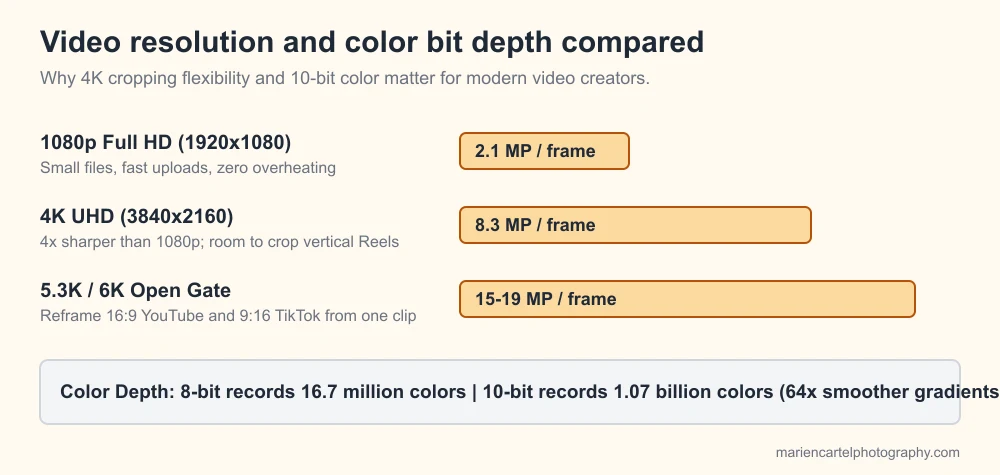
Frame resolution (1080p vs 4K vs 6K Open Gate) and 8-bit vs 10-bit color grading flexibility.
What should you know about the Sony FX30 before choosing lenses?
The Sony FX30 is a Cinema Line camera with a 26 MP APS-C (Super 35) sensor, 4K recording up to 120p, five-axis sensor-shift stabilization and S-Cinetone and S-Log3 profiles, according to Sony's FX30 specifications on Wikipedia and Sansmirror. Sources list it at about 645 g with battery and card.
Three points matter for lens choice:
- Crop factor. The APS-C sensor has about a 1.5x crop, so a 30mm lens frames like a roughly 45mm lens on full frame, and a 56mm lens like roughly 84mm.
- Extra crop in high frame rates. Sources say 4K at 120p adds a further crop, quoted as 1.5x to 1.6x, so wide lenses help.
- Lens mount. The FX30 uses Sony's E mount, so it accepts E-mount and FE lenses and many third-party lenses.
How do the main lenses compare?
The figures come from the makers' pages and specification databases. Weights vary between sources, so check the manufacturer's page for current numbers.
| Lens | Role | Weight | Filter | Notes |
|---|---|---|---|---|
| Sony E 16-55mm f/2.8 G | Standard zoom | About 494 g | 67mm | Constant f/2.8 aperture, 73 x 100 mm |
| Sigma 30mm f/1.4 DC DN Contemporary | Fast prime | Sources range from 265 g to 285 g | 52mm | About a 45mm equivalent |
| Tamron 11-20mm f/2.8 Di III-A RXD | Wide zoom | About 335 g | 67mm | Constant f/2.8 aperture |
| Sigma 56mm f/1.4 DC DN Contemporary | Portrait prime | About 280 g | 55mm | About an 84mm equivalent |
| Sigma 16mm f/1.4 DC DN Contemporary | Wide prime | About 405 g | 67mm | About a 24mm equivalent |
Sources: Sony's E 16-55mm f/2.8 G specifications, PhotographyBlog on the Sigma 16mm, 30mm and 56mm f/1.4 lenses and PhotographyBlog on the Tamron 11-20mm.
Sony E 16-55mm f/2.8 G
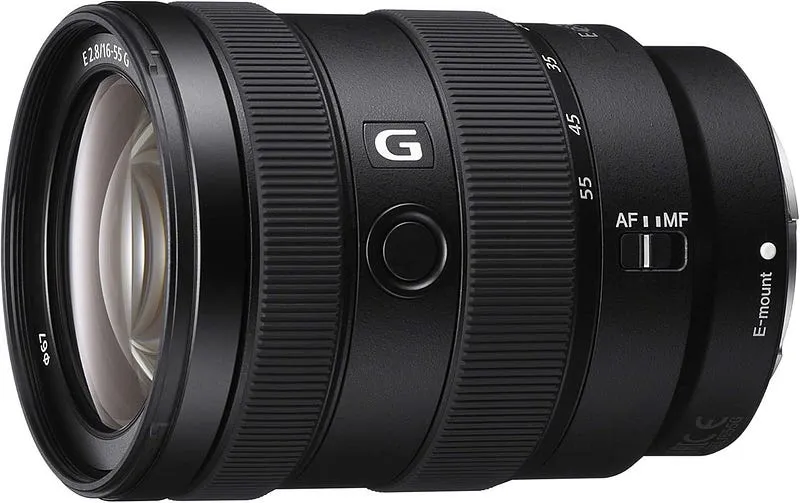
The Sony E 16-55mm f/2.8 G lens is the all-round pick. Its constant f/2.8 aperture keeps exposure steady as you zoom, which helps for interviews and run-and-gun shooting, and it covers wide to short-telephoto framing.
Sigma 30mm f/1.4 DC DN Contemporary
The Sigma 30mm f/1.4 DC DN Contemporary lens is a fast prime for low light and shallow depth of field. On the FX30 it frames like a roughly 45mm lens, a natural field of view for people and general scenes.
Tamron 11-20mm f/2.8 Di III-A RXD
For wide landscapes and tight interiors, the Tamron 11-20mm f/2.8 gives an ultra-wide view that APS-C cameras can struggle to reach. The constant f/2.8 aperture is useful for video, and at about 335 g it is light.
Sigma 56mm f/1.4 DC DN Contemporary
The Sigma 56mm f/1.4 frames like roughly an 84mm lens, which suits tight close-ups and subject isolation, at a modest price for an f/1.4 prime.
Other lenses to consider
- Sony E 11mm f/1.8 lens — Check Sony E 11mm f/1.8 lens Price on Amazon
- Sigma 18–50mm f/2.8 DC DN Contemporary lens — Check Sigma 18–50mm f/2.8 DC DN Contemporary lens Price on Amazon
- Sony E PZ power zoom lens — Check Sony E PZ power zoom lens Price on Amazon
- Sigma 16mm f/1.4 DC DN Contemporary lens — Check Sigma 16mm f/1.4 DC DN Contemporary lens Price on Amazon
Which lens for which job?
| If you shoot | Best fit | Why |
|---|---|---|
| Interviews and general video | Sony E 16-55mm f/2.8 G | Constant f/2.8 and a useful range |
| Low light and cinematic depth | Sigma 30mm f/1.4 | Fast aperture |
| Landscapes and interiors | Tamron 11-20mm f/2.8 | Ultra-wide field of view |
| Portraits and close-ups | Sigma 56mm f/1.4 | About an 84mm equivalent |
| A compact, light kit | Sigma 16mm f/1.4 or the Sony E 11mm f/1.8 | Fast wide primes |
Frequently asked questions
Which lens should I buy first for the FX30? A constant-aperture standard zoom such as the Sony E 16-55mm f/2.8 G covers the most situations. Add primes later.
Does the FX30 crop the image? The sensor is APS-C, about a 1.5x crop compared with full frame. Some sources say 4K at 120p adds a further crop, so check Sony's specifications.
Can I use full-frame FE lenses on the FX30? Yes. The FX30 uses the E mount, and FE lenses work, though they frame tighter because of the crop.
What is a good budget prime for the FX30? The Sigma 30mm f/1.4 and 56mm f/1.4 are common budget primes for APS-C E-mount cameras.
What is the best wide lens for the FX30? The Tamron 11-20mm f/2.8 is a popular wide zoom, and the Sigma 16mm f/1.4 and Sony E 11mm f/1.8 are wide primes.
For related guides, see the best lenses for the Sony FX3, the best lenses for the Sony ZV-E10 II, the best lenses for the Sony a6700 and the best lenses for videography on Sony.
How many lenses do I need for professional-looking 4K video on the FX30? Two or three cover most work: a constant-aperture standard zoom such as the Sony E 16-55mm f/2.8 G, a fast prime for low light and an optional wide lens. Lighting, audio and steady camera moves matter as much as the number of lenses.

Photo by Mia Anderson on Unsplash
Camera & Lens Settings by Real-World Use Case
Match your focal length, aperture, shutter speed, and lighting modifier to the exact environment you shoot in.
Tattoo Artists & Micro-Realism Portfolios
- Best Body:
- Sony Alpha a7 III / Fujifilm X-T4
- Ideal Lens:
- 90mm f/2.8 Macro (detail) or 50mm f/1.8 (sleeves & back pieces)
- Aperture & Shutter:
- f/5.6 – f/8 (keeps curved forearms and calves sharp edge-to-edge) · 1/125s – 1/200s handheld (or 1/60s on tripod)
- Room Distance:
- 0.4m – 1.5m (1.5 to 5 ft)
Barbershops, Hairstylists & Color Salons
- Best Body:
- Sony a7 IV / Canon EOS R6 Mark II
- Ideal Lens:
- 50mm f/1.8 (tight stations) or 85mm f/1.8 (spacious salons)
- Aperture & Shutter:
- f/1.8 – f/2.8 (blurs background chairs while keeping the lineup tack-sharp) · 1/160s – 1/250s (freezes subtle head movement in the chair)
- Room Distance:
- 1.5m – 2.4m (5 to 8 ft from the styling chair)
Makeup Artists (MUA) & Beauty Tutorials
- Best Body:
- Sony Alpha a6400 / Canon G7 X Mark III
- Ideal Lens:
- Sigma 56mm f/1.4 DC DN (APS-C) or 50mm–85mm f/1.8 (Full Frame)
- Aperture & Shutter:
- f/2.8 – f/4 for full-face sharpness; f/5.6 for macro eye/lip close-ups · 1/125s for stills; 1/50s (24p) or 1/120s (60p) for video tutorials
- Room Distance:
- 1.2m – 2.2m (4 to 7 ft)

Written by
Marien CartelMarien Cartel runs Marien Cartel Photography, a camera and lens buying-guide site, and photographs the gear shown on it.
Related Guides
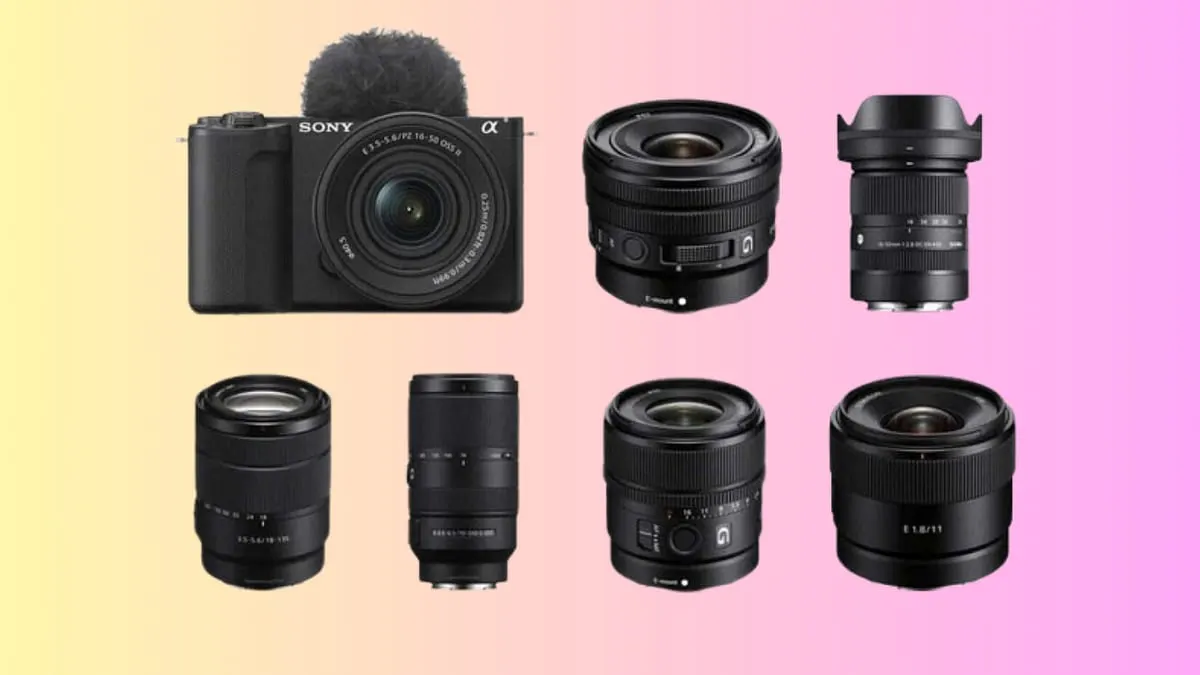
Best Lenses for Sony ZV-E10 II (2026): 8 Lenses for Video & Photo
Eight lenses for the Sony ZV-E10 II by use: 10–20mm PZ G, Sigma 18–50mm f/2.8, 18–135mm OSS, 70–350mm G, 15mm f/1.4 G, 11mm f/1.8.
Best Lens for Sony ZV-E10 2026: Sigma 16mm vs 18–105mm G
Sigma 16mm f/1.4, Sony E PZ 18–105mm f/4 G OSS or Sigma 30mm f/1.4 for the ZV-E10? A quick verdict for vlogging, product shots and all-round video.

Best Budget Wide-Angle Lens for Sony Full Frame (2026)
Tamron 17–28mm f/2.8, Samyang AF 18mm f/2.8 and Viltrox AF 16mm f/1.8 compared on weight, sharpness and price (about $250 to $650) for Sony E-mount full frame.
7 Best Sony Camera for Wedding Videography: (2026 Guide & Reviews)
Best Sony Camera for Wedding Videography: a side-by-side look at Sony A1, Sony a7 IV and Sony A7S III, with strengths, trade-offs and buying advice.
Best Lenses for Canon EOS Rebel T7: Fast Primes & Versatile Zooms
Best Lenses for Canon EOS Rebel T7: Canon EF-S 10–18mm f/4.5–5.6 IS and Canon EF 50mm f/1.8 STM compared on features, price and who each one suits.
Best Zoom Lens for Canon Full-Frame: Fast Primes & Versatile Zooms
Recommended picks include the Canon RF 24-70mm f/2.8L, RF 70-200mm f/2.8L, RF 15-35mm f/2.8L and RF 24-105mm f/4L for RF bodies, and the EF 24-70mm f/2.8L.