Canon R8 Review: Tested Models & Buying Guide
As an Amazon Associate we earn from qualifying purchases. Some links in this guide are affiliate links, see our affiliate disclosure for details.
Is the Canon EOS R8 worth buying?
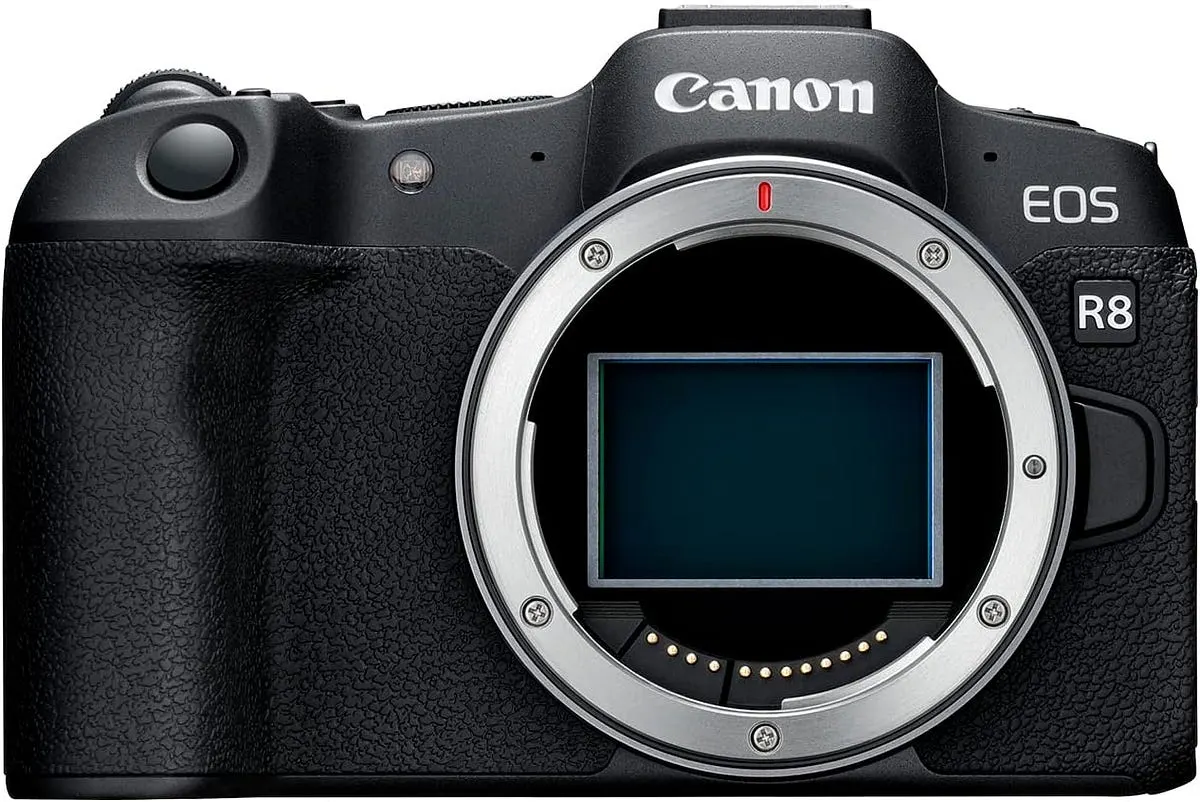
Our review calls the EOS R8 an entry-level full-frame mirrorless camera priced around $1,500. It lacks in-body stabilization and has fewer customization options but still satisfies amateur and semi-professional photographers.
The Canon EOS R8 blends performance and affordability, with a price of around $1,500 USD.
Canon EOS R8 Overview
Design and Handling
The R8 has a compact design. Weighing about one pound, it feels lightweight yet sturdy. The grip is comfortable, even during extended shooting sessions, which is useful for long events or outdoor shoots.
Strengths of the Camera
The 24.2MP full-frame sensor and Dual Pixel CMOS AF II autofocus system are standout features, inherited from the more advanced EOS R6 Mark II. Autofocus performance is exceptional and tracks faces effortlessly, including with fast-moving subjects in portrait sessions, which leaves the photographer free to focus on composition.
Video Capabilities
The R8’s ability to shoot 4K video at 60fps is a significant draw for videographers. Video quality is impressive, although the lack of in-body image stabilization (IBIS) is a drawback for handheld shots. Lens stabilization and digital IS can be used for video instead.
Ergonomics and Usability
Canon designed the EOS R8 to be ergonomic without compromising functionality. The layout of buttons and dials is intuitive, although a dedicated joystick for navigating menus and settings is missing. The touchscreen interface is responsive and user-friendly.
Limitations Faced
There are limitations. The absence of IBIS is noticeable in shooting scenarios where stability is paramount. The single SD card slot is also a drawback, since dual slots are valuable during critical shoots.
Conclusion
Overall, the Canon EOS R8 combines an excellent sensor with robust autofocus in a lightweight body, which suits both photography and videography enthusiasts who want quality without breaking the bank.
While there are compromises due to its budget-friendly nature — such as the lack of IBIS and fewer customization options — the camera still delivers impressive performance that can satisfy both amateur and semi-professional photographers.
In conclusion, for an entry-level full-frame mirrorless camera that doesn’t skimp on features or performance, the Canon EOS R8 is worth considering.
Photo by Pacto Visual on Unsplash

Photo by John Cameron on Unsplash
See also Canon EOS R10 Review, Canon R5 Mark II Review, or test setups in the camera selector tool.
Camera & Lens Settings by Real-World Use Case
Match your focal length, aperture, shutter speed, and lighting modifier to the exact environment you shoot in.
Makeup Artists (MUA) & Beauty Tutorials
- Best Body:
- Sony Alpha a6400 / Canon G7 X Mark III
- Ideal Lens:
- Sigma 56mm f/1.4 DC DN (APS-C) or 50mm–85mm f/1.8 (Full Frame)
- Aperture & Shutter:
- f/2.8 – f/4 for full-face sharpness; f/5.6 for macro eye/lip close-ups · 1/125s for stills; 1/50s (24p) or 1/120s (60p) for video tutorials
- Room Distance:
- 1.2m – 2.2m (4 to 7 ft)
Tattoo Artists & Micro-Realism Portfolios
- Best Body:
- Sony Alpha a7 III / Fujifilm X-T4
- Ideal Lens:
- 90mm f/2.8 Macro (detail) or 50mm f/1.8 (sleeves & back pieces)
- Aperture & Shutter:
- f/5.6 – f/8 (keeps curved forearms and calves sharp edge-to-edge) · 1/125s – 1/200s handheld (or 1/60s on tripod)
- Room Distance:
- 0.4m – 1.5m (1.5 to 5 ft)
Barbershops, Hairstylists & Color Salons
- Best Body:
- Sony a7 IV / Canon EOS R6 Mark II
- Ideal Lens:
- 50mm f/1.8 (tight stations) or 85mm f/1.8 (spacious salons)
- Aperture & Shutter:
- f/1.8 – f/2.8 (blurs background chairs while keeping the lineup tack-sharp) · 1/160s – 1/250s (freezes subtle head movement in the chair)
- Room Distance:
- 1.5m – 2.4m (5 to 8 ft from the styling chair)

Written by
Marien CartelMarien Cartel runs Marien Cartel Photography, a camera and lens buying-guide site, and photographs the gear shown on it.
Related Guides
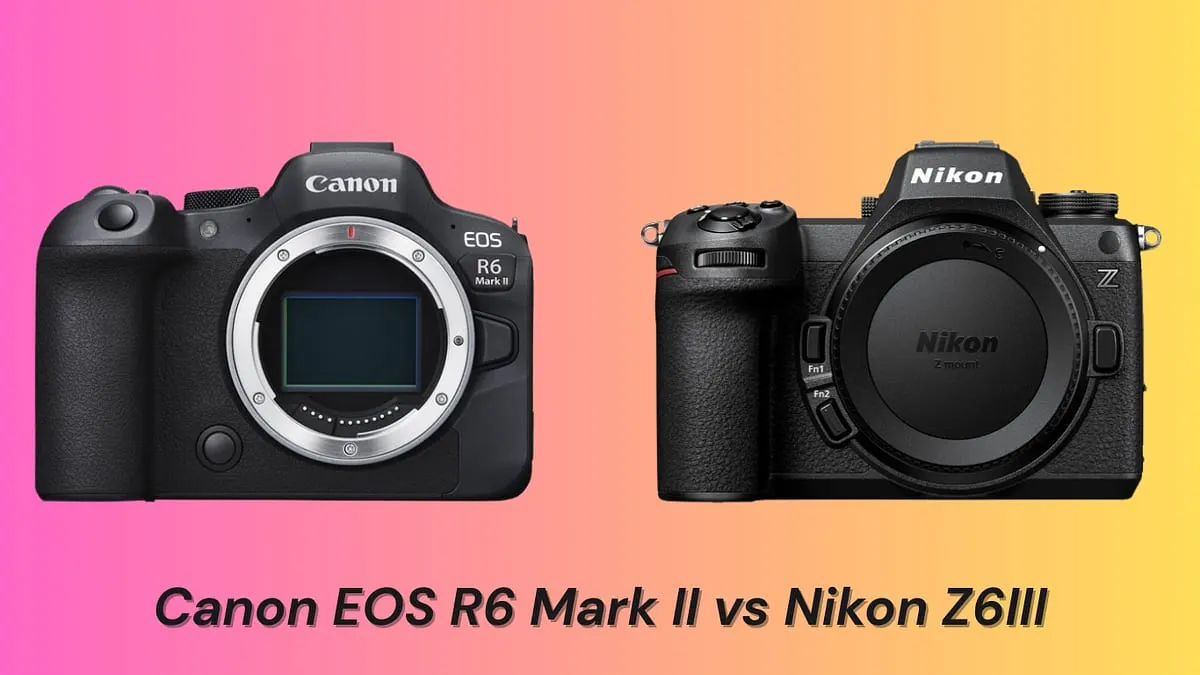
Canon EOS R6 Mark II vs Nikon Z6III: Tested Models & Buying Guide
Canon EOS R6 Mark II vs Nikon Z6III: Which One Should You Choose? — how the Canon EOS R6 Mark II and Nikon Z6III differ in autofocus, viewfinder and video.
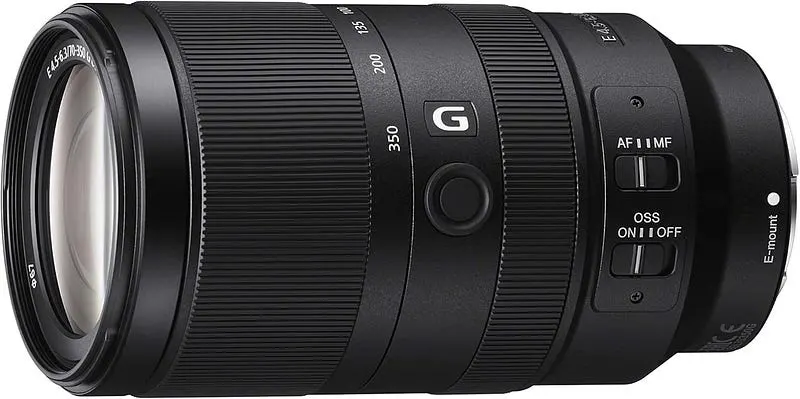
Sony 70–350 on Full-Frame Adventure: Tested Models & Buying Guide
Sony 70–350 on Full-Frame Adventure — Sony E 70–350mm f/4.5–6.3 G, Sony A7 II and Sony A7 III compared, with pros, cons and who should buy which.
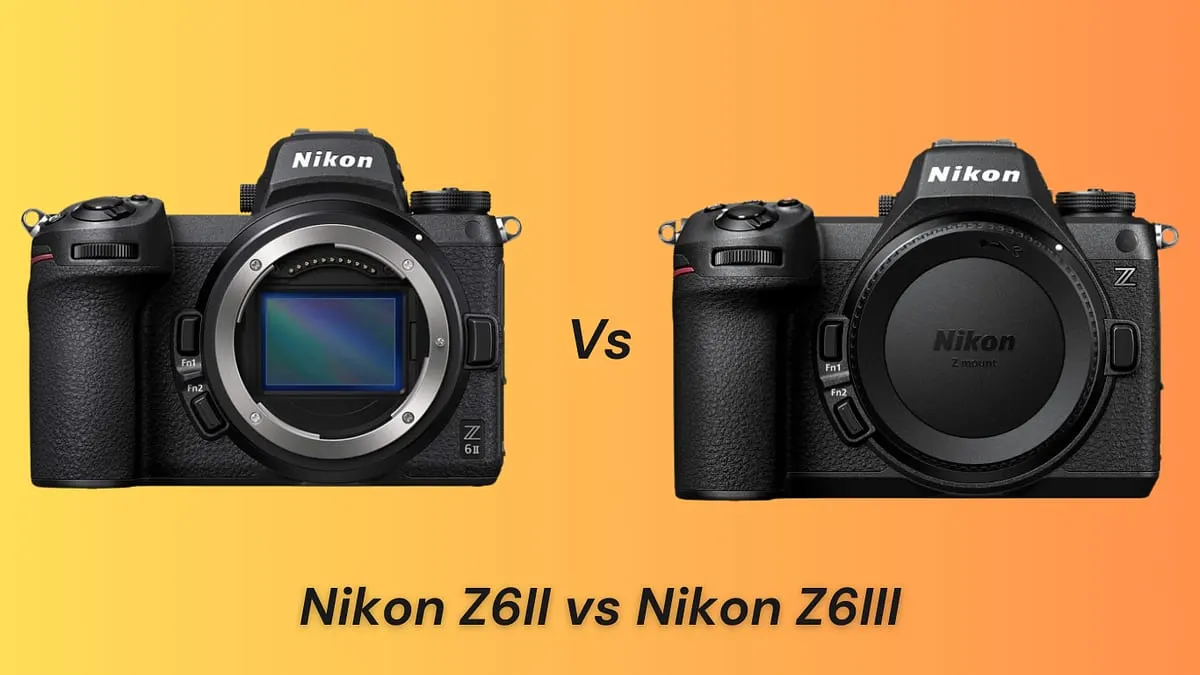
Nikon Z6II vs Nikon Z6III: Tested Models & Buying Guide
Nikon Z6II vs Nikon Z6III compared — where each one wins, where it falls short, and who should buy which. Updated for 2026.
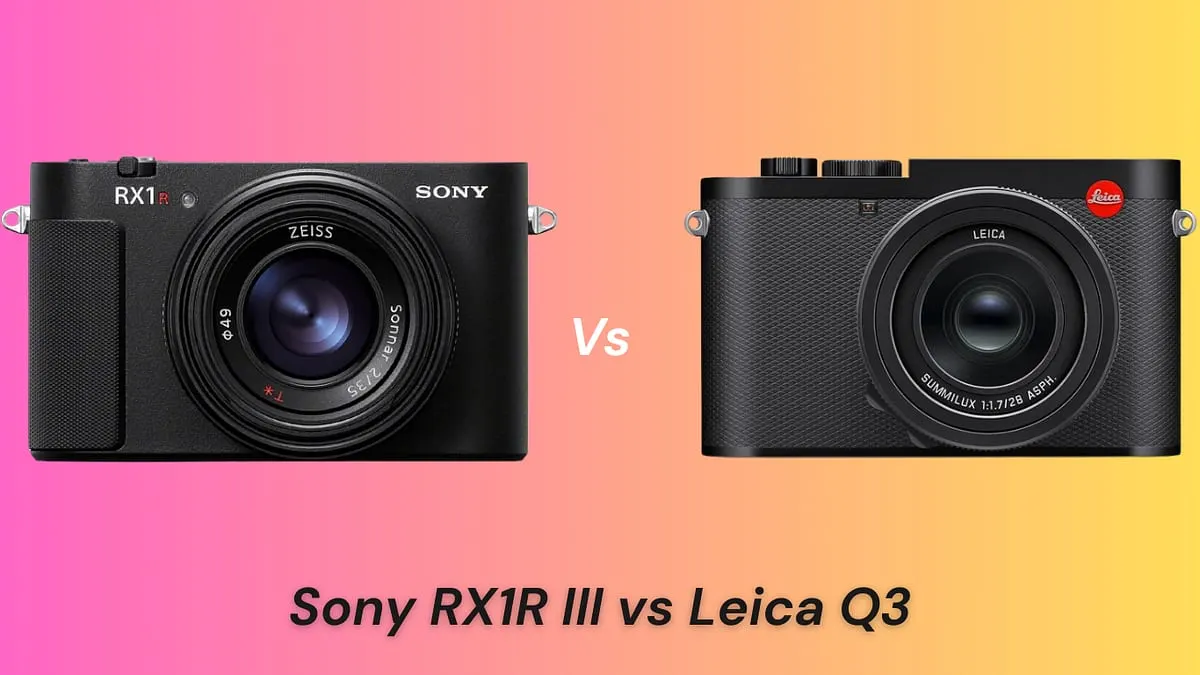
Sony RX1R III vs Leica Q3: Tested Models & Buying Guide
Sony RX1R III vs Leica Q3 compared — where each one wins, where it falls short, and who should buy which. Updated for 2026.
Best Camera for Therapy Sessions: Tested Models & Buying Guide
This comparison evaluates webcams and camcorders at several price ranges and gives recommendations based on research.
Best Cameras for Photography: Tested Models & Buying Guide
Best Cameras for Photography: Sony a7 IV, Canon EOS M50 Mark II and Canon EOS R5 compared on features, price and who each one suits.