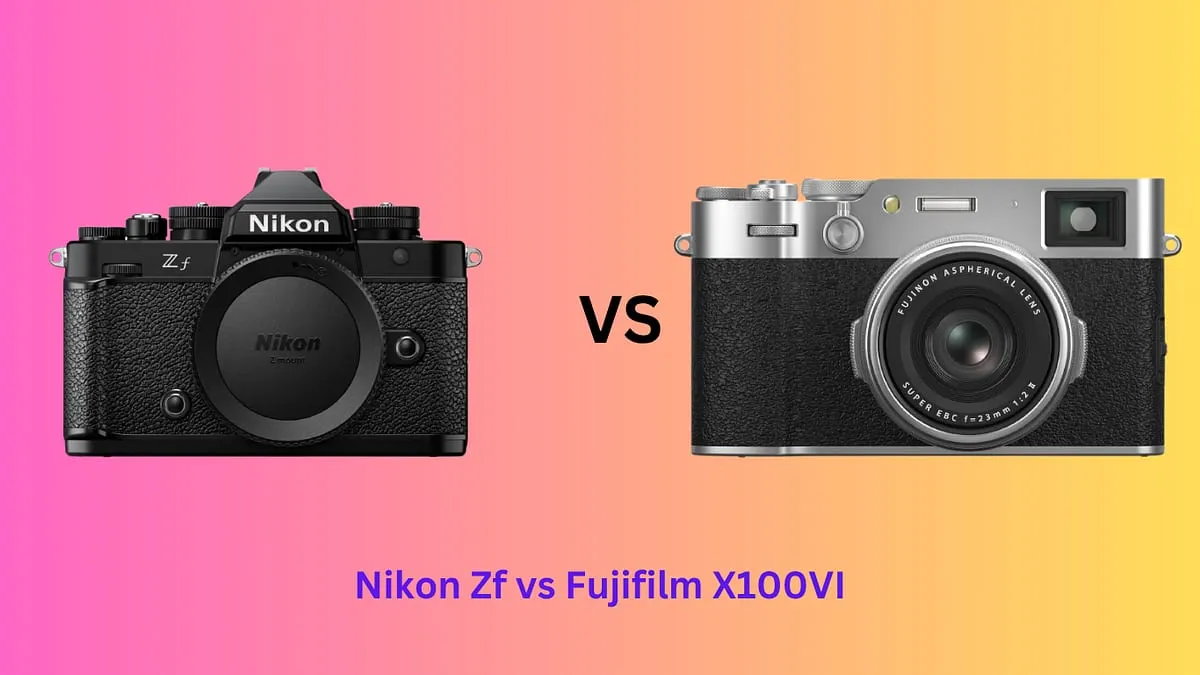
Nikon Zf vs Fujifilm X100VI: Top Picks & Sensor Comparison
As an Amazon Associate we earn from qualifying purchases. Some links in this guide are affiliate links, see our affiliate disclosure for details.
Should you buy the Nikon Zf or the Fujifilm X100VI?
Buy the Fujifilm X100VI if you want a pocketable fixed-lens camera with a 40 MP APS-C sensor and a 35mm-equivalent f/2 lens for walk-around and street photography. Buy the Nikon Zf if you want a full-frame body, interchangeable lenses and better low-light performance. The X100VI weighs about 521 g with battery and card, against about 710 g for the Zf. Owning both can make sense because they suit different days.
How do the Nikon Zf and Fujifilm X100VI compare?
The figures come from the makers' pages and review sites. Sources sometimes disagree, so check Nikon's and Fujifilm's pages for current details.
| Feature | Fujifilm X100VI | Nikon Zf |
|---|---|---|
| Sensor | 40.2 MP APS-C X-Trans CMOS 5 HR | 24.5 MP full-frame BSI |
| Lens | Fixed 23mm f/2, 35mm equivalent | Interchangeable Nikon Z mount |
| Stabilization | 5-axis in-body, rated up to 6 stops | In-body, rated at 7 to 8 stops depending on the source |
| Built-in ND filter | Yes, 4 stops | No |
| Weight | About 521 g with battery and card | About 710 g with battery and card |
| Size | 128.0 x 74.8 x 55.3 mm | 144 x 103 x 49 mm, or 59 mm including the viewfinder hump |
| Viewfinder | Hybrid optical and 3.69M-dot EVF | 3.69M-dot EVF |
| Processor and autofocus | X-Processor 5 | 273-point phase-detection autofocus |
| Launch price | Check current listings | $1,999 body only in the US |
Sources: Fujifilm's X100VI specifications, Fujifilm X's X100VI page, PhotographyLife on the Nikon Zf announcement and Nikon USA's Zf page.
What is the size difference between the Nikon Zf and Fujifilm X100VI?
The X100VI is much smaller. It measures 128.0 x 74.8 x 55.3 mm and weighs about 521 g with battery and card, so it fits a large jacket pocket. The Zf measures about 144 x 103 mm in width and height and is 49 mm deep, or about 59 mm with the viewfinder, and weighs about 710 g with battery and card. The Zf also needs a lens, which adds size and weight.
Fujifilm X100VI
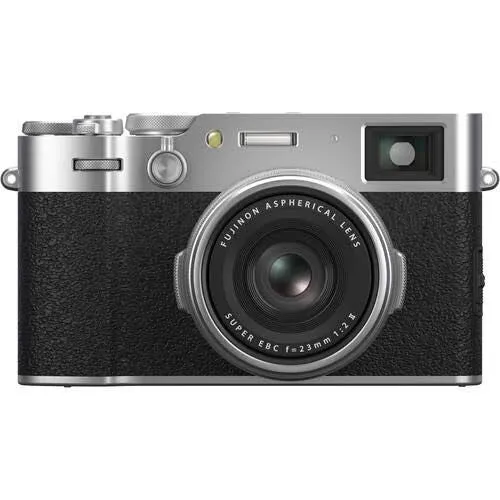
The Fujifilm X100VI pairs a 40 MP APS-C sensor with a fixed 23mm f/2 lens and a quiet leaf shutter. Its built-in 4-stop ND filter and in-body stabilization suit street and travel photography, and it is small enough to carry every day. You can also compare another listing.
Strengths: pocketable, quiet, high resolution, built-in ND filter.
Trade-offs: one fixed lens, so you cannot change the focal length, and the APS-C sensor has less low-light headroom than full frame.
Nikon Zf
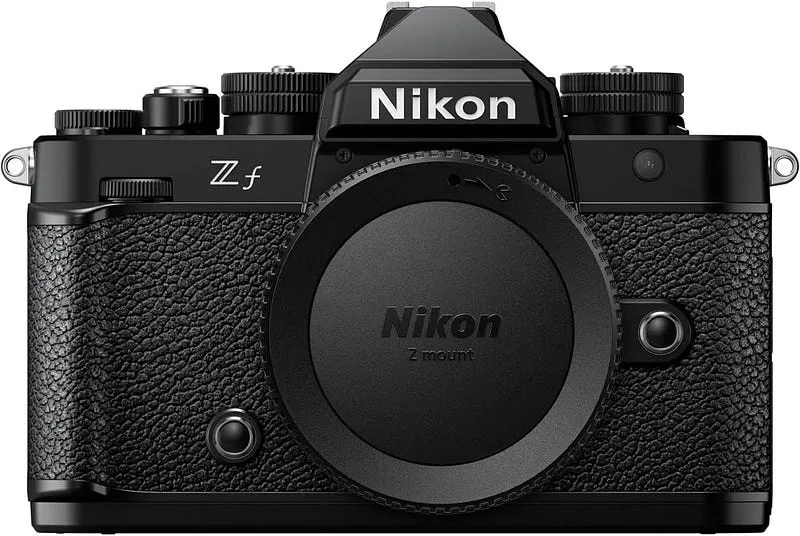
The Nikon Zf borrows the look of the Nikon FM2 film camera, with dedicated dials for shutter speed, ISO and exposure compensation. Its 24.5 MP full-frame sensor and in-body stabilization suit low-light shooting, and the Z mount gives you a wide choice of lenses.
Strengths: full-frame sensor, interchangeable lenses, strong in-body stabilization.
Trade-offs: larger and heavier, and the body and lenses together cost more.
Which one should you buy?
| If you want | Best fit | Why |
|---|---|---|
| An everyday carry camera | Fujifilm X100VI | About 521 g and pocket-sized |
| Street photography with a low profile | Fujifilm X100VI | Quiet leaf shutter and a small, unthreatening body |
| Better low light and shallow depth of field | Nikon Zf | Full-frame sensor |
| Interchangeable lenses | Nikon Zf | Z-mount lens range |
| A retro feel with manual dials | Either | Both have physical dials |
Frequently asked questions
Is the Nikon Zf or the X100VI better for street photography? The X100VI is smaller and quieter, which helps on the street. The Zf gives you lens choice and better low-light performance at the cost of size.
What is the size difference between the Nikon Zf and Fujifilm X100VI? The X100VI is 128.0 x 74.8 x 55.3 mm and about 521 g with battery and card. The Zf is about 144 x 103 x 49 mm, or 59 mm with the viewfinder, and about 710 g with battery and card.
Does it make sense to own both a Fujifilm X100VI and a Nikon Zf? Yes. Many photographers use a small fixed-lens camera for carrying every day and a larger body for planned shoots with different lenses.
Should I buy the X100VI on top of my Nikon Zf? If you leave the Zf at home because of its size, a pocketable X100VI can fill the gap. If you always carry the Zf with a prime lens, it may not add much.
Which has the higher resolution? The X100VI, at 40.2 MP against 24.5 MP, though the Zf has the larger sensor.
How does the X100VI compare with the Ricoh GR III? See Ricoh GR III vs Fujifilm X100VI for that comparison, and the Fujifilm X-M5 vs X100VI guide for the interchangeable-lens alternative. For lens ideas on the Zf, see the best lenses for the Nikon Zf.
Photo by Laurence Ziegler on Unsplash
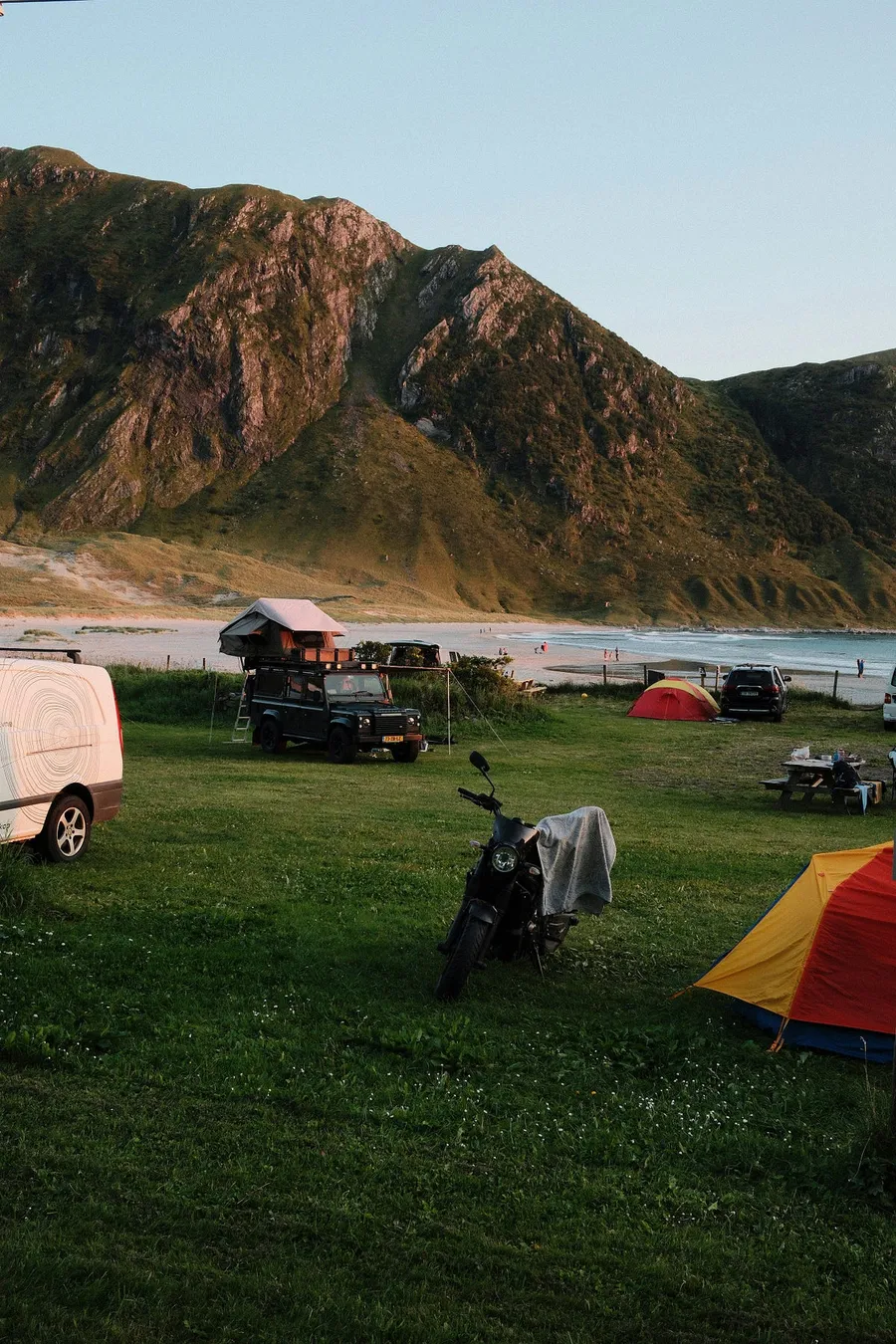
Photo by Laurence Ziegler on Unsplash

Photo by Laurence Ziegler on Unsplash

Photo by Vonecia Carswell on Unsplash
Camera & Lens Settings by Real-World Use Case
Match your focal length, aperture, shutter speed, and lighting modifier to the exact environment you shoot in.
Tattoo Artists & Micro-Realism Portfolios
- Best Body:
- Sony Alpha a7 III / Fujifilm X-T4
- Ideal Lens:
- 90mm f/2.8 Macro (detail) or 50mm f/1.8 (sleeves & back pieces)
- Aperture & Shutter:
- f/5.6 – f/8 (keeps curved forearms and calves sharp edge-to-edge) · 1/125s – 1/200s handheld (or 1/60s on tripod)
- Room Distance:
- 0.4m – 1.5m (1.5 to 5 ft)
Barbershops, Hairstylists & Color Salons
- Best Body:
- Sony a7 IV / Canon EOS R6 Mark II
- Ideal Lens:
- 50mm f/1.8 (tight stations) or 85mm f/1.8 (spacious salons)
- Aperture & Shutter:
- f/1.8 – f/2.8 (blurs background chairs while keeping the lineup tack-sharp) · 1/160s – 1/250s (freezes subtle head movement in the chair)
- Room Distance:
- 1.5m – 2.4m (5 to 8 ft from the styling chair)
Makeup Artists (MUA) & Beauty Tutorials
- Best Body:
- Sony Alpha a6400 / Canon G7 X Mark III
- Ideal Lens:
- Sigma 56mm f/1.4 DC DN (APS-C) or 50mm–85mm f/1.8 (Full Frame)
- Aperture & Shutter:
- f/2.8 – f/4 for full-face sharpness; f/5.6 for macro eye/lip close-ups · 1/125s for stills; 1/50s (24p) or 1/120s (60p) for video tutorials
- Room Distance:
- 1.2m – 2.2m (4 to 7 ft)

Written by
Marien CartelMarien Cartel runs Marien Cartel Photography, a camera and lens buying-guide site, and photographs the gear shown on it.
Related Guides
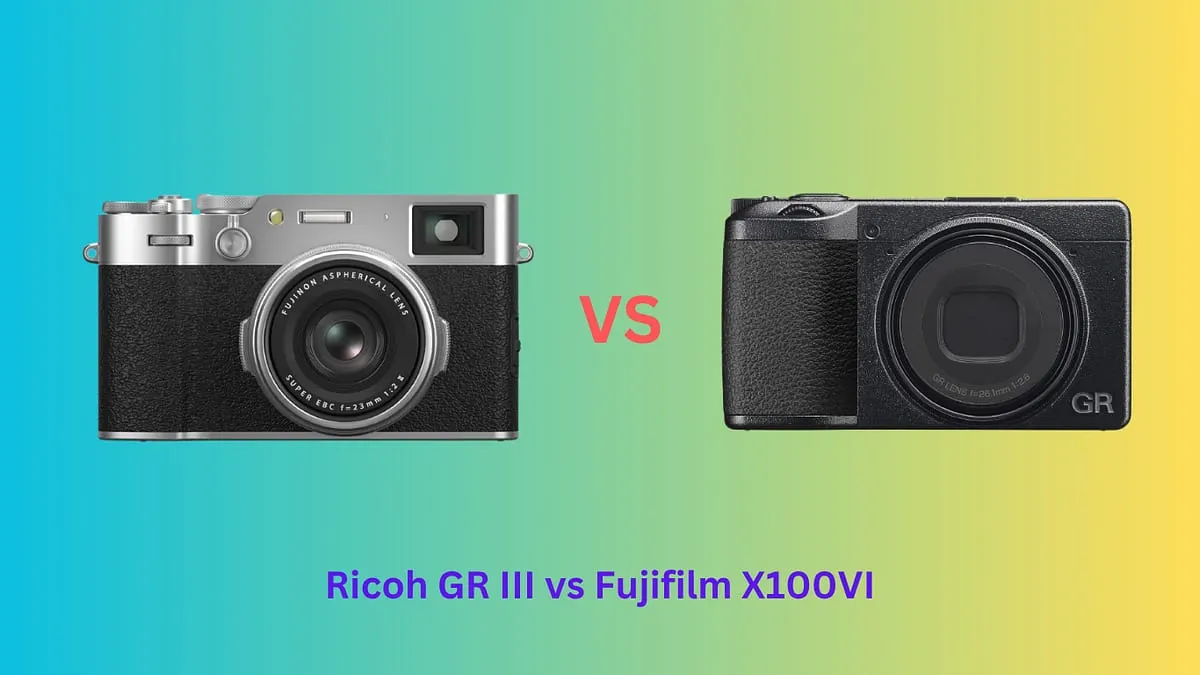
Ricoh GR III vs Fujifilm X100VI: Top Picks & Sensor Comparison
Compare the pocketable 28mm Ricoh GR III vs the 40MP Fujifilm X100VI across APS-C sharpness, hybrid viewfinder, IBIS stabilization, and street portability.
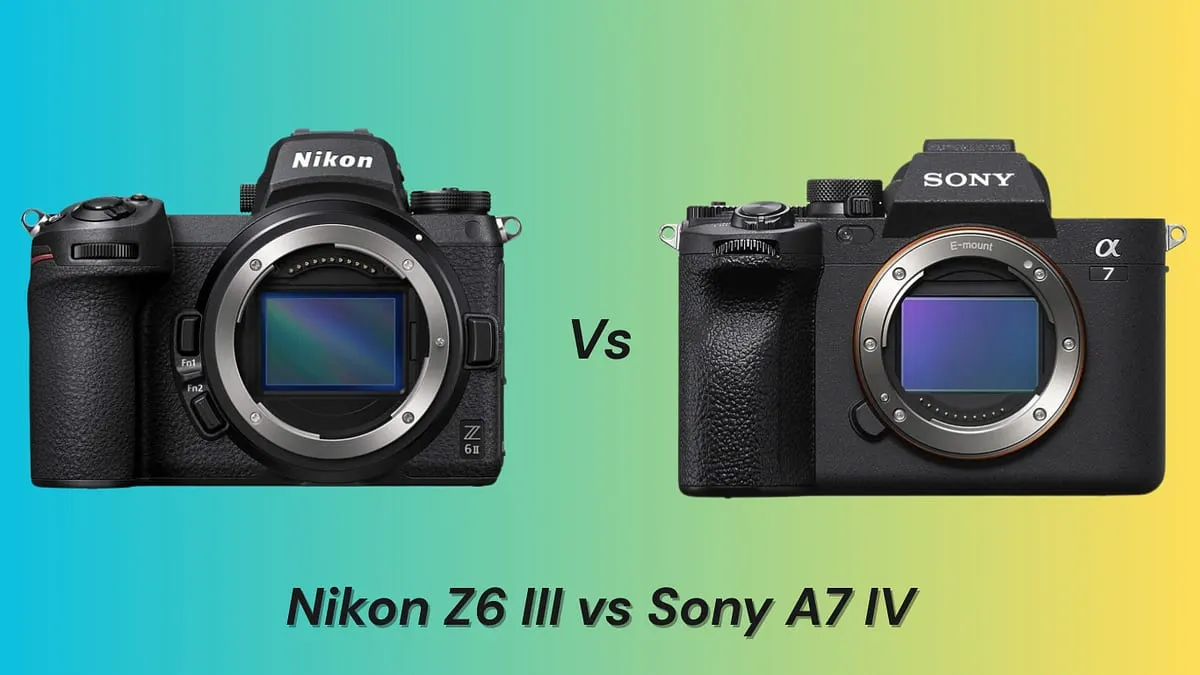
Nikon Z6 III vs Sony A7 IV: Sensor Size, Stabilization & Picks
Nikon Z6 III vs Sony A7 IV compared — where each one wins, where it falls short, and who should buy which. Updated for 2026.
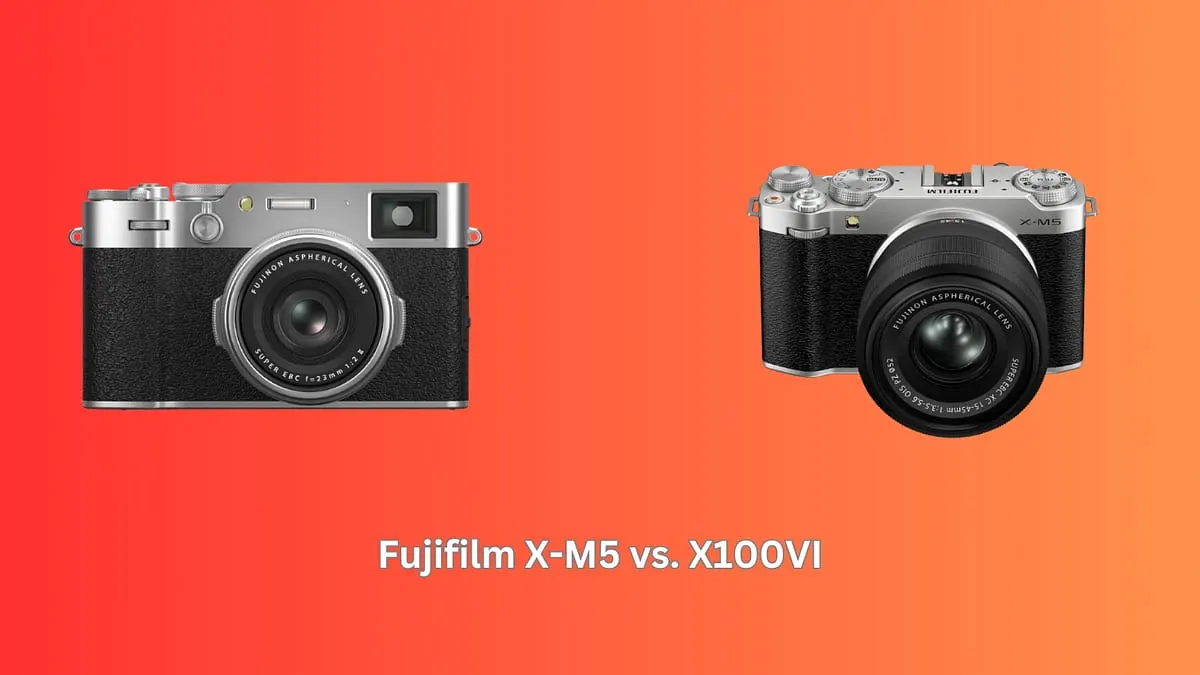
Fujifilm X-M5 vs. X100VI: Specs, Autofocus & Lens Pairing
Fujifilm X-M5 vs. X100VI compared — where each one wins, where it falls short, and who should buy which. Updated for 2026.
Best Lenses for Nikon Zf: Aperture, Stabilization & Mount Guide
Best Lenses for Nikon Zf: Nikon Z 40mm f/2 SE, Nikon Z 50mm f/1.8 S and Nikon Z 24–120mm f/4 S compared on features, price and who each one suits.
Canon R5 Mark II Review: Top Picks & Sensor Comparison
Canon R5 Mark II Review: what to look for, what to skip and how to choose the right one for your budget. Updated for 2026.

Best Camcorder For Sports: Top Picks & Sensor Comparison
Compare the best camcorders for sports filming, led by the Canon VIXIA HF G50 and Sony AX53 with 20x optical zoom, fast autofocus, and clean HDMI output.