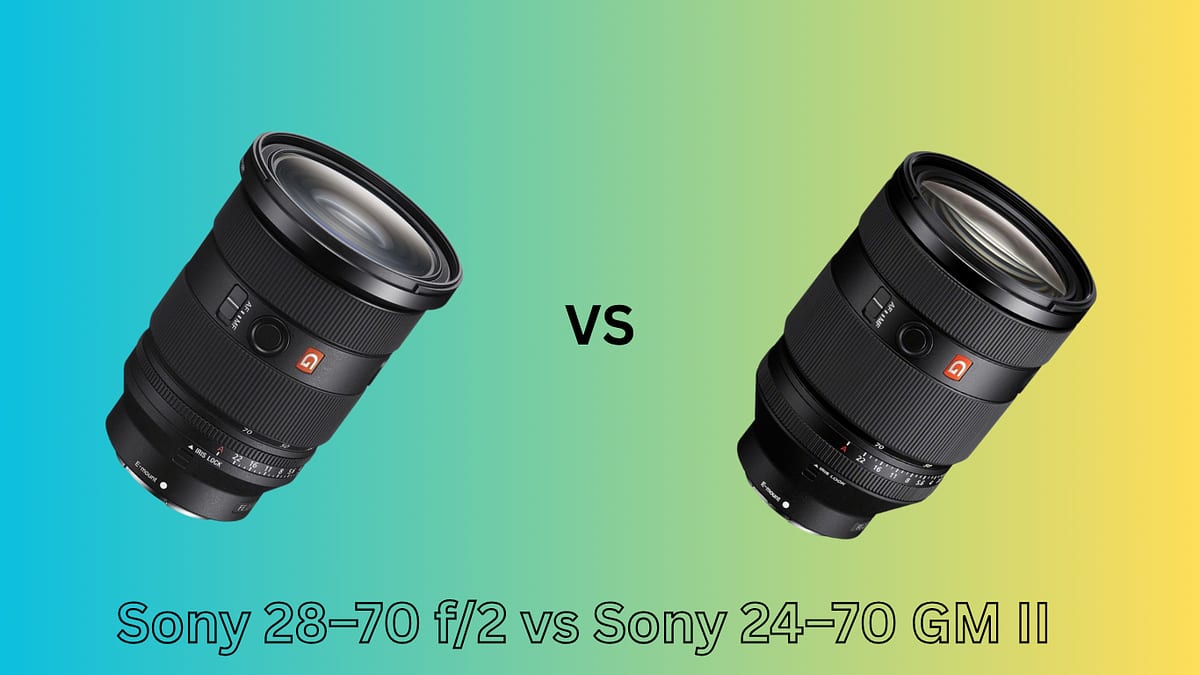
Sony 28–70 f/2 vs Sony 24–70 GM II
As an Amazon Associate we earn from qualifying purchases. Some links in this guide are affiliate links — see our affiliate disclosure for details.
There’s a question that every Sony shooter looking for a pro-standard zoom eventually asks themselves: f/2.8 or f/2? It’s not just a question of aperture; it’s a question of philosophy. It’s about choosing the tool that best fits your creative vision and, just as importantly, how you work in the field.
For years, my workhorse was the legendary Sony 24–70mm f/2.8 GM II. It’s the lens every reviewer raves about, and for good reason. But recently, I took a leap on its exotic sibling, the Sony 28–70mm f/2 GM. The experience has been illuminating, and it’s reshaped how I think about my kit. This is my story of choosing between these two optical giants.
Affiliate Disclosure: This article contains affiliate links to camera gear and lenses. If you click through and make a purchase, I may earn a commission. This helps me continue creating free photography content for readers like you — thank you for your support!
The All-Rounder Champion: My Time with the 24–70mm f/2.8 GM II

When I first unboxed the GM II, it felt like a revelation. After lugging around older, heavier zooms, its weight and balance on my Sony A7IV were a dream. This lens is the definition of versatility.
I primarily shoot events — weddings, corporate gatherings, and run-and-gun documentary work. The GM II was my perfect partner. The wider 24mm end was indispensable for capturing grand reception halls, cramped interior shots, and expansive group photos. I never felt limited.
Its autofocus is lightning-fast and utterly silent, making it a beast for both photo and video. The addition of the aperture ring felt premium and improved my workflow immensely. For 90% of my professional work, it was, and still is, absolutely flawless. The image quality is stunningly sharp, and f/2.8 was always “good enough” in most low-light situations, especially with modern sensors doing so well at high ISOs.
But there was always a whisper in the back of my mind… what if?


The Allure of More Light: Switching to the 28–70mm f/2 GM

The “what if” was about two things: bokeh and low-light performance. I started taking on more intimate portrait sessions and moody, available-light projects. While the GM II was competent, I craved that extra pop — the creamy, dreamy separation that makes a subject leap from the background. I wanted to shoot in darker environments without constantly pushing my ISO into noisy territory.
So, I rented, and then eventually bought, the 28–70mm f/2 GM.
The first thing you notice is the size. It’s a chonker. It’s longer, heavier, and changes the entire balance of the camera. It announces its presence. The second thing you notice is the 28mm wide end. You do lose a tangible amount of width. For a landscape or real estate photographer, this would be a deal-breaker.
But then you take a shot.
Oh. My. Goodness.
The images that come out of this lens have a character that’s hard to describe but easy to see. That f/2 aperture isn’t just a number; it’s a creative tool. The background blur is lush and smooth, edging into prime lens territory. At a wedding, I could isolate a bride from a busy crowd like never before. In a dimly lit restaurant, I could capture the ambiance at ISO 1000 instead of 4000.
The trade-off was immediate and clear: I traded ultimate convenience for ultimate performance in specific scenarios.
Side-by-Side: My Personal Pros and Cons
Sony 28–70mm f/2 GM: The Specialist
- My Pro: The f/2 aperture is a game-changer. The images have a “look” — a beautiful rendering and subject isolation that truly stands out.
- My Con: The size and weight are significant. After a 10-hour wedding day, my neck and shoulders knew the difference. Missing that 24mm felt like losing a tool from my kit.
Sony 24–70mm f/2.8 GM II: The Workhorse
- My Pro: The perfect balance of size, weight, and versatility. It’s the lens I never have to think about. It just works, brilliantly, for everything.
- My Con: While excellent, it doesn’t have that special “magic” in the bokeh that the f/2 lens possesses. In extreme low light, you’re working the camera harder.
So, Which One Did I Choose?
The boring answer is: I kept both. But the real answer is more nuanced.
The Sony 24–70mm f/2.8 GM II is my default. It lives on my camera for events, travel, and any situation where I need to be nimble and ready for anything. Its versatility is its greatest strength.
The Sony 28–70mm f/2 GM is my secret weapon. It comes out for specific portrait sessions, intimate ceremonies, artistic projects, and any time I know the light will be challenging and beautiful background separation is my top priority.
The Verdict: Which One Should YOU Choose?
- Choose the Sony 28–70mm f/2 GM if you are a low-light artist, a portrait photographer, or a videographer who lives and dies by bokeh. If your work prioritizes aesthetic rendering over convenience and you don’t mind the extra heft and cost, this lens will reward you with truly special images.
- Choose the Sony 24–70mm f/2.8 GM II if you are a generalist, a wedding/event photographer, a run-and-gun shooter, or a travel enthusiast. If you need one lens to do it all with minimal compromise, offering a perfect blend of performance, size, and versatility, the GM II remains arguably the best standard zoom ever made.
For me, the choice wasn’t about finding a winner, but about understanding that each lens serves a different master. One masters versatility, the other masters light. And knowing which master you serve on any given day is the key to unlocking your best work.



Written by
Marien CartelProfessional and Certified Digital Photographer born in the USA, with 22 years of experience in the field of photography.