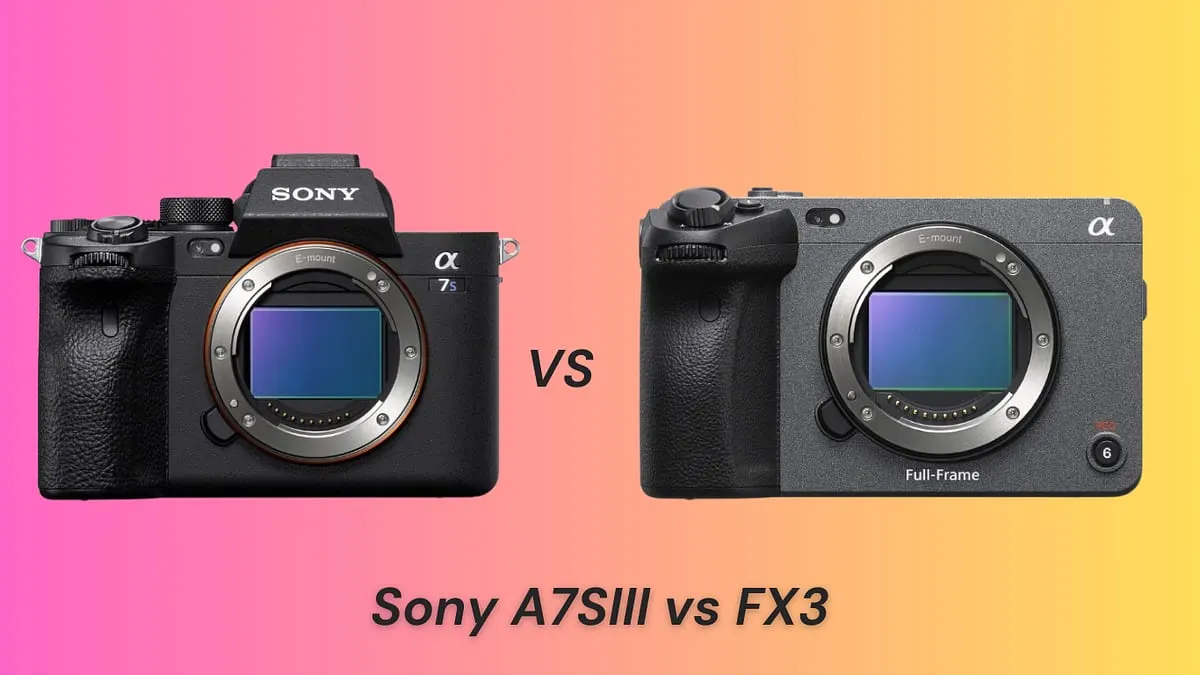
Sony A7SIII vs FX3: Sensor Size, Stabilization & Picks
As an Amazon Associate we earn from qualifying purchases. Some links in this guide are affiliate links, see our affiliate disclosure for details.
Top Picks & Key Specifications at a Glance
| Model | Best For | Mount / System | Key Optical & Sensor Specs | Check Price |
|---|---|---|---|---|
1The A7S III: Jack-of-All-Trades Hero | Top Overall Pick | Sony FE E-Mount (Full Frame) | High-Resolution Optics & Fast AF | Amazon ↗ |
2A7S III | Recommended Pick | Sony FE E-Mount (Full Frame) | Full-Frame · 4K UHD | Amazon ↗ |
Should you buy the Sony A7S III or the FX3?
image quality is identical, so the choice is about ergonomics, features and workflow. The A7S III is the all-rounder and the FX3 is its cinema-optimized sibling.
The A7S III: Jack-of-All-Trades Hero
Coming from older DSLRs and mirrorless cameras, it was a revelation.
-
Shoot anywhere, anytime: Dimly lit receptions? No problem. Candlelit scenes? Bring it on. The low-light performance wasn’t just good; it felt like cheating.
-
Be a hybrid ninja: Needing a quick photo for socials or a client deliverable mid-video shoot? The A7S III handled it seamlessly. It genuinely felt like one camera to rule them all.
-
The Rigging Tango: Building it out for serious cinema work became a puzzle. Cage, external monitor, external recorder, external audio… it started feeling bulky and Frankenstein-ish. Getting everything mounted securely was fiddly.
-
Audio Awkwardness: While the internal audio was decent, professional XLR inputs meant bulky adapters or external recorders — more weight, more cables, more points of failure. Syncing in post became another step.
Enter the Sony FX3. On paper, it seemed like the A7S III’s identical twin: same sensor, same processor, same incredible image quality. Was it just an A7S III in a different dress?
The FX3: Not a Replacement, But a Refined Evolution
- Built to Be Built Upon: The FX3’s design is pure cinema pragmatism.
- Integrated Threaded Points: Top, sides, bottom — everywhere you need them. Rigging became intuitive and rock-solid. No more hunting for cage attachment points.
- Dedicated Status Lamp: A small but crucial feature on set, letting others know when you’re rolling.
Choose the Sony A7S III if
- You are a true hybrid shooter (photo + video is equally important).
- You prioritize the absolute smallest, lightest full-frame video powerhouse.
- You love the flexibility of an EVF.
- Your projects are varied (run-and-gun, travel, events, some controlled shoots) and you need one versatile tool.
- Budget is tighter and rigging is minimal.
Choose the Sony FX3 if
- Video is your primary (or only) focus.
- You demand maximum reliability for long recordings and challenging environments (active cooling).
- Professional, integrated audio (XLR handle) is non-negotiable.
- You frequently build out rigs (cages, monitors, follow focus) — the mounting points are superior.
- You work on longer-form projects, documentaries, commercials, or narrative work where cinema camera conventions (tally lights, status lamp) are beneficial.
- You value a streamlined, dedicated video workflow.
Shift
Crucially: The image quality from both is identical. Stunning 4K, incredible low-light, reliable autofocus. You cannot make a bad choice based on the picture. It’s purely about ergonomics, features, and workflow.
Final Thought
More picks
- A7S III — Check A7S III Price on Amazon
Explore Best Lenses for Sony FX3 alongside Sony A1 II Review and the budget camera matcher.
Common Buying & Setup Questions
What is the top pick in Sony A7SIII vs FX3?
The The A7S III: Jack-of-All-Trades Hero (High-Resolution Optics & Fast AF, Sony FE E-Mount (Full Frame)) leads our shortlist as the top overall pick, followed closely by the A7S III (Full-Frame · 4K UHD).
What focal length, aperture, and shutter speed work best for tattoo artists & micro-realism portfolios?
For tattoo artists & micro-realism portfolios, pair a 50mm – 90mm (never below 35mm, which warps limb proportions) lens at f/5.6 – f/8 (keeps curved forearms and calves sharp edge-to-edge) with a shutter speed of 1/125s – 1/200s handheld (or 1/60s on tripod) and a working distance of 0.4m – 1.5m (1.5 to 5 ft). Recommended setup: CRI 95+ 5600K LED panel covered with Linear Polarizing Film + Circular Polarizer (CPL) lens filter rotated 90°..
Camera & Lens Settings by Real-World Use Case
Match your focal length, aperture, shutter speed, and lighting modifier to the exact environment you shoot in.
Tattoo Artists & Micro-Realism Portfolios
- Best Body:
- Sony Alpha a7 III / Fujifilm X-T4
- Ideal Lens:
- 90mm f/2.8 Macro (detail) or 50mm f/1.8 (sleeves & back pieces)
- Aperture & Shutter:
- f/5.6 – f/8 (keeps curved forearms and calves sharp edge-to-edge) · 1/125s – 1/200s handheld (or 1/60s on tripod)
- Room Distance:
- 0.4m – 1.5m (1.5 to 5 ft)
Barbershops, Hairstylists & Color Salons
- Best Body:
- Sony a7 IV / Canon EOS R6 Mark II
- Ideal Lens:
- 50mm f/1.8 (tight stations) or 85mm f/1.8 (spacious salons)
- Aperture & Shutter:
- f/1.8 – f/2.8 (blurs background chairs while keeping the lineup tack-sharp) · 1/160s – 1/250s (freezes subtle head movement in the chair)
- Room Distance:
- 1.5m – 2.4m (5 to 8 ft from the styling chair)
Makeup Artists (MUA) & Beauty Tutorials
- Best Body:
- Sony Alpha a6400 / Canon G7 X Mark III
- Ideal Lens:
- Sigma 56mm f/1.4 DC DN (APS-C) or 50mm–85mm f/1.8 (Full Frame)
- Aperture & Shutter:
- f/2.8 – f/4 for full-face sharpness; f/5.6 for macro eye/lip close-ups · 1/125s for stills; 1/50s (24p) or 1/120s (60p) for video tutorials
- Room Distance:
- 1.2m – 2.2m (4 to 7 ft)

Written by
Marien CartelMarien Cartel runs Marien Cartel Photography, a camera and lens buying-guide site, and photographs the gear shown on it.
Related Guides
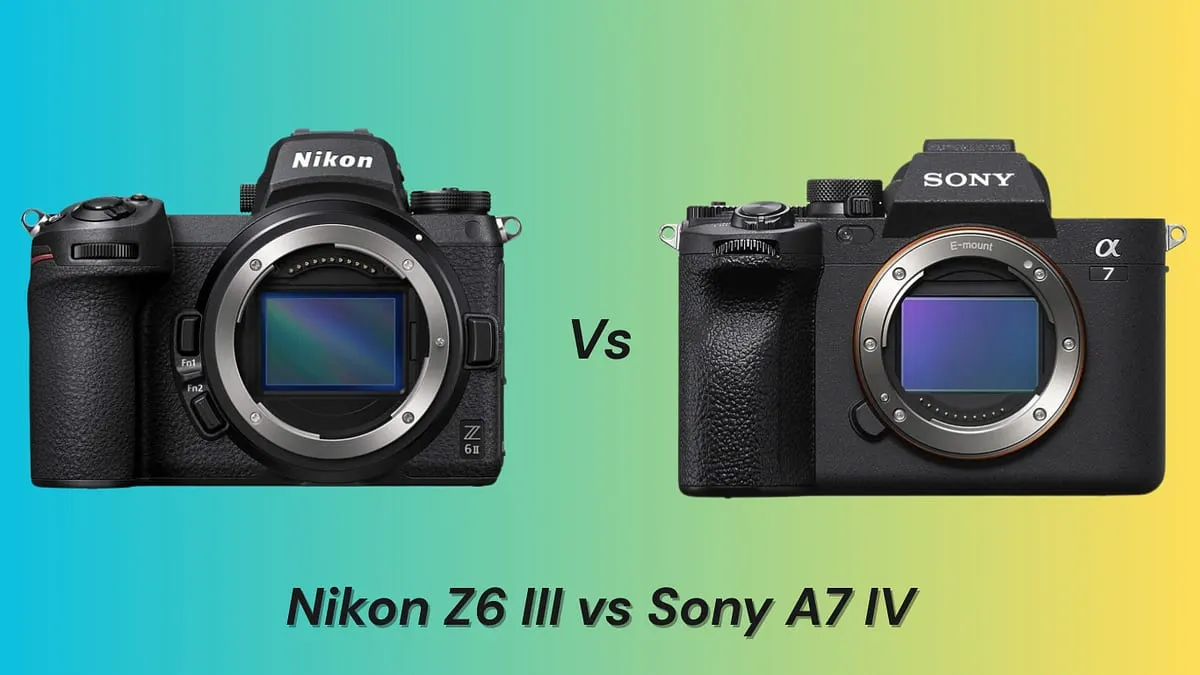
Nikon Z6 III vs Sony A7 IV: Sensor Size, Stabilization & Picks
Nikon Z6 III vs Sony A7 IV compared — where each one wins, where it falls short, and who should buy which. Updated for 2026.
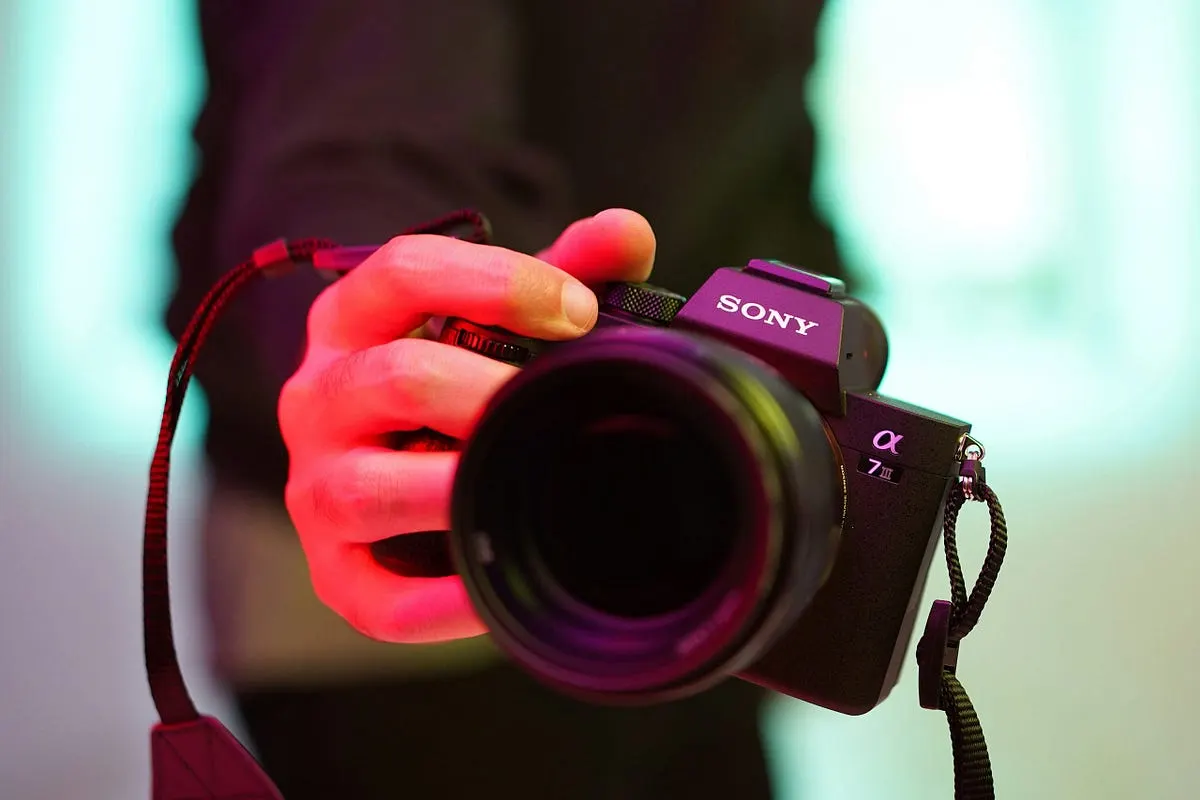
Best Sony Cameras: Sensor Size, Stabilization & Picks
At a glance, the Sony A7 IV as the one most people should buy, the a6700 as the best value, the A7R V for detail and the A7 III.
Best Camera for Cooking Videos: Sensor Size, Stabilization & Picks
Best Camera for Cooking Videos: Sony ZV-E1, Canon EOS R6 Mark II and Panasonic Lumix GH5 compared on features, price and who each one suits.
Best Camera for Personal: Sensor Size, Stabilization & Picks
Best Camera for Personal: a side-by-side look at Sony A7 IV, Canon EOS R10 and Fujifilm X-T5, with strengths, trade-offs and buying advice.
Sony A1 II Review: Image Stabilization, Video Capabilities & More
Sony A1 II Review: what to look for, what to skip and how to choose the right one for your budget. Updated for 2026.
Best Camera For Kids Vlogging: Sensor Size, Stabilization & Picks
Best Camera For Kids Vlogging: a side-by-side look at GoPro Hero10 Black and Insta360 Go 3S, with strengths, trade-offs and buying advice.