Top 7 Best Cameras for Gym Videos (2026): GH5, GH7, ZV-1 & More
As an Amazon Associate we earn from qualifying purchases. Some links in this guide are affiliate links, see our affiliate disclosure for details.
Gym footage is awkward to shoot: bright overhead lights mixed with dim corners, a subject that keeps moving, and often no one behind the camera. That makes stabilization, a flip-out screen and reliable autofocus more useful than a big resolution number.
This guide compares seven cameras from a pocketable creator compact to full-frame bodies. The table below gives the short version, and the sections after it explain what to check and who each camera suits.
Quick verdict
| Your situation | Pick | Why |
|---|---|---|
| Solo creator who wants the easiest camera | Sony ZV-1 | 1-inch sensor, 24-70mm-equivalent f/1.8-2.8 lens, side flip-out screen, built-in directional microphone |
| A video-focused all-rounder | Panasonic Lumix GH5 or the newer GH7 | GH5: 4K up to 60p and Dual I.S.; GH7: internal ProRes RAW and stabilization rated up to 7.5 stops |
| Action clips and mounting anywhere | GoPro Hero10 or Hero 13 Black | HyperSmooth stabilization; the Hero13 is waterproof to 10 m and records 5.3K at 60 fps |
| Low-light quality in full frame | Sony a7 III | Adds low-light quality but costs more and weighs more |
| Strongest stabilization in a small system | Olympus OM-D E-M1 Mark III | In-body stabilization rated at 7 to 7.5 stops, weather sealed |
| High-resolution stills and video | Nikon D850 | 45.7 MP full frame, 4K UHD at up to 30p, large body |
| Canon full frame | Canon EOS R | 30.3 MP, 4K, Dual Pixel autofocus, vari-angle screen |
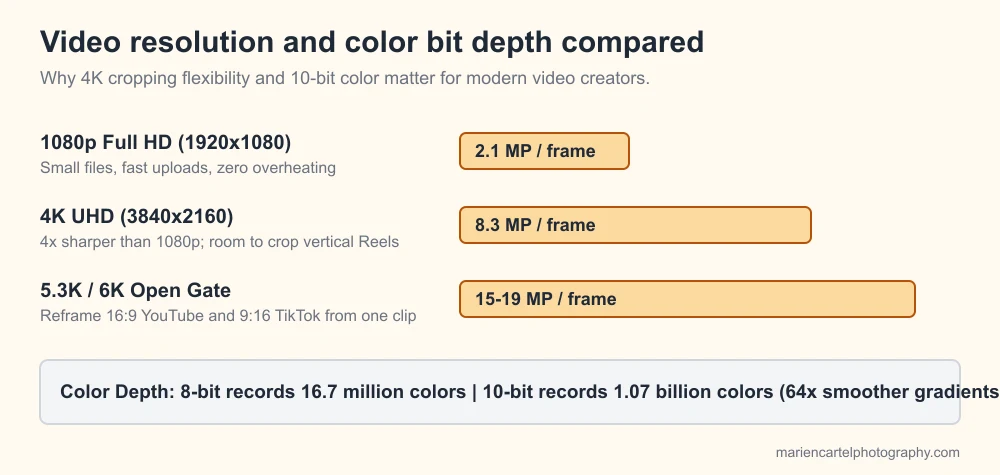
Frame resolution (1080p vs 4K vs 6K Open Gate) and 8-bit vs 10-bit color grading flexibility.
What matters when filming in a gym?
| Feature | Why it matters | What to check |
|---|---|---|
| Stabilization | Moving shots and handheld clips look smoother | In-body or digital stabilization |
| Flip-out screen | You can frame yourself when filming solo | A side-flip or fully articulating screen |
| Low-light performance | Gyms are often dim or mixed-lit | Sensor size and lens aperture |
| Audio | Clear speech makes videos feel professional | A microphone jack or a good built-in mic |
| Autofocus | Keeps you sharp as you move | Face and subject tracking |
| Size and weight | Easy to move around and mount | Weight with battery |
How do the cameras compare?
The figures come from the makers' pages and specification databases. Weight and some video details vary by source, so check the manufacturer's page before you buy.
| Camera | Sensor | Video | Notes |
|---|---|---|---|
| Panasonic Lumix GH5 | 20.3 MP Micro Four Thirds | 4K at up to 60p, Dual I.S. stabilization rated at about 5 stops | Two UHS-II SD slots, 3.2-inch free-angle touchscreen |
| Panasonic Lumix GH7 | 25.2 MP Micro Four Thirds | Internal ProRes RAW up to 5.7K, 4K up to 120p | Phase-detect autofocus, stabilization rated up to 7.5 stops |
| GoPro Hero10 and Hero13 Black | Small action-camera sensor | The Hero13 Black records 5.3K at 60 fps | HyperSmooth stabilization, waterproof to 10 m on the Hero13 |
| Sony ZV-1 | 20.1 MP 1-inch | 24-70mm equivalent f/1.8-2.8 lens | Side flip-out screen, built-in directional mic and a 3.5 mm jack, Product Showcase mode |
| Olympus OM-D E-M1 Mark III | 20.4 MP Micro Four Thirds | 4K at up to 30p | In-body stabilization rated at 7 to 7.5 stops, weather sealed |
| Nikon D850 | 45.7 MP full-frame | 4K UHD at up to 30p | Tilting touchscreen, about 1,840 shots per charge, large body |
| Canon EOS R | 30.3 MP full-frame | 4K and Dual Pixel autofocus | Vari-angle screen, 5,655 selectable AF points |
Sources: Imaging Resource on the Panasonic GH5, TechRadar on the GH5, Wikipedia on the Lumix GH7, a Micro Center listing for the GoPro Hero13 Black, Wikipedia on the Sony ZV-1, Sansmirror on the Olympus E-M1 Mark III, DPReview on the Nikon D850 and Canon UK on the EOS R.
1. Panasonic Lumix GH5
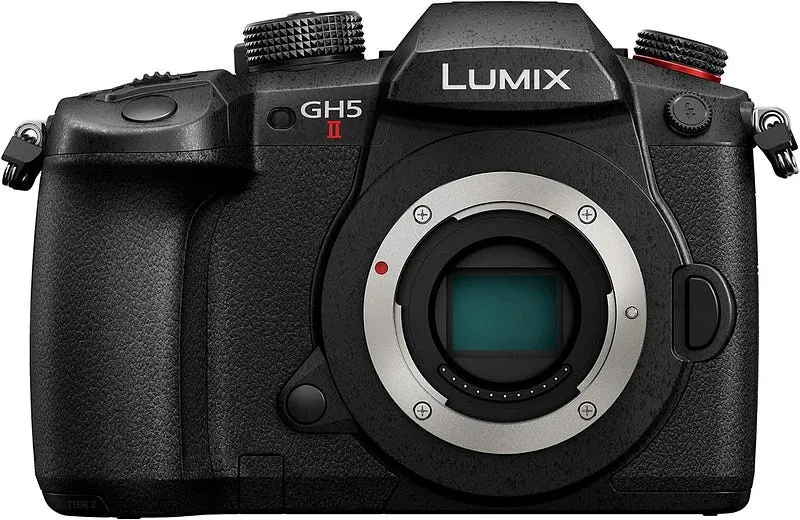
The Panasonic Lumix GH5 is a video-focused body with a 20.3 MP Micro Four Thirds sensor, 4K recording up to 60p and Dual I.S. stabilization. Sources differ on how many 4K modes are 10-bit, so check Panasonic's spec sheet if that matters. The newer Lumix GH7 adds phase-detect autofocus and internal ProRes RAW, which suits more demanding work.
2. GoPro Hero10 and Hero 13 Black
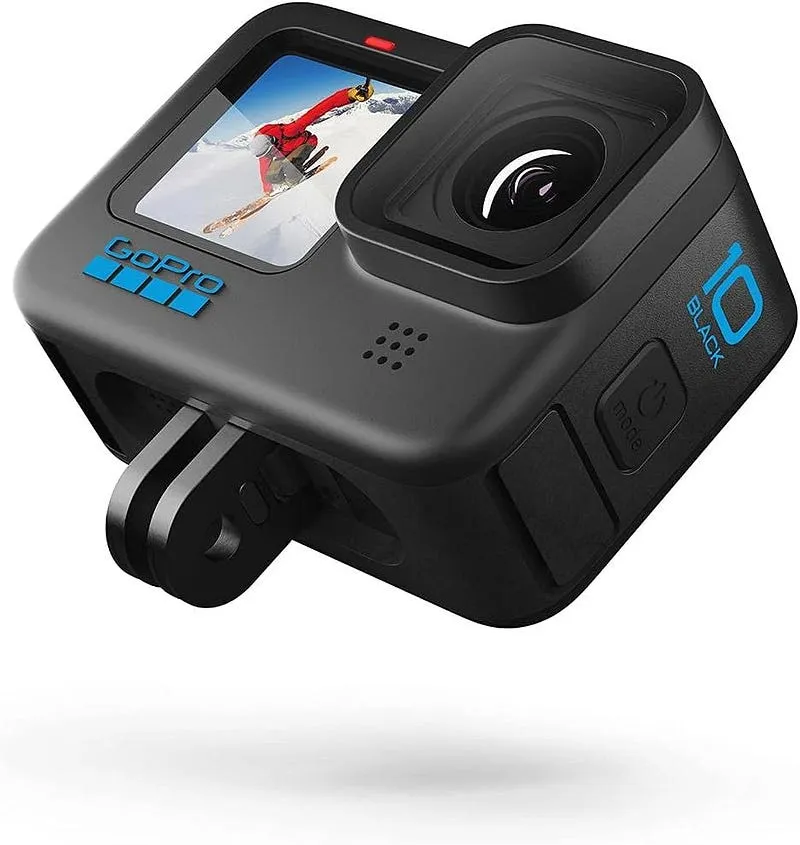
The GoPro Hero10 is a small, rugged action camera that you can mount in many places. The newer Hero 13 Black records 5.3K at 60 fps and uses HyperSmooth stabilization. Action cameras suit wide-angle clips of lifts and circuits more than interview-style talking shots.
3. Sony ZV-1
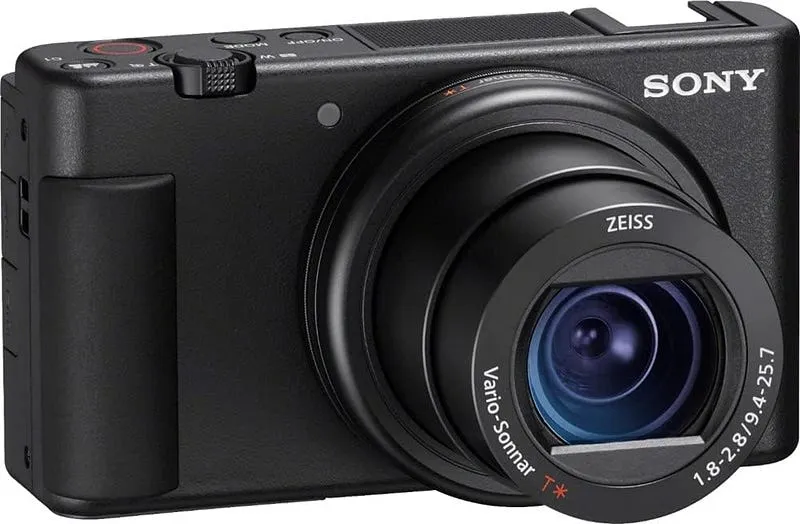
The Sony ZV-1 is built for creators who film themselves. It has a 1-inch sensor, a bright f/1.8-2.8 zoom lens, a side flip-out screen, a directional microphone and a jack for an external mic.
4. Olympus OM-D E-M1 Mark III
The E-M1 Mark III is known for strong in-body stabilization, rated at 7 to 7.5 stops, and a weather-sealed body, which helps for handheld shots. It records 4K at up to 30p.
5. Nikon D850
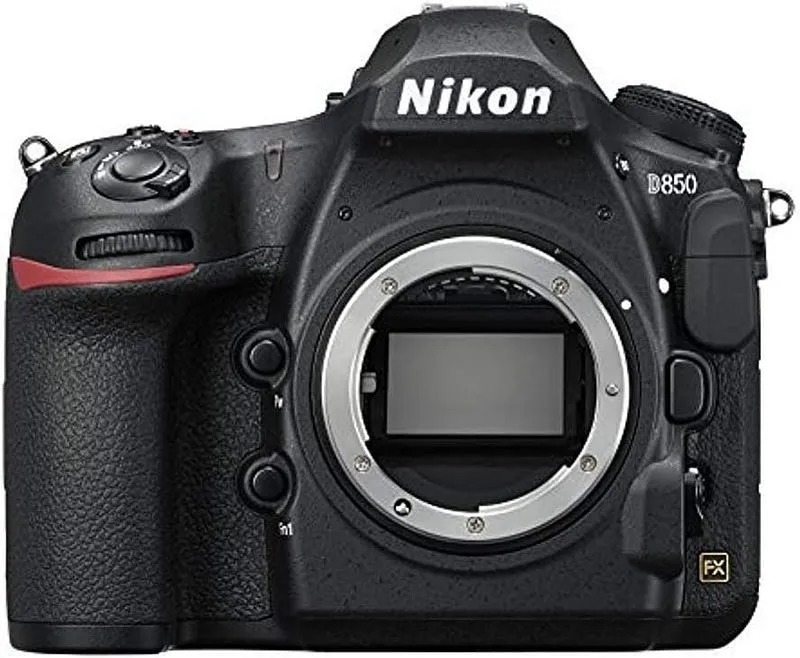
The Nikon D850 is a high-resolution DSLR with 4K UHD video up to 30p and long battery life. It is large and heavy for a gym setup, so it suits stills and fixed-position video more than handheld work.
6. Canon EOS R
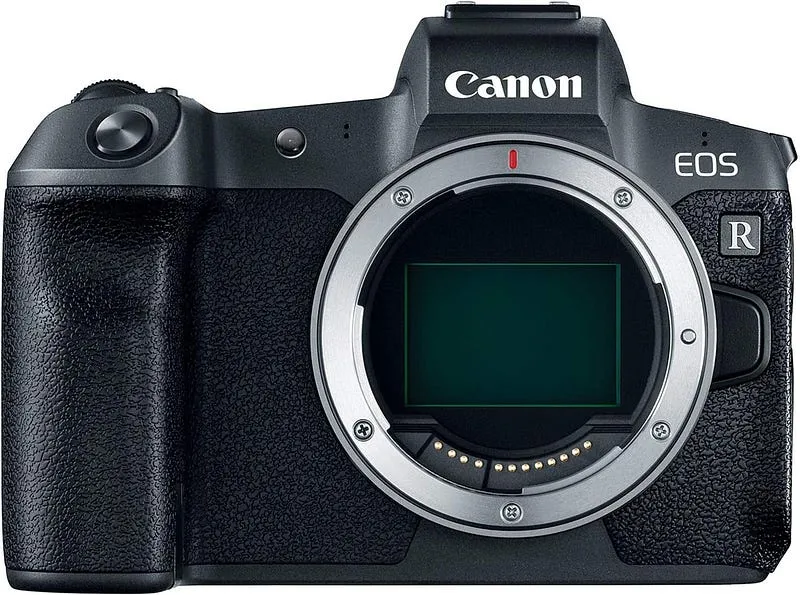
The Canon EOS R is a 30.3 MP full-frame mirrorless camera with Dual Pixel autofocus and a vari-angle screen, which helps with self-filming.
7. Sony A7 III
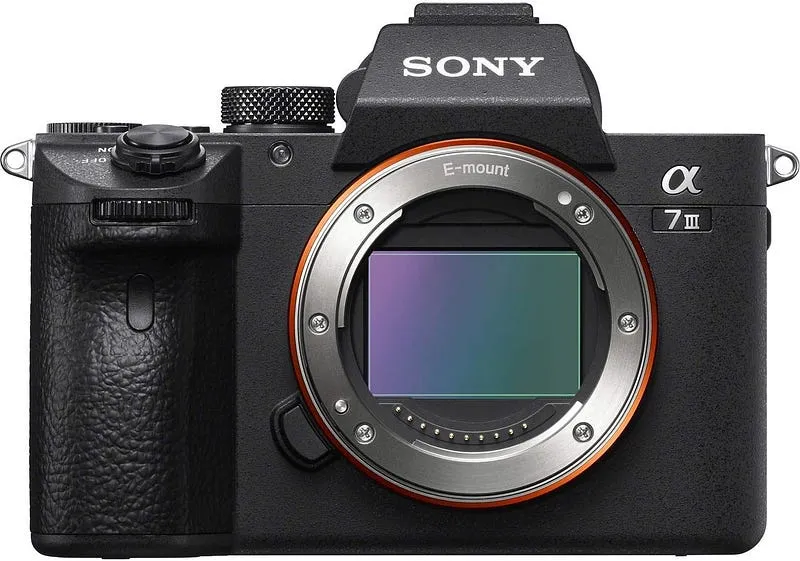
The Sony A7 III is a full-frame body that is popular for low-light work, which helps in a dim gym. It costs more and weighs more than the ZV-1.
Which camera suits which creator?
| If you want | Best fit | Why |
|---|---|---|
| The easiest solo setup | Sony ZV-1 | Flip-out screen, built-in mic, small body |
| Video quality and flexibility | Panasonic Lumix GH5 or GH7 | Video-focused features and stabilization |
| Action clips and mounting | GoPro Hero10 or Hero 13 Black | Small, rugged and stabilised |
| Low light in a dim gym | Sony A7 III | Full-frame sensor |
| Stills plus video | Canon EOS R or Nikon D850 | Large sensors and lens choice |
How do you film better gym videos?
Filming guides from Mindbody and the University of Western Ontario agree on a few points:
- Light from the side and slightly above. Avoid backlighting, which leaves you very dark, and harsh light, which washes out faces.
- Stabilise the camera. A tripod or a sturdy surface avoids shake, and a handheld gimbal helps with moving shots.
- Prioritise audio. An external microphone makes speech clearer.
- Choose the orientation for the platform. Guides disagree, with landscape for longer classes and portrait for short mobile clips.
For lens and camera ideas for video, see the best budget vlogging cameras, the best camera for daily vlogging, the best camera for long video recording and the best camera for YouTube beginners.
Mistakes to avoid when choosing a gym camera
- Buying a heavy DSLR for handheld work. Weight and size matter in a gym.
- Ignoring audio. Bad sound ruins clean video.
- Skipping a tripod. A stable base gives consistent framing.
- Forgetting battery life and heat limits. Long sessions drain batteries.
- Choosing 4K without storage. 4K files need larger cards and drives.
Frequently asked questions
What is the best camera for gym videos on a budget? The Sony ZV-1 and GoPro Hero10 are among the lower-cost options here, and an older Panasonic GH5 can also be good value.
Is an action camera enough? For wide-angle workout clips, yes. For talking-head content with a blurred background, a camera with a bigger sensor works better.
Do I need a microphone? A good external microphone makes speech clearer. The Sony ZV-1 has a built-in directional mic and a jack for an external one.
Which has the best low-light performance? Full-frame bodies such as the Sony A7 III, Canon EOS R and Nikon D850 generally do best in dim gyms.
Should I film vertical or horizontal? It depends on where the video will be viewed. Guides suggest portrait for short mobile clips and landscape for longer classes.
Cover photo by Daniel Apodaca on Unsplash.
Photo by Spencer Davis on Unsplash
Photo by Edgar Chaparro on Unsplash
Photo by Danielle Cerullo on Unsplash
Camera & Lens Settings by Real-World Use Case
Match your focal length, aperture, shutter speed, and lighting modifier to the exact environment you shoot in.
Gym Workouts, Fitness Coaching & Athletic Reels
- Best Body:
- Sony ZV-1 / Panasonic Lumix GH5 & GH7 / Sony a7 III
- Ideal Lens:
- 24mm–35mm f/1.8 or 16–35mm f/2.8 Zoom
- Aperture & Shutter:
- f/1.8 – f/2.8 (isolates athlete from crowded gym equipment) · 1/120s (for 4K 60fps slow-motion) or 1/60s (for 30fps)
- Room Distance:
- 1.5m – 3.0m (5 to 10 ft on a compact floor tripod or magnetic mount)
Youth Sports, GameChanger Baseball/Softball & Golf Swings
- Best Body:
- GoPro Hero 12 Black (Fence Stream) / Canon EOS R50 & R10 (Sideline)
- Ideal Lens:
- RF 100–400mm f/5.6–8 IS USM or 70–200mm f/2.8 (Sideline) / Fixed Wide (Fence)
- Aperture & Shutter:
- f/2.8 – f/5.6 (blurs chain-link fences when shot wide open close to the mesh) · 1/1000s – 1/2000s (baseball bat contact & golf clubhead impact)
- Room Distance:
- 0.1m (snug against chain-link fence) or 10m–40m sideline
YouTube Talking-Head, Podcasting & Desk Streaming
- Best Body:
- Sony ZV-E10 II / Sony a6700 / Canon EOS R50
- Ideal Lens:
- Sigma 16mm f/1.4 DC DN (APS-C) or 24mm f/1.8 (Full Frame)
- Aperture & Shutter:
- f/1.4 – f/2.0 (separates speaker from a close desk wall within 4 feet) · 1/50s (for 24fps) or 1/60s (for 30fps) — 180-degree shutter rule
- Room Distance:
- 0.8m – 1.4m (2.5 to 4.5 ft desk arm mount)

Written by
Marien CartelMarien Cartel runs Marien Cartel Photography, a camera and lens buying-guide site, and photographs the gear shown on it.
Related Guides
Best Camera for Guitar Videos 2026: ZV-1F, GoPro, Sony Alpha
Sony ZV-1F, a GoPro or a Sony Alpha for filming guitar? A quick verdict, plus why a good microphone matters more than the camera.
Best Camera for Walking Videos (2026): Hero13 vs Osmo Pocket 3
GoPro Hero13 Black, DJI Osmo Pocket 3 or Sony ZV-1 II for walking videos? A quick verdict by terrain, stabilization and whether you talk to the camera.
Best Camera for DJ Sets 2026: Sony ZV-1 vs a7 III vs GoPro HERO 13
Filming DJ sets in dark, loud clubs: Sony ZV-1, Sony a7 III, GoPro HERO 13, Canon Rebel T7 and Zoom Q2n-4K compared on low light, screen.
Best Camera for ASMR Content Creators (2026): G100D vs ZV-1
Panasonic Lumix G100D or Sony ZV-1 for ASMR? Why quiet operation, close focus and a flip screen matter more than resolution, with a quick verdict.
10 Best Cameras for Influencers (2026): Guide & Reviews
Ten cameras for influencers compared, from the Sony a7 III and Olympus OM-D E-M1 Mark III to the Fujifilm X-T30 and Canon EOS R.
Best Camera for Sports Photography Beginners (2026)
Canon EOS R10, Sony A6400, Nikon Z50 or Fujifilm X-S20 for a first sports camera? Burst rate, autofocus and price compared, with a quick verdict.