Best Camera for Switzerland: Top Bodies Compared by Budget
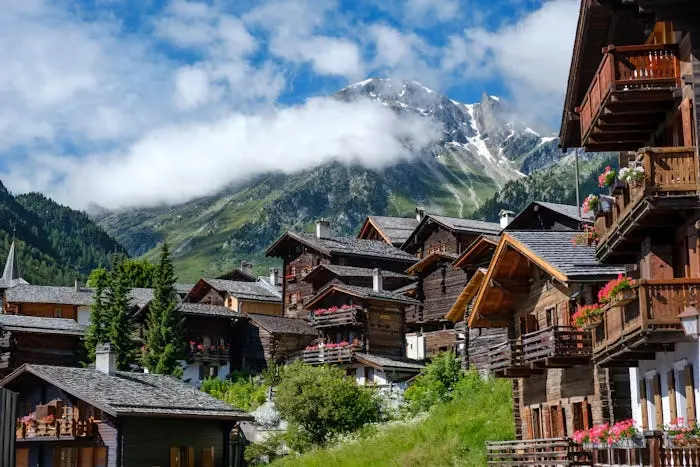
As an Amazon Associate we earn from qualifying purchases. Some links in this guide are affiliate links, see our affiliate disclosure for details.
Key Picks for a trip to Switzerland
The Fujifilm X-T30 II is a good, light choice for Switzerland: it combines a 26-megapixel APS-C sensor, tactile dials, film simulations and a compact body that is easy to carry on trains, gondolas and hikes. Its main limit is that it is not weather sealed, so a rain cover matters in Alpine weather. Buyers who want sealing can look at the Fujifilm X-T5 or a sealed full-frame body, and buyers who want the smallest kit can choose a compact camera.
What does a Switzerland camera need?
- Portability. Switzerland means trains, hikes, gondolas and cobbled streets, and a heavy kit takes the fun out of it.
- Image quality. The camera should do justice to mountain landscapes, with sharp details, rich colour and good dynamic range for bright snow and dark valleys.
- Versatility. A zoom range from wide landscapes to details of chalets and wildflowers.
- Weather resistance. Alpine weather changes quickly, so protection from drizzle or light snow matters.
- Battery life. Cold air drains batteries, so spare batteries are essential.
Fujifilm X-T30 II
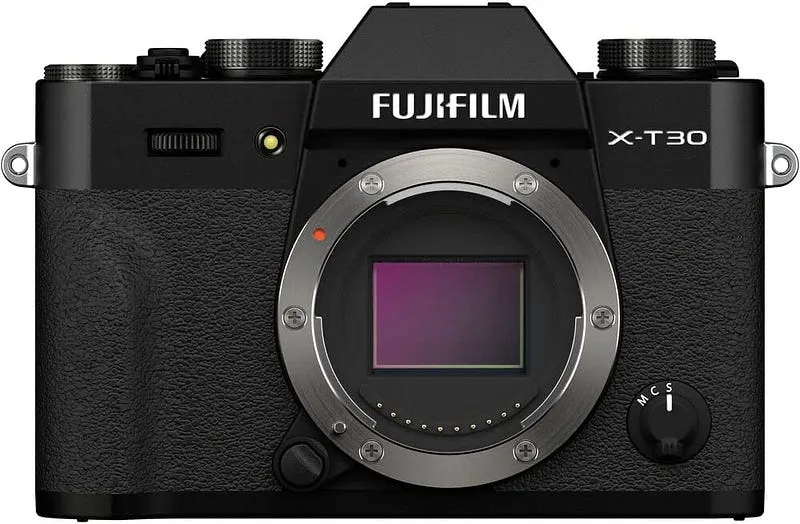
The Fujifilm X-T30 II fits most of these needs.
- Retro controls, modern autofocus. Dials for shutter speed, ISO and exposure compensation make settings quick to change, while the autofocus handles fast moments.
- Kit lens. The XF 18-55mm f/2.8-4 R LM OIS frames like roughly 27-84mm on full frame. That is wide enough for sweeping vistas and long enough for details such as wildflowers or distant chalets.
- Film simulations. Velvia suits vivid landscapes, and Classic Chrome suits moody scenes.
- Compact body. It weighs about 383 g with battery and card.
Limits: the X-T30 II has no weather sealing and no in-body stabilization. A waterproof cover, a lens hood and a lens cloth protect it in rain and spray near waterfalls.
Which other cameras suit Switzerland?
| Camera | Strength | Trade-off |
|---|---|---|
| Fujifilm X-T30 II | Light, great colour | Not weather sealed |
| Fujifilm X-T5 | Weather-sealed, 40 MP, stabilization | Heavier and costlier |
| Sony A7C | Compact full frame | Single card slot |
| Fujifilm X100VI or Ricoh GR III | Pocket-size | Fixed lens |
| Smartphone | Always with you | Small sensor |
A full-frame sensor might capture marginally more detail in vast landscapes, and a longer zoom offers more reach for distant peaks. See the best Fujifilm cameras for travel and the best Sony cameras for travel.
Practical tips for photographing Switzerland
- Use a polarizing filter. It deepens skies and reduces reflections on lakes.
- Plan for light. Early morning and late afternoon give soft, warm light on the mountains.
- Protect batteries in cold. Keep spares in an inside pocket.
- Check for haze and weather. Mountain views can disappear in clouds, so check forecasts and be flexible.
- Respect rules. Some areas restrict drones, so check current regulations before flying one.
- Back up daily. Copy photos to a drive or cloud storage each night.
For more help, see the best travel photography tips and the best camera for travel photography for beginners.
The verdict
The Fujifilm X-T30 II is not the single best camera for every traveller to Switzerland, but for visitors who value portability, strong image quality, intuitive controls and enjoyment, it is an excellent choice. Pairing it with weather protection solves its main weakness.
Frequently asked questions
Is the X-T30 II weather sealed? No. Use a rain cover in wet conditions.
What lens is best for Switzerland? A wide-to-standard zoom such as the 18-55mm covers most scenes.
How many batteries should I bring? At least two spares, because cold drains them faster.
Is a tripod worth carrying? A small travel tripod helps for sunrise, sunset and night shots.
Camera & Lens Settings by Real-World Use Case
Match your focal length, aperture, shutter speed, and lighting modifier to the exact environment you shoot in.
Street Photography, Japan/Europe Trips & Backpacking
- Best Body:
- Fujifilm X100VI / Ricoh GR III / Fujifilm X-T30 II / Sony a6700
- Ideal Lens:
- 23mm f/2 or 27mm f/2.8 Pancake (APS-C) — 35mm to 40mm equivalent
- Aperture & Shutter:
- f/2.0 (neon night street) or f/5.6 – f/8 (sunny zone-focusing from 2m to infinity) · 1/250s – 1/500s (freezes pedestrians mid-stride)
- Room Distance:
- 1.5m – 5m (candid street distance)
Tattoo Artists & Micro-Realism Portfolios
- Best Body:
- Sony Alpha a7 III / Fujifilm X-T4
- Ideal Lens:
- 90mm f/2.8 Macro (detail) or 50mm f/1.8 (sleeves & back pieces)
- Aperture & Shutter:
- f/5.6 – f/8 (keeps curved forearms and calves sharp edge-to-edge) · 1/125s – 1/200s handheld (or 1/60s on tripod)
- Room Distance:
- 0.4m – 1.5m (1.5 to 5 ft)
Barbershops, Hairstylists & Color Salons
- Best Body:
- Sony a7 IV / Canon EOS R6 Mark II
- Ideal Lens:
- 50mm f/1.8 (tight stations) or 85mm f/1.8 (spacious salons)
- Aperture & Shutter:
- f/1.8 – f/2.8 (blurs background chairs while keeping the lineup tack-sharp) · 1/160s – 1/250s (freezes subtle head movement in the chair)
- Room Distance:
- 1.5m – 2.4m (5 to 8 ft from the styling chair)

Written by
Marien CartelMarien Cartel runs Marien Cartel Photography, a camera and lens buying-guide site, and photographs the gear shown on it.
Related Guides
Best Camera for Digital Nomads: Top Bodies Compared by Budget
Best Camera for Digital Nomads: a side-by-side look at Sony a7C II and Fujifilm X-S20, with strengths, trade-offs and buying advice.
How to become a travel photographer: Top Bodies Compared by Budget
Practical guide to becoming a travel photographer: building a location portfolio, choosing lightweight weather-sealed gear, and pitching tourism clients.
Best Camera for Young Photographers: Top Bodies Compared by Budget
Best Camera for Young Photographers: key features, strengths, drawbacks and who should buy the Canon EOS R100.
Best Camera for Night Sky Time Lapse: Top Bodies Compared by Budget
Choosing the best camera for night sky time-lapse photography can be a daunting task, especially for beginners eager to capture the beauty of celestial
Best Panasonic Compact Cameras: Top Bodies Compared by Budget
Best Panasonic Compact Cameras — Panasonic Lumix ZS200D and Panasonic Lumix ZS99 compared, with pros, cons and who should buy which.
Best Soccer Camera for Parents: Top Bodies Compared by Budget
Best Soccer Camera for Parents: key features, strengths, drawbacks and who should buy the Canon VIXIA HF G40 Right.