Best Camera for Ice Hockey Photography: Field Setup & Key Specs
As an Amazon Associate we earn from qualifying purchases. Some links in this guide are affiliate links, see our affiliate disclosure for details.
Top Picks & Key Specifications at a Glance
| Model | Best For | Mount / System | Key Optical & Sensor Specs | Check Price |
|---|---|---|---|---|
1Canon EOS R6 Mark II + RF 70 - 200mm f/2.8 | Dream Setup | Canon RF (Full Frame) | 200mm · f/2.8 | Amazon ↗ |
2Sony A7 IV + FE 70 - 200mm f/4 | Sweet Spot | Sony FE E-Mount (Full Frame) | 200mm · f/4 | Amazon ↗ |
3Canon EOS M50 + EF 70 - 200mm f/4L (with adapter) | Budget Champion | Interchangeable-Lens System | 200mm | Amazon ↗ |
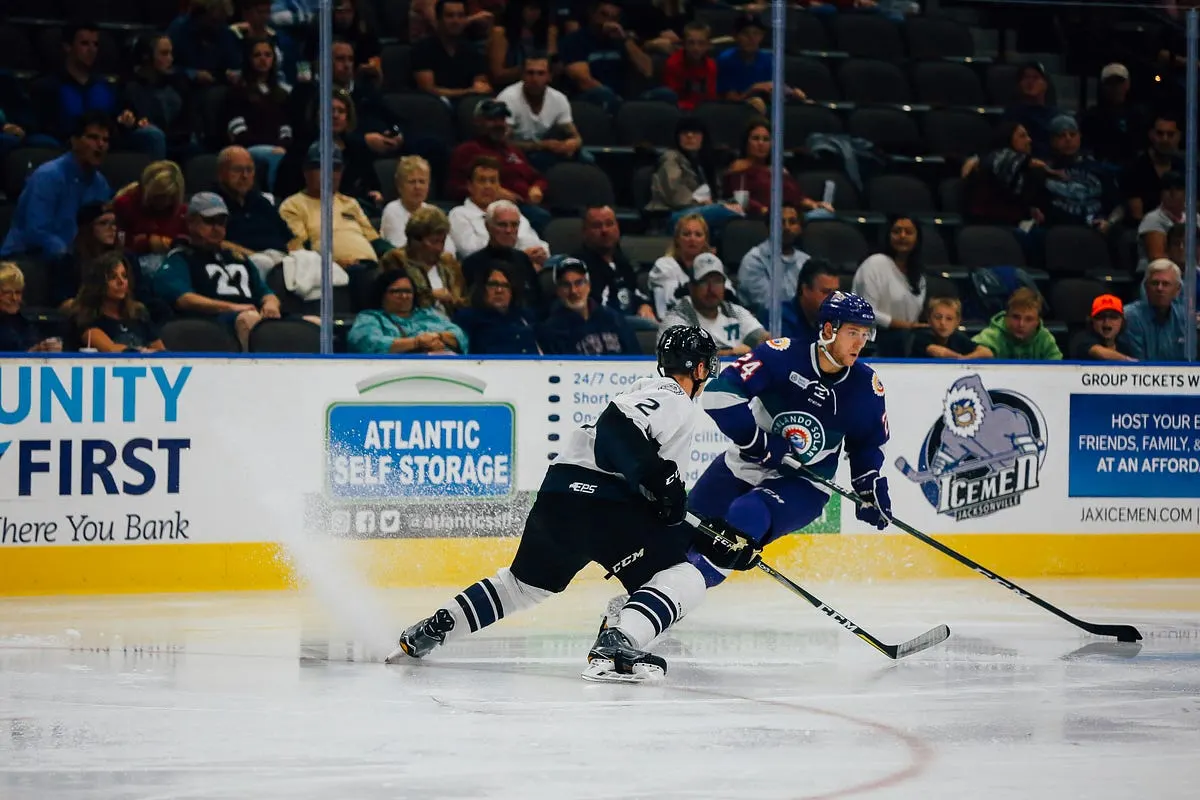
Photo by Richard Ciraulo on Unsplash
Best Options for ice hockey photography
the lens matters most. Its dream setup is the Canon EOS R6 Mark II with an RF 70-200mm f/2.8, the sweet spot is the Sony A7 IV with an FE 70-200mm f/4, and the budget pick is the Canon EOS M50 with an adapted EF 70-200mm f/4L.
1. Your Lens Is Everything
Hockey happens fast and far away. You need reach, and you need light-gathering ability. That kit lens that came with your camera? It’s staying home.
2. Autofocus Speed Trumps Megapixels
Players moving at 25+ mph don’t care about your camera’s resolution. They care about whether your autofocus can keep up.
3. Low Light Performance Is Non-Negotiable
Hockey arenas are dark. Even the “well-lit” ones are challenging. You’ll be shooting at ISO 1600–3200 regularly, sometimes higher. If your camera falls apart at high ISO, you’re in trouble.
The Dream Setup: Canon EOS R6 Mark II + RF 70–200mm f/2.8
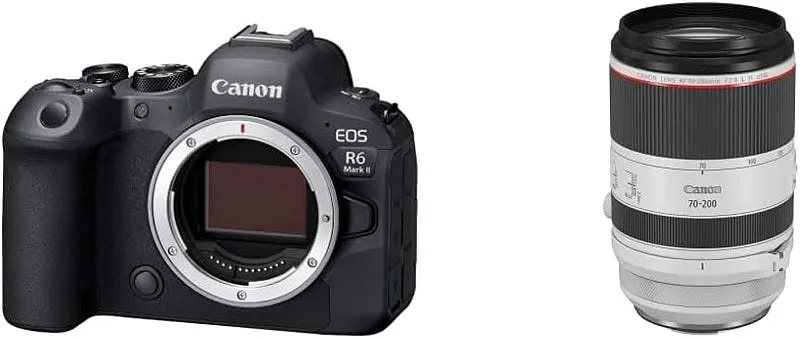
- Autofocus that actually tracks the puck (seriously, it’s magic)
- Clean ISO performance up to 6400
- 40fps burst mode for those split-second goals
- In-body stabilization helps with longer lenses
The reality check: This setup costs roughly $5,000 or more new (prices vary). If you’re just starting out, this might be overkill.
The Sweet Spot: Sony A7 IV + FE 70–200mm f/4
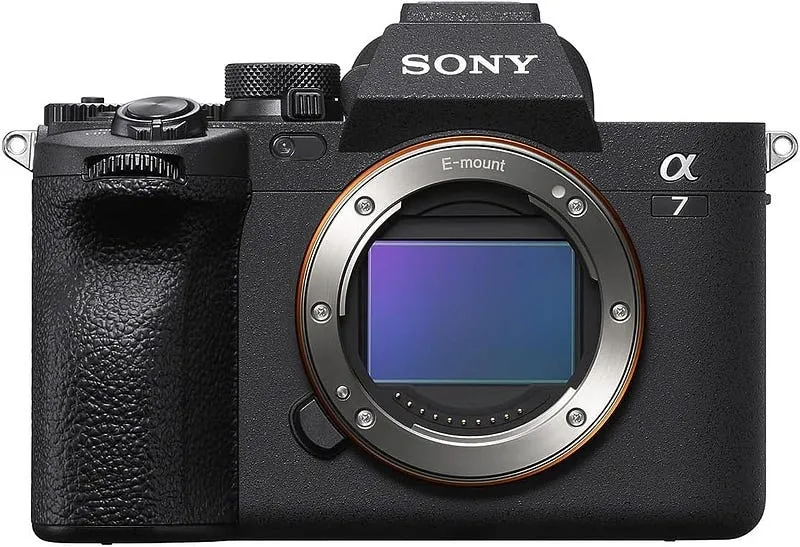
What makes it work:
- Excellent low-light performance
- Fast, accurate autofocus with subject detection
- Good burst rates (10fps)
- More affordable than the Canon setup
Cost: Around $4,000 new for body and lens (prices vary), but you can find deals
The Budget Champion: Canon EOS M50 + EF 70–200mm f/4L (with adapter)
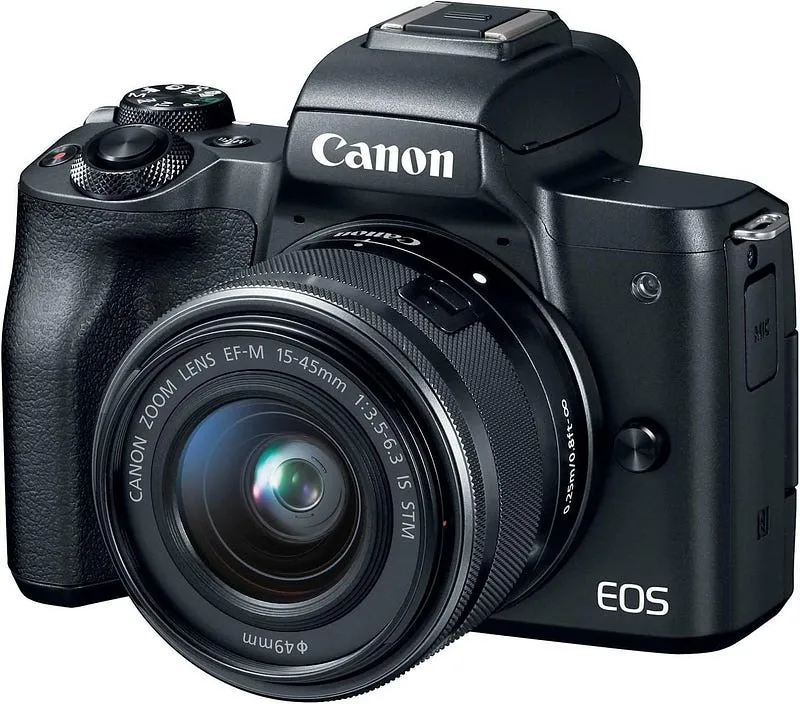
Why it works:
- Solid autofocus system for the price
- Good high ISO performance
- 10fps burst mode
- The EF 70–200mm f/4L is a legendary sports lens
Total cost: About $800–900 used
The catch: The M series is discontinued, so you’re buying into a dead system. But for learning hockey photography? It’s perfect.
The Lenses That Actually Work
Canon EF 70–200mm f/2.8L (Any Version)
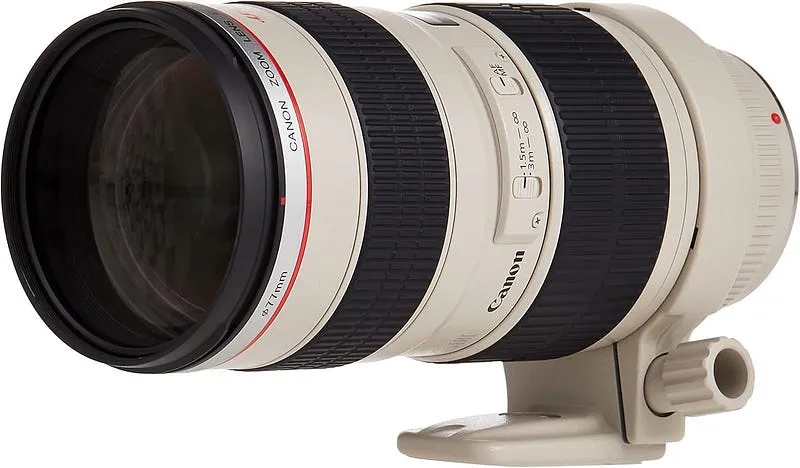
The gold standard. Fast, sharp, and reliable. It just works.
Sony FE 70–200mm f/2.8 GM
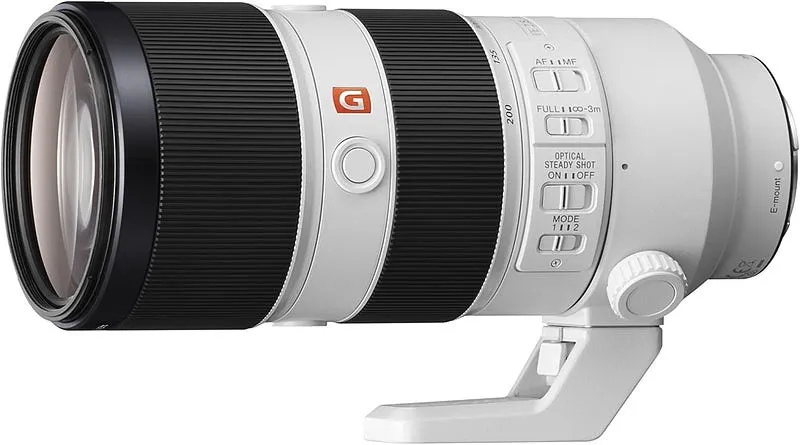
Sony’s answer to the Canon. Slightly lighter, equally excellent.
Canon RF 70–200mm f/2.8L
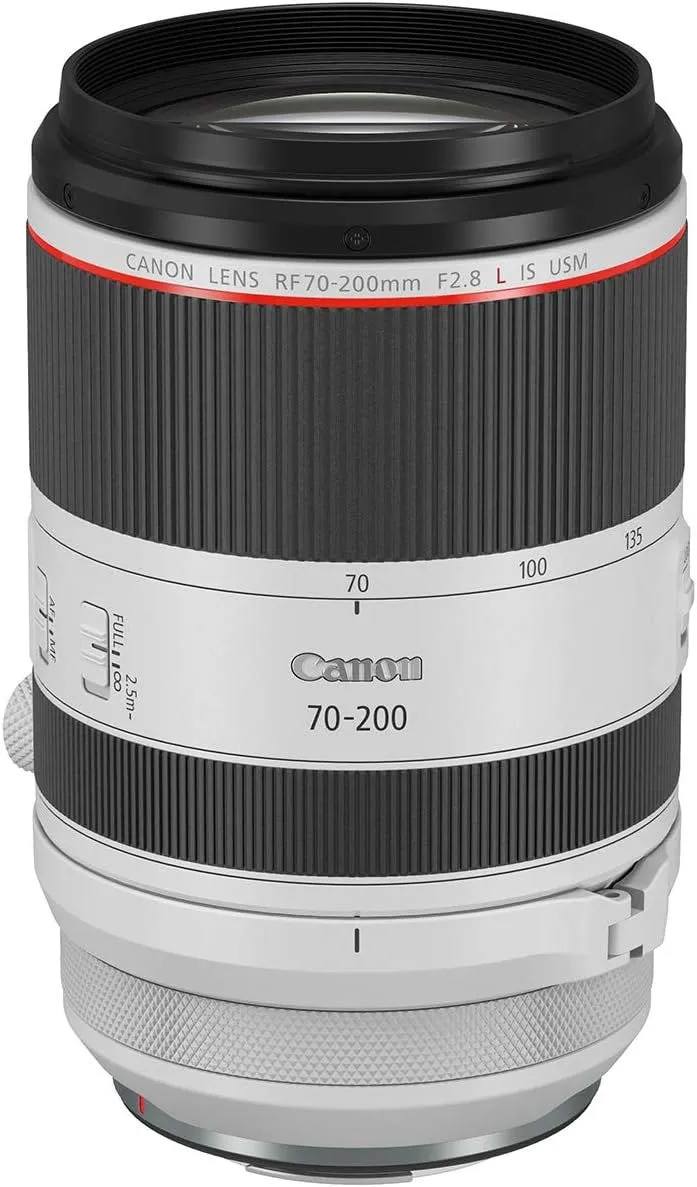
The newest version. Weather-sealed, incredibly sharp, and that autofocus is just unfair to the competition.
What About Those “Budget” Options?
It’s slow to focus, soft even at its best aperture, and has no image stabilization. You’ll get frustrated and think you’re not good at this when really, it’s just your gear fighting you.
Save up for the f/4 version of the 70–200.
Settings That Actually Work
Camera Mode: Shutter Priority (Tv/S mode) Shutter Speed: 1/1000s minimum (1/1250s for fast action) ISO: Auto, max 3200 Aperture: f/4-f/5.6 (gives enough depth of field) Focus Mode: AI Servo/Continuous AF Drive Mode: High-speed continuous
The Real Secret Nobody Talks About
Here’s what separates good hockey photos from great ones: anticipation.
The best hockey photographers aren’t just reacting to what’s happening — they’re predicting where it’s going to happen. Study the game. Learn the flow. Notice patterns.
That perfect shot of the game-winning goal? The photographer saw it developing three seconds before it happened.
Final Thoughts
The best camera for hockey photography is the one that doesn’t get in your way. Whether that’s a $5,000 professional setup or a used M50 with a good lens, what matters is understanding your gear and knowing the game.
Now stop reading about cameras and go shoot some hockey.
What’s your experience with hockey photography? And if you found this helpful, consider sharing it with another photographer who’s just getting into the game.
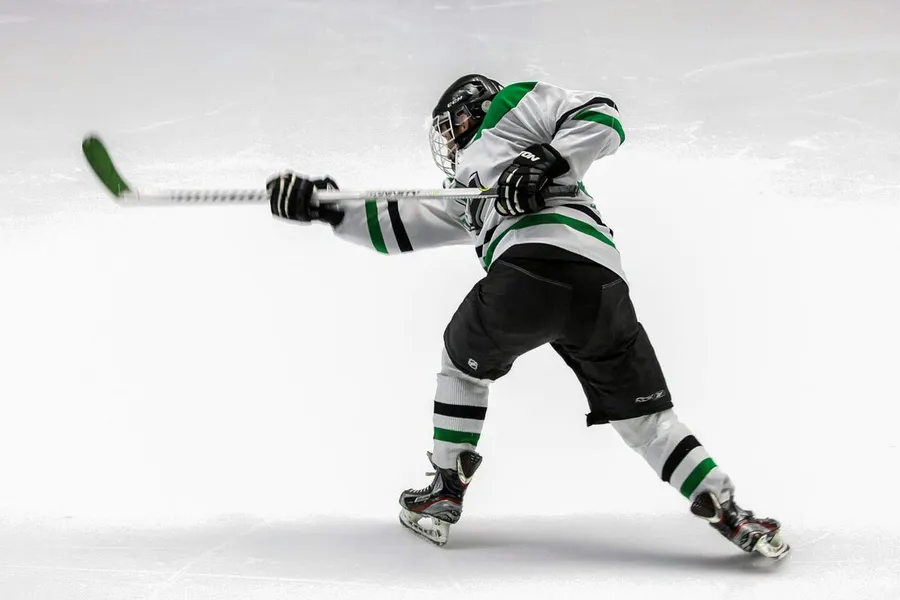
Photo by Gerhard Crous on Unsplash
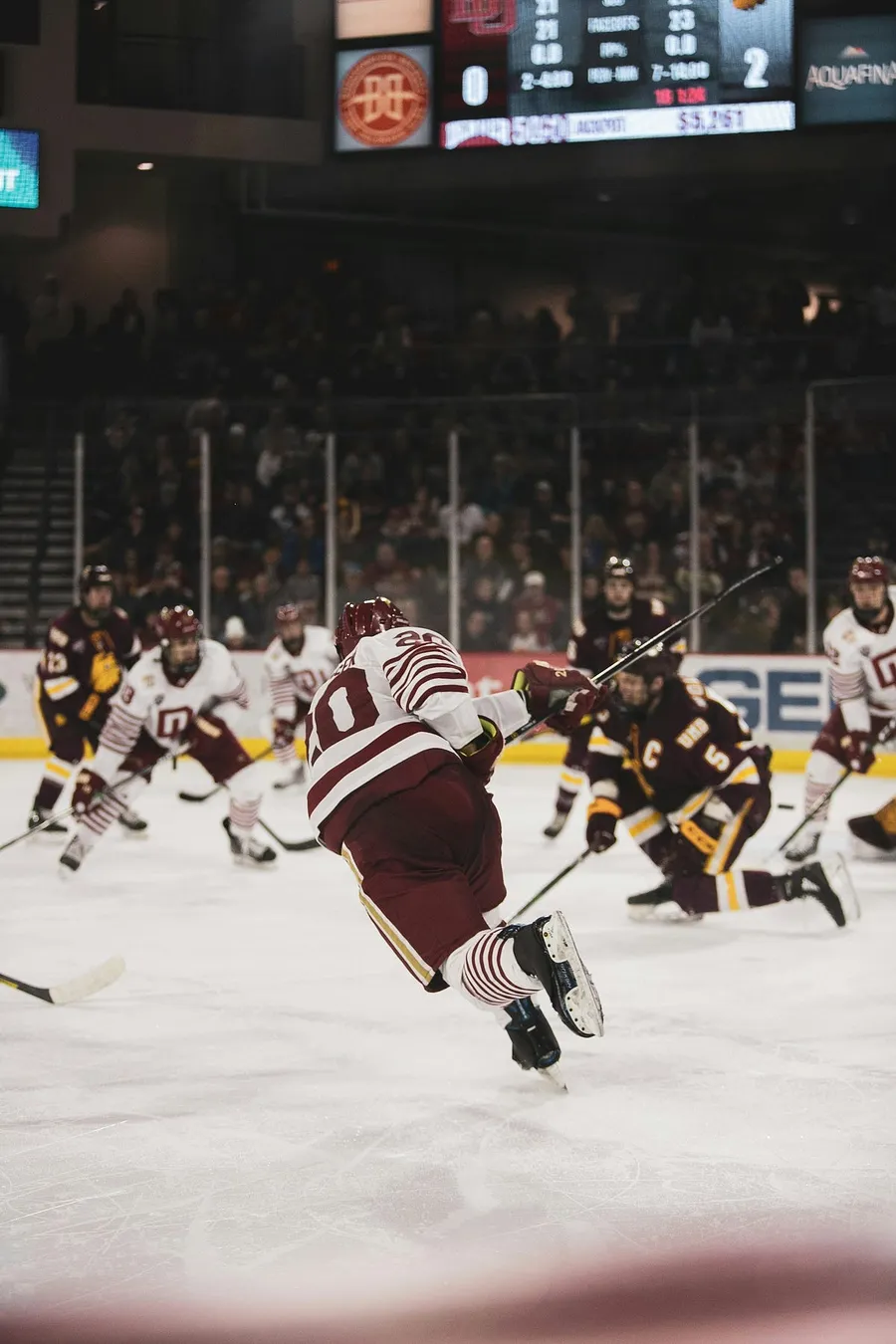
Photo by LOGAN WEAVER | @LGNWVR on Unsplash
Pair this guide with 6 Best Canon Cameras for Landscape Photography, Best Bridge Camera for Beginners, and the bokeh & framing tool.
Common Buying & Setup Questions
What is the top pick in Best Camera for Ice Hockey Photography?
The Canon EOS R6 Mark II + RF 70 - 200mm f/2.8 (200mm · f/2.8, Canon RF (Full Frame)) leads our shortlist as the dream setup, followed closely by the Sony A7 IV + FE 70 - 200mm f/4 (200mm · f/4).
What focal length, aperture, and shutter speed work best for gym workouts, fitness coaching & athletic reels?
For gym workouts, fitness coaching & athletic reels, pair a 24mm – 35mm (wide enough for full-body squats/deadlifts in tight aisles) lens at f/1.8 – f/2.8 (isolates athlete from crowded gym equipment) with a shutter speed of 1/120s (for 4K 60fps slow-motion) or 1/60s (for 30fps) and a working distance of 1.5m – 3.0m (5 to 10 ft on a compact floor tripod or magnetic mount). Recommended setup: Compact magnetic tripod + wireless noise-canceling lav mic (blocks gym PA music and clanking plates)..
Camera & Lens Settings by Real-World Use Case
Match your focal length, aperture, shutter speed, and lighting modifier to the exact environment you shoot in.
Gym Workouts, Fitness Coaching & Athletic Reels
- Best Body:
- Sony ZV-1 / Panasonic Lumix GH5 & GH7 / Sony a7 III
- Ideal Lens:
- 24mm–35mm f/1.8 or 16–35mm f/2.8 Zoom
- Aperture & Shutter:
- f/1.8 – f/2.8 (isolates athlete from crowded gym equipment) · 1/120s (for 4K 60fps slow-motion) or 1/60s (for 30fps)
- Room Distance:
- 1.5m – 3.0m (5 to 10 ft on a compact floor tripod or magnetic mount)
Youth Sports, GameChanger Baseball/Softball & Golf Swings
- Best Body:
- GoPro Hero 12 Black (Fence Stream) / Canon EOS R50 & R10 (Sideline)
- Ideal Lens:
- RF 100–400mm f/5.6–8 IS USM or 70–200mm f/2.8 (Sideline) / Fixed Wide (Fence)
- Aperture & Shutter:
- f/2.8 – f/5.6 (blurs chain-link fences when shot wide open close to the mesh) · 1/1000s – 1/2000s (baseball bat contact & golf clubhead impact)
- Room Distance:
- 0.1m (snug against chain-link fence) or 10m–40m sideline
Motorsport, Track Days & Automotive Rolling Shots
- Best Body:
- Sony a7 IV / Canon EOS R5 / Fujifilm X-H2S
- Ideal Lens:
- 70–200mm f/2.8 / 100–400mm (trackside) + 24–70mm f/2.8 with CPL (statics & rollers)
- Aperture & Shutter:
- f/2.8 (static separation) or f/8 – f/13 (slow-shutter daytime panning) · 1/60s – 1/125s (track panning), 1/40s – 1/80s (chase rollers), 1/1000s+ (head-on)
- Room Distance:
- 3m – 50m

Written by
Marien CartelMarien Cartel runs Marien Cartel Photography, a camera and lens buying-guide site, and photographs the gear shown on it.
Related Guides
Best Camera for Basketball Games: Field Setup & Key Specs
Best Camera for Basketball Games: Sony A6700, Fujifilm X-H2S and Sony A9 III compared on features, price and who each one suits.
Best APS-C Compact Camera: Field Setup & Key Specs
Compare the best APS-C compact cameras including the Fujifilm X100VI, X100V, Ricoh GR III, and GR IIIx for street, travel, and everyday photography.
Best Camera for Filming Garden Wildlife: Field Setup & Key Specs
Best Camera for Filming Garden Wildlife — Sony α7 IV and Canon EOS R6 Mark II compared, with pros, cons and who should buy which.
4 Best Cameras for Nursery: Field Setup & Key Specs
Best Cameras for Nursery: what to look for, what to skip and how to choose the right one for your budget. Updated for 2026.
3 Best Time Lapse Camera for Plants: Field Setup & Key Specs
Which Time Lapse Camera for Plants is worth buying? See how Brinno TLC2020, GoPro Hero 12 and Canon EOS Rebel T7 stack up on specs, performance, and budget.
Best Camera for Vlogs: Field Setup & Key Specs
Sony ZV-E10, Sony ZV-1 II and DJI Osmo Pocket 3 compared for Camera for Vlogs: key specifications, trade-offs, and top picks by budget.